Oct 14, 2026Product Planning
Pool Robot Auto-Parking and Easy Retrieval
A robot that stops in the deep end soon stops being used. How auto-parking works on our floor-only models, plus the lifting and button checks that matter.
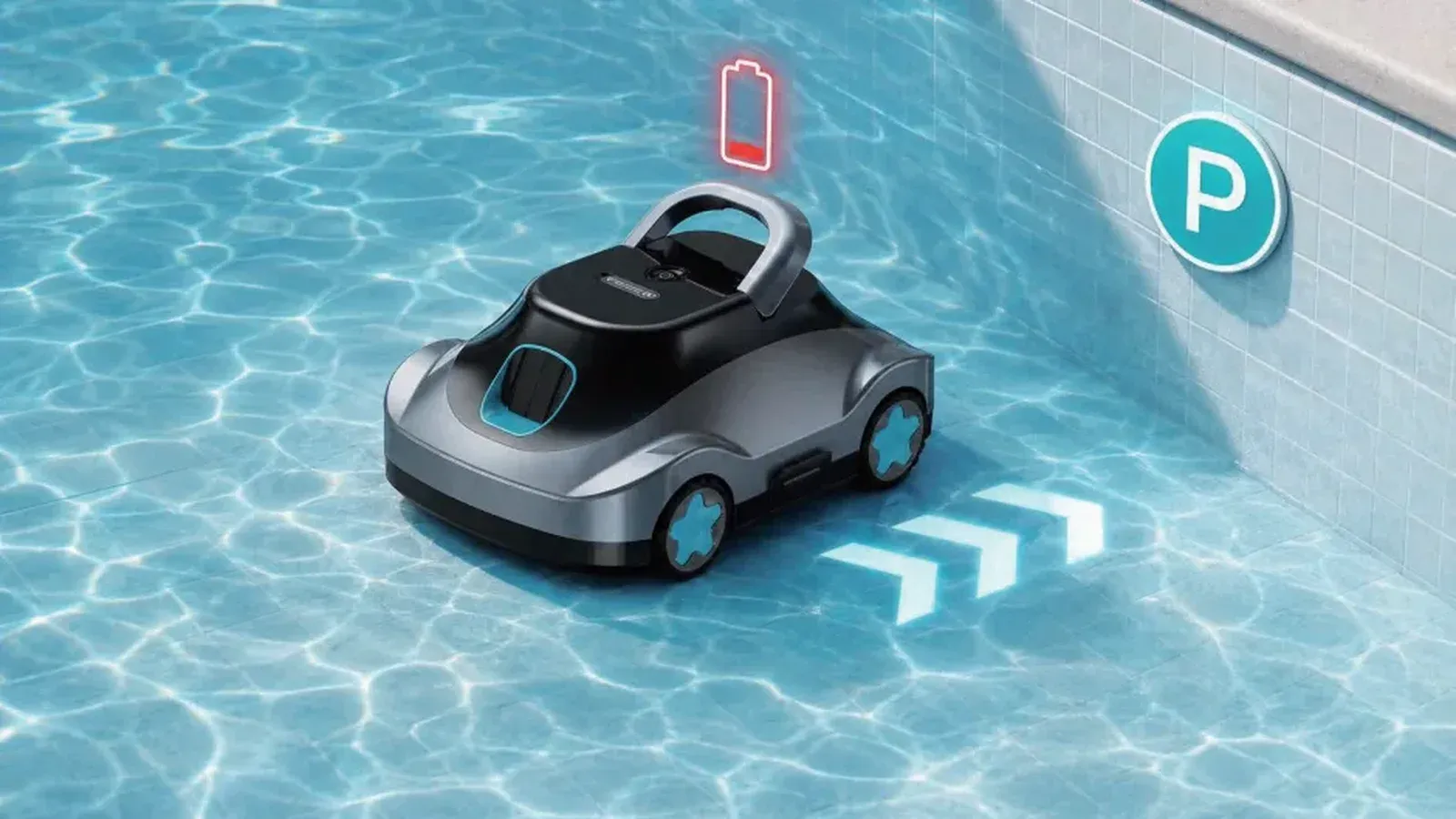
Every cleaning cycle ends the same way: someone has to get the robot out of the pool. When that's easy, the owner barely notices. When the robot stops in the deep end with a full basket, it becomes the job they dread, and a robot that's a chore to retrieve soon stops being used. Unused robots have a habit of coming back as "it doesn't work".
Auto-parking decides most of this, along with what happens when the owner reaches for the robot. We'll cover both, from the parking behavior on our floor-only models to the hook and the power button.
Where does the robot go when the battery runs low?
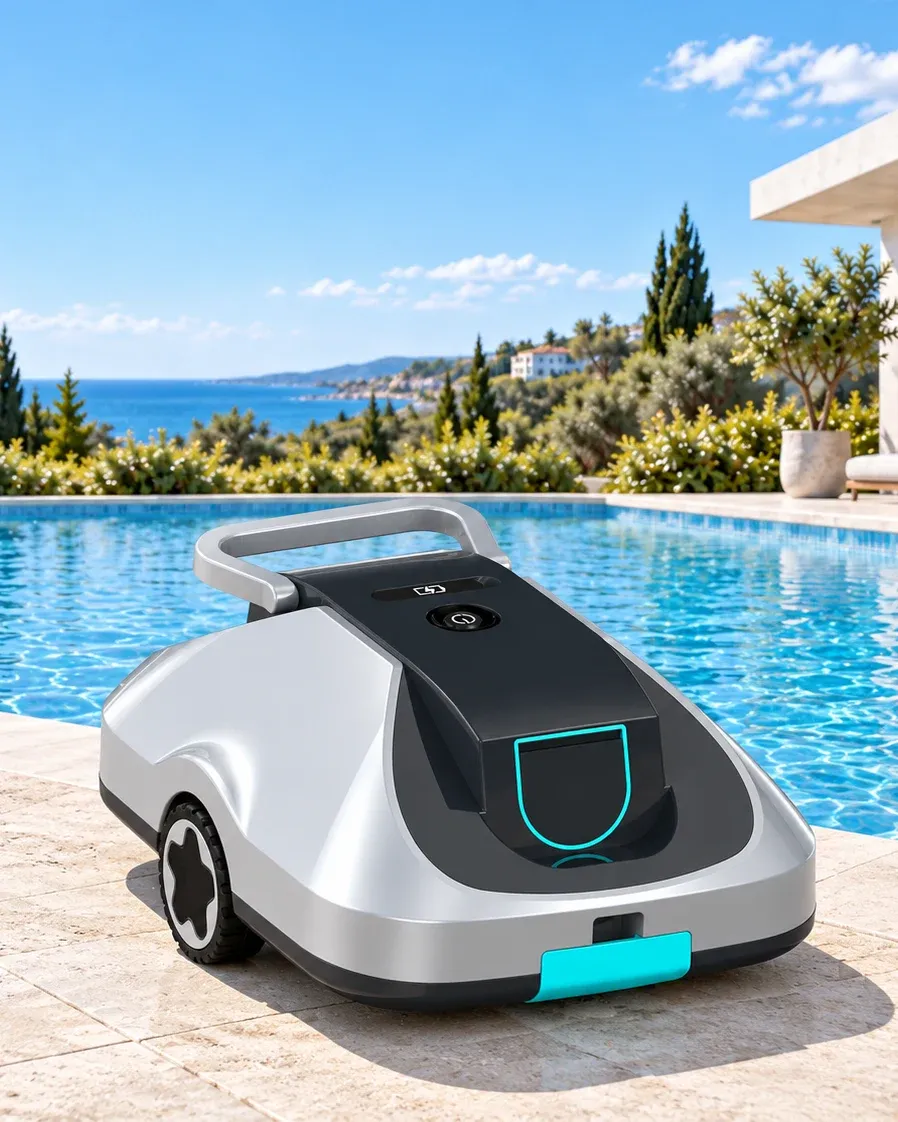
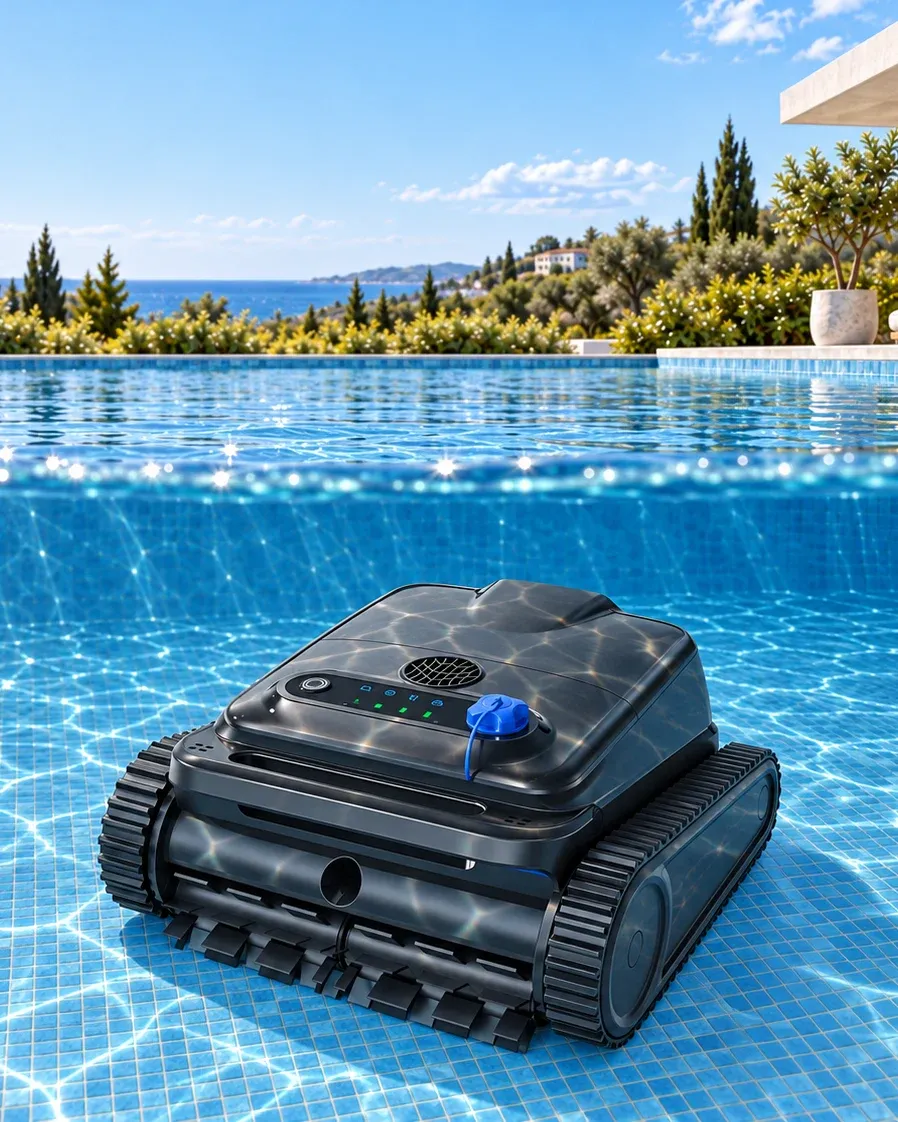
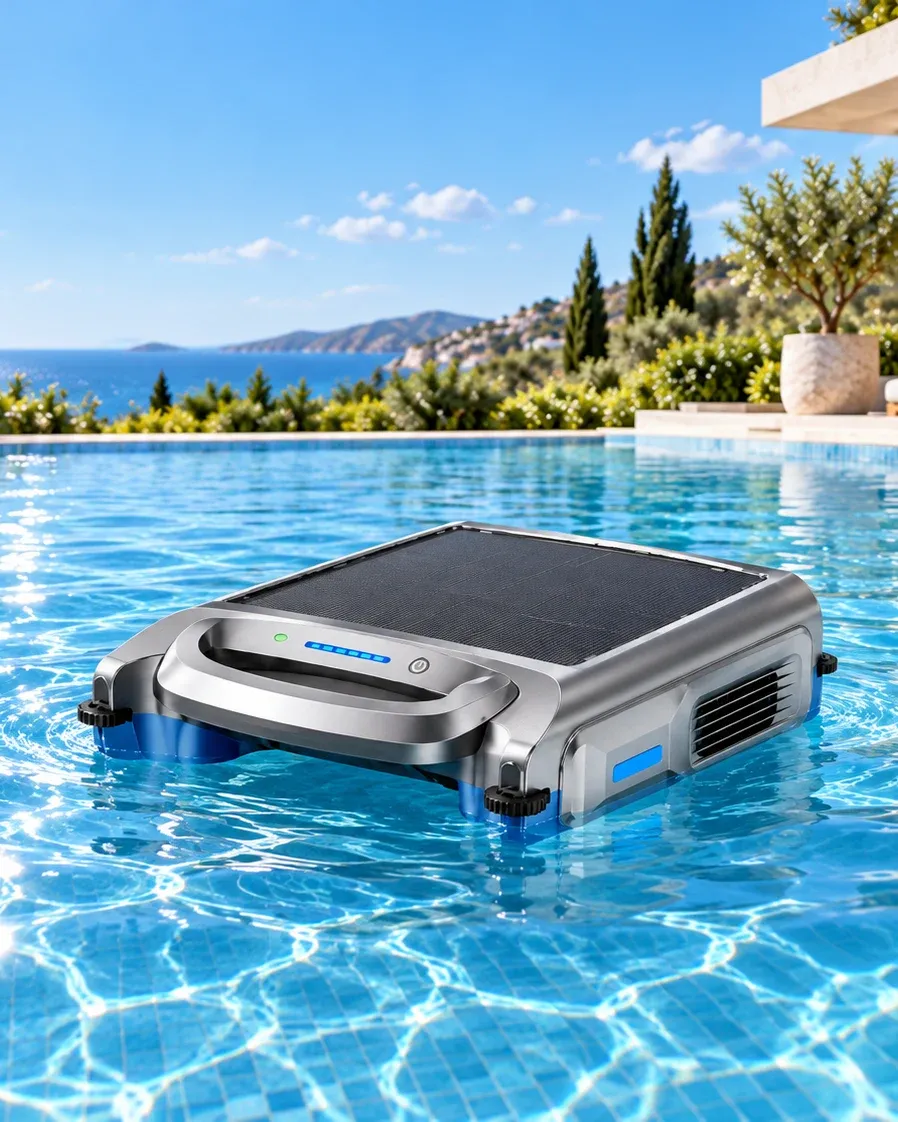
On our floor-only robots, it heads for the side of the pool. The Y20 parks near the wall when the battery is low, after up to 135 minutes of cleaning. The C2 docks by the wall after up to 210 minutes. The C1 and C3 return to the edge, the C5 returns to the poolside and the Y10 self-parks when the battery runs low. Our Y90 Pro skimmer has its own version on the surface: it parks at the pool edge for easy retrieval.
Why did my robot stop in the middle of the pool?
Owners write this when parking didn't happen where they expected. Parking starts when the battery reaches a set level, and the robot then needs enough charge to reach the wall. A few things are worth testing on a sample: a robot that went in on a part charge, one that was lifted out and dropped back in mid-cycle, and a path to the wall blocked by steps, a ladder or the main drain. Start one run at the deep end so the robot has the longest trip back, and write down where it stops each time. Then ask the supplier at what battery level parking begins. A supplier who has tested it in a real pool can answer with a number.
Is it easy to lift out?
Parking gets the robot within reach. The owner still has to lift it out, usually with a hook on a pole, and a robot full of water is far heavier than the same robot dry. How fast the water drains matters as much as where the robot parks. Our C2 empties in seconds for easy lifting. On any sample, lift it out with a full basket and watch how long it keeps streaming water. Check that the hook takes a standard telescopic pool pole and that the robot hangs level while it drains. Then ask what the hook is attached to. A hook that loads a thin cover will start to flex over a season, while one tied into the main housing is far less likely to.
Will the button survive wet hands?
Retrieval ends with the owner switching the robot off, usually with wet hands, and the next cycle starts with switching it on again. On the Y50S, we pressed the power button 1,000 times during validation, and it takes at least 15 N to press. That force helps keep the robot from switching on in its box or a storage bag, which would drain the battery before the next cycle and leave it too flat to park. Our Y10 and Y20 start with a long press, which does a similar job. Whatever the design, check on the sample that the button works with wet hands and can't be switched on by a knock.
What should the listing promise?
Parking near the wall is a convenience. It doesn't bring the robot out of the water, and it can't help if the owner switches the robot off mid-pool. Our own product pages use several phrases for similar behavior, from "parks near the wall" to "returns to the poolside", so pick one phrase for your range and use it on the box, the listing and the manual. Add one line to the quick-start card: when the cycle ends, lift the robot out by the hook and let it drain before you carry it. Owners who know what to expect rarely call it a fault.
FAQ
Which of your models park automatically?
Our product pages list auto-parking for the floor-only Y10, Y20, C1, C2, C3 and C5, and the Y90 Pro skimmer parks at the pool edge. For any other model, ask us how the cleaning cycle ends.
Does auto-parking lift the robot out of the pool?
No. It brings the robot to the wall or the edge so it's within reach. The owner still lifts it out.
Can we check parking before we order?
Yes. Test it on samples in your own market before you confirm packaging, documents and the production order.
Comparing parking on samples? Tell us which models you're testing in the form below, and we'll send the parking and start-button details for each one. Our team will reply by email within 1 business day.
Written by the Silver Home R&D and quality team.