Oct 14, 2026Manufacturing
Pool Robot Charger Recalls: Questions to Ask
About 32,000 cordless pool robots were recalled in the U.S. in 2025 over chargers that could overheat. What to ask suppliers about chargers and batteries.
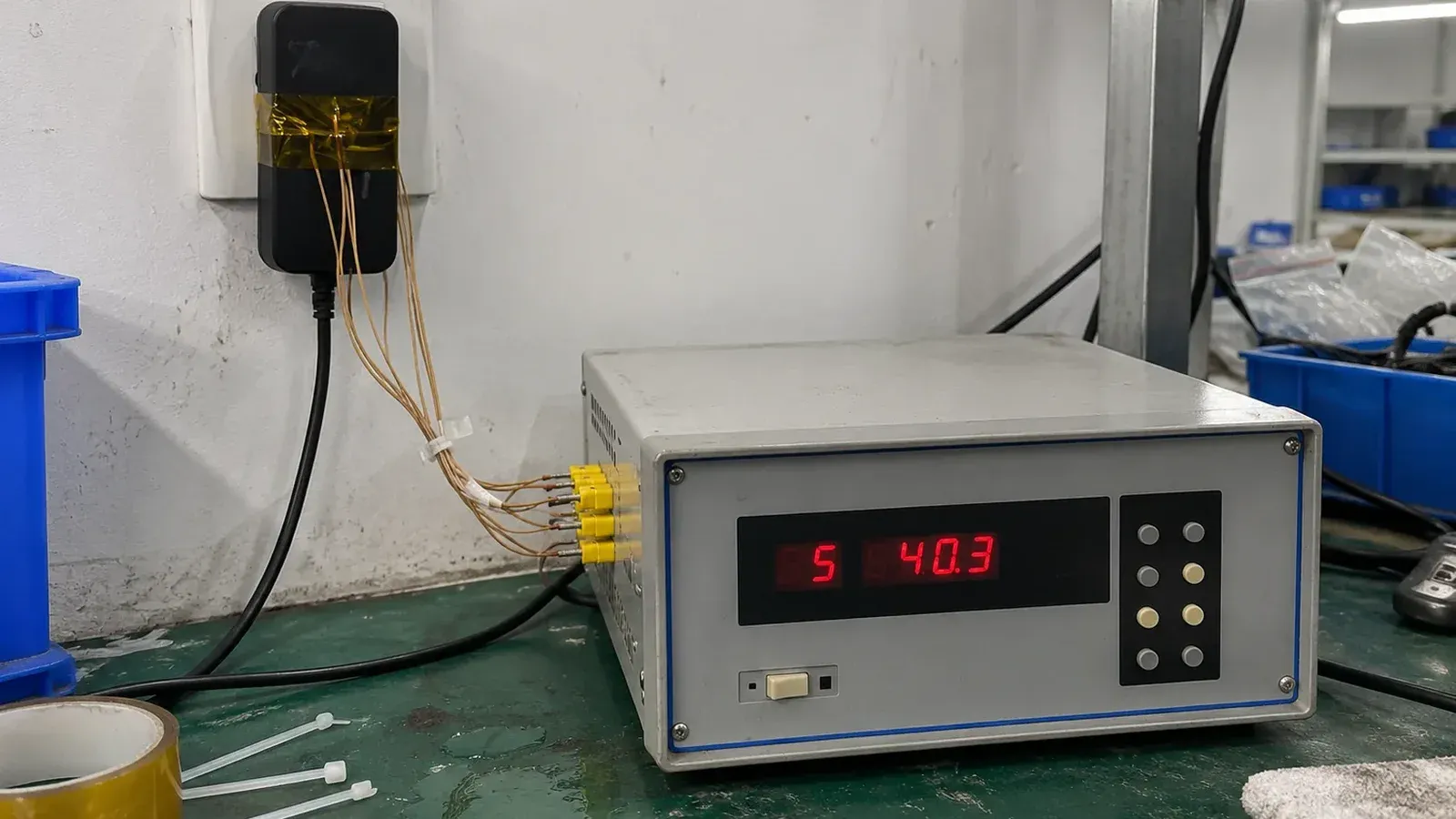
In March 2025, about 32,000 cordless pool robots were recalled in the U.S. because their charging adapters could overheat. The part named in the recall was the adapter, the plainest-looking thing in the box. It's often bought in from a power-supply maker, and it's the one component the owner plugs into a wall socket at home.
We've published our own charger test data before. This article is about the questions: what we'd ask any supplier, ourselves included, before your name goes on the box. Responsibility for a recall usually sits with the company that imported the product or put its brand on it, and in a private-label program that's often you.
Who makes the charger, and will it stay the same?
Ask who makes the adapter and for its model number, then check that number against the label on your sample. Then ask the harder question: if the adapter or battery supplier changes during production, will you hear about it before the goods ship? A cheaper adapter swapped in halfway through a program doesn't show up on a spec sheet. Put a change-notice clause in your purchase terms that covers the adapter, the battery cells and the battery's protection circuit.
What does a 3.6 kV withstand test prove?
A withstand test, often called a hi-pot test, puts a high voltage across the charger's insulation, between the mains side and the low-voltage side, and checks that nothing breaks down. Our Y50S charger passed a 3.6 kV withstand test. That shows the insulation holds under stress, which is about protecting the person holding the plug from a shock. It says nothing about how hot the adapter gets over a long charge. Insulation and heat are separate tests, so ask a supplier for results on both.
Does the robot protect its own battery?
The adapter is half of the charging system. The other half sits inside the robot: the battery's protection circuit and the firmware that watches it. On the Y50S, the firmware shuts the robot down if it overheats and locks it out when the battery voltage drops too low. Ask any supplier where each cut-off lives, in the battery pack, in the firmware or in both, and which faults each one covers. A supplier who can draw that on a whiteboard has thought about it.
Why does low-voltage lockout matter?
Lithium cells don't like being run flat. Draining a cell too far can damage it, and a damaged cell is exactly the one you don't want on a charger later. Low-voltage lockout stops the robot before the cells get there. Ask what the owner sees when it trips, and put that in your manual. An owner who knows the robot has protected itself will simply charge it. One who doesn't is more likely to report a dead battery.
Which approvals should the charger have?
Approvals are issued per model, and the adapter is a model in its own right. Ask which safety approvals the adapter carries for your market, and get copies that show the adapter's model number. If a different adapter turns up in production, the robot's paperwork may no longer describe what's in the box. That's one more reason the change-notice clause matters.
What should we check when the goods arrive?
Pull a few cartons from different pallets and compare each adapter label with the one on your approved sample: maker, model number and ratings. It's a quick check, and it catches a swapped part before it reaches a customer. Keep some spare chargers in stock as well. Chargers can be ordered separately, so if an owner reports a problem with one, your team can replace the adapter quickly and send the suspect unit back to be looked at.
FAQ
Was the March 2025 recall about the battery or the charger?
The recall named charging adapters that could overheat. We'd still check the adapter and the battery protections together, because they work as one system.
Does a withstand test replace market certification?
No. It's one of the tests behind a safe charger. Market certifications are issued per model, so confirm them for the robot and the adapter in each market you sell in.
Comparing chargers between suppliers? Ask us for the Y50S test summary, including the charger withstand test and the firmware protections, and tell us your market in the form below. Our team will reply by email within 1 business day.
Written by the Silver Home R&D and quality team.