Oct 14, 2026Product Planning
Pool Robot Filter Microns: Fine Sand, Pollen
What a 180 µm pool robot filter catches, what slips through, and when a 10 µm or 5 µm second stage is worth it in sandy or pollen-heavy markets.
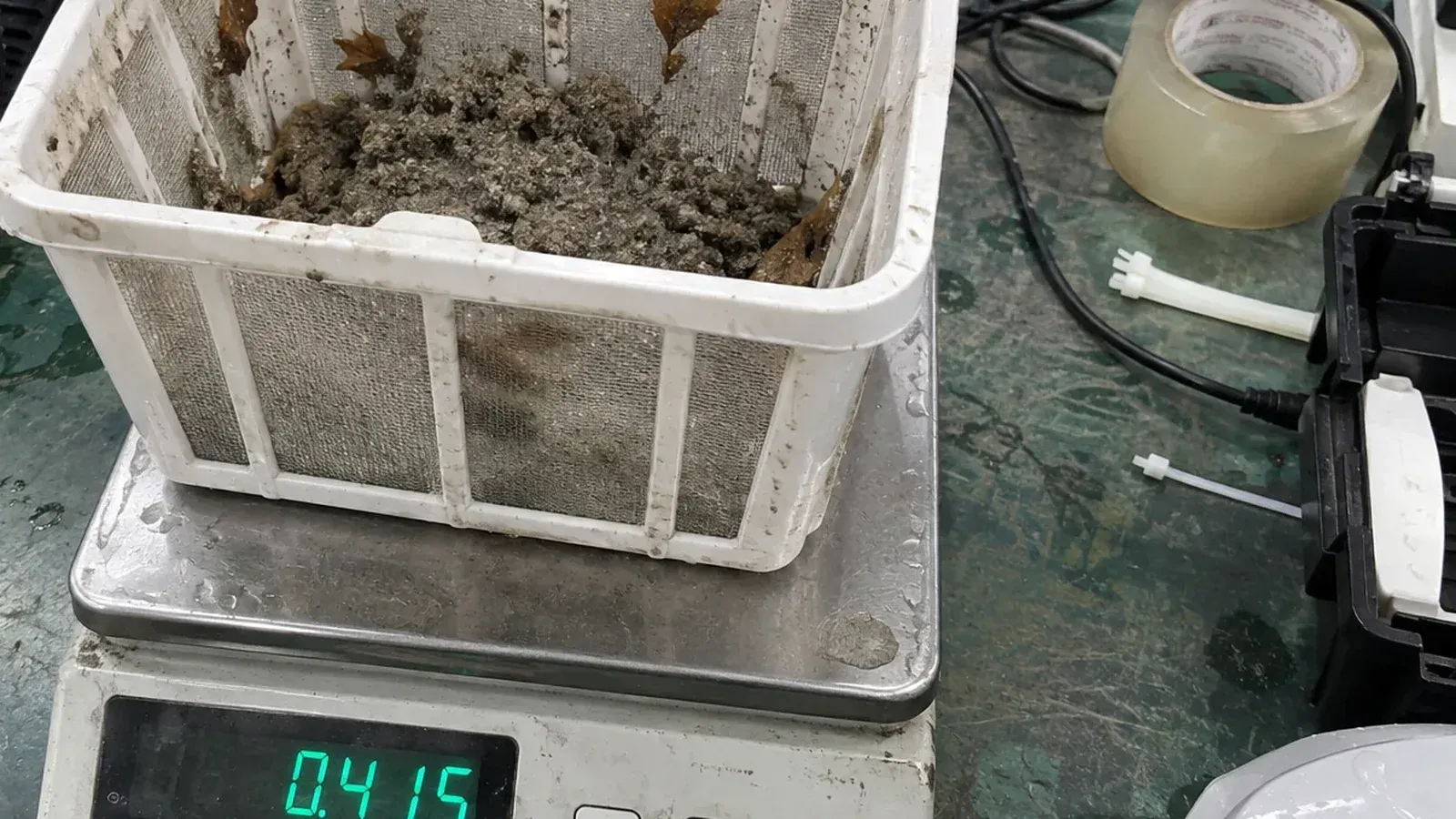
When a pool robot leaves a haze of fine sand behind, or runs a full cycle and the pollen is still there, owners usually blame suction. We'd look at the filter first. A filter rating tells you what a robot can hold on to, and a lot of the fine material in a pool is smaller than most robot filters are built to catch. This is what the filter figures on our own product pages mean, and how we'd choose models for sandy and pollen-heavy markets.
What does 180 µm actually mean?
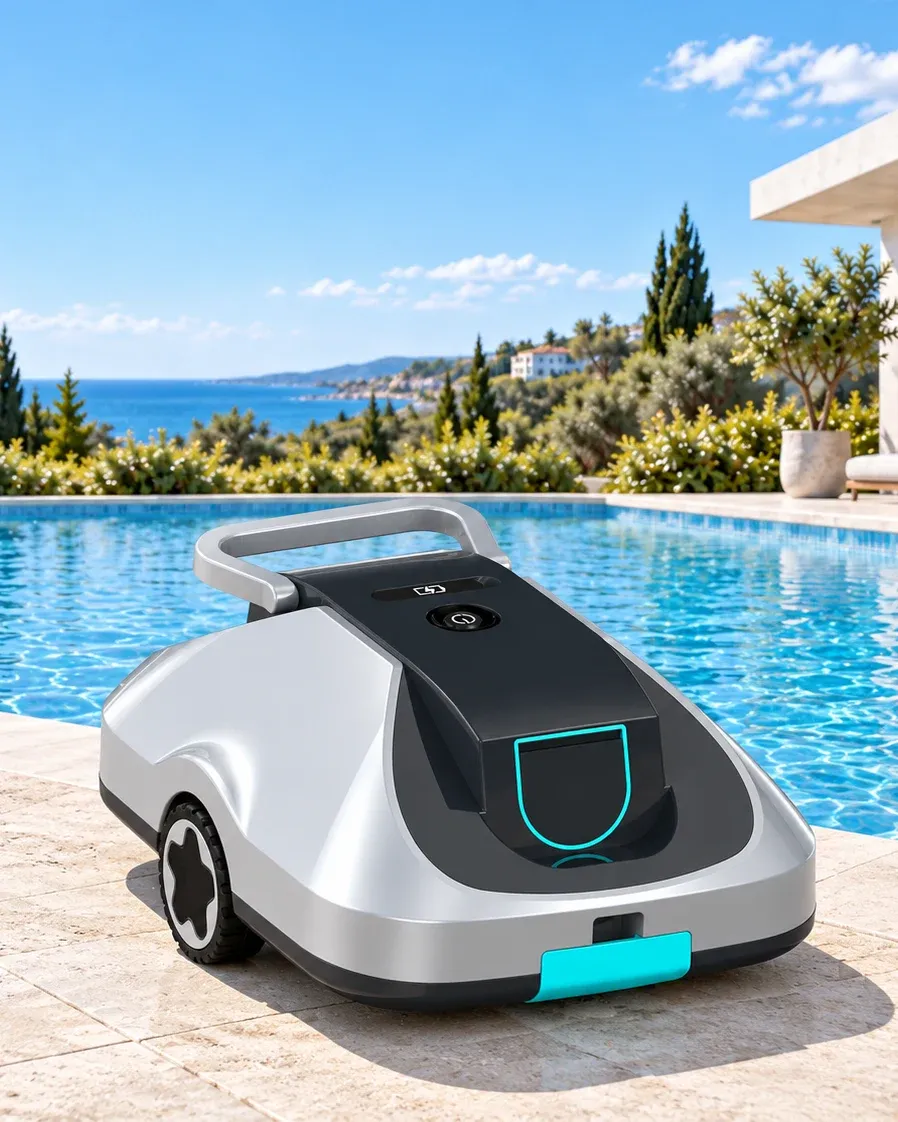
It's the size of the openings in the filter mesh, measured in microns, and a micron is a thousandth of a millimeter. Anything bigger than the openings stays in the basket. Anything smaller can pass through, unless it gets caught in the debris already sitting on the mesh. Most of our range is rated at 180 µm: all six floor-only robots, the wall-climbing Y50S and both solar skimmers. The H100 handheld lists ≤180 µm.
At that size, most pool sand and grit stays in the basket. Very fine sand, silt and most pollen grains are smaller than the openings, so a single 180 µm mesh lets part of them through. One thing surprises people: a basket that's been running for a while catches finer dirt than a clean one, because the layer of debris on the mesh works as a second filter. The same layer is why suction drops as the basket fills.
Why does it leave fine sand behind?
We'd check in this order. The basket first: if it's full or the mesh is coated, flow drops and the robot drives over sand without lifting it, so rinse it and run again. Then the fit. A basket that isn't seated properly lets water, and the sand in it, go around the mesh, so look for sand trails along the edges where the basket sits. Only then look at the rating. If the sand left behind is finer than the mesh, the robot is doing what it was designed to do, and the answer is a finer filter or a model with a second stage.
Is a finer filter always better?
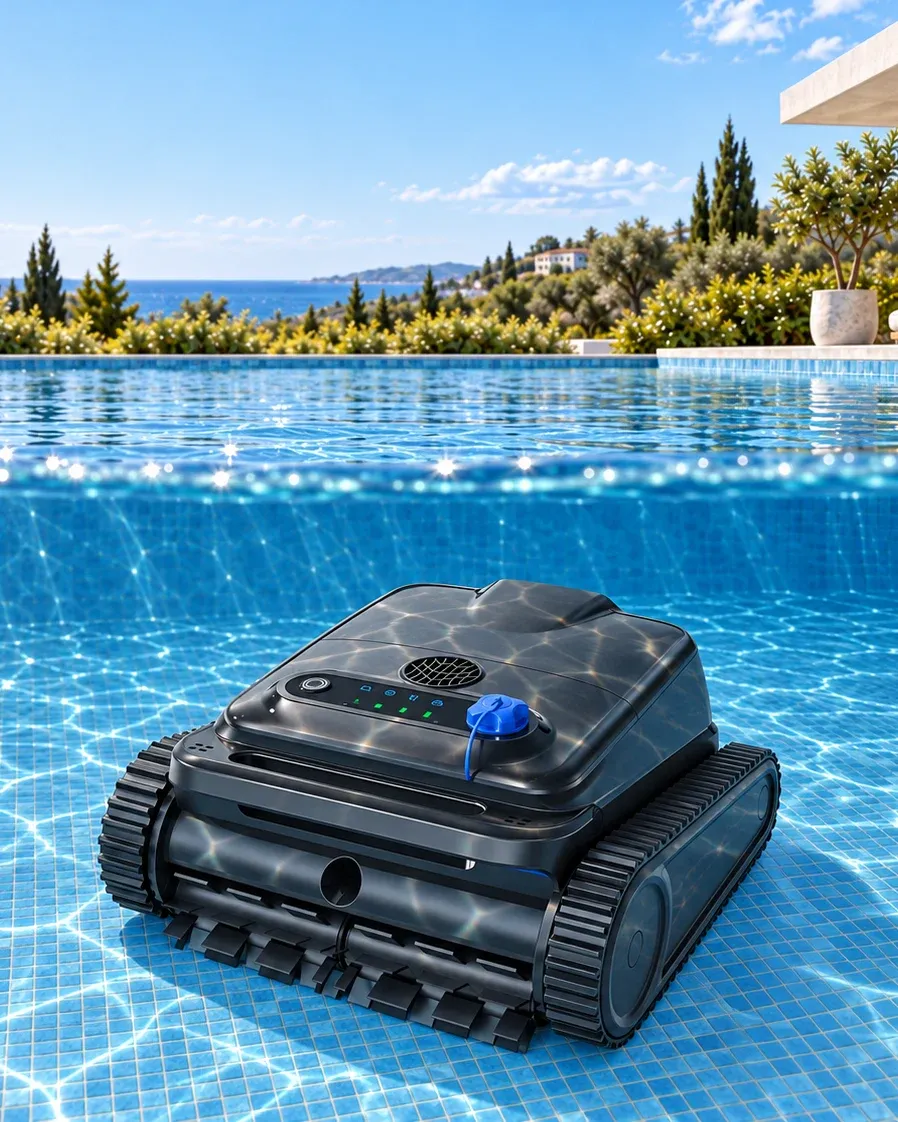
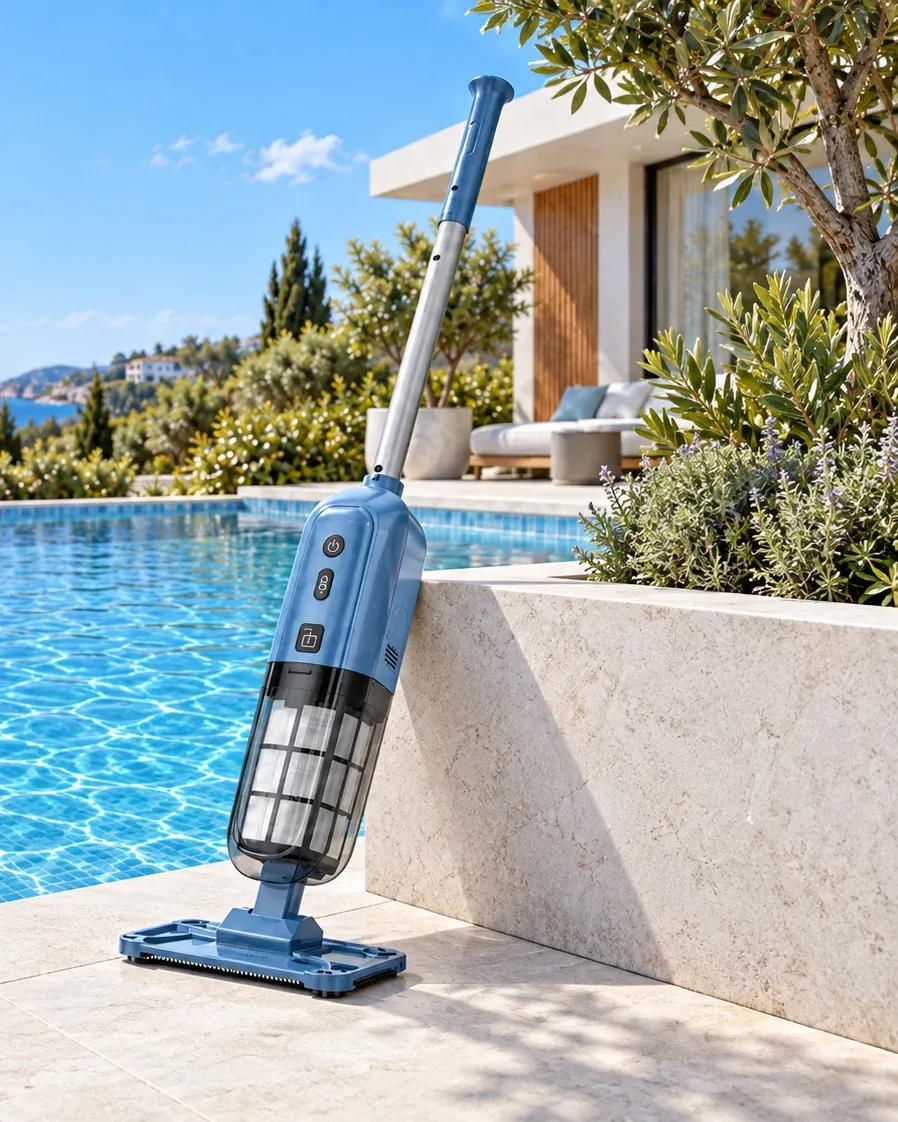
No, and this is the trade-off buyers tend to miss. A finer mesh catches more and clogs sooner, especially in pools where leaves and sand arrive together. When it clogs, flow drops, the robot picks up less, and a wall-climbing model may struggle to hold the wall. That's why our finer options come in two stages. The Y50 pairs a 180 µm basket with a 10 µm fine filter, and the H200 handheld uses 120 µm + 5 µm filtration, which we position for fine silt. In a two-stage filter, the coarse layer holds the bulk, so the fine layer lasts longer before it needs rinsing.
Will it pick up pollen?
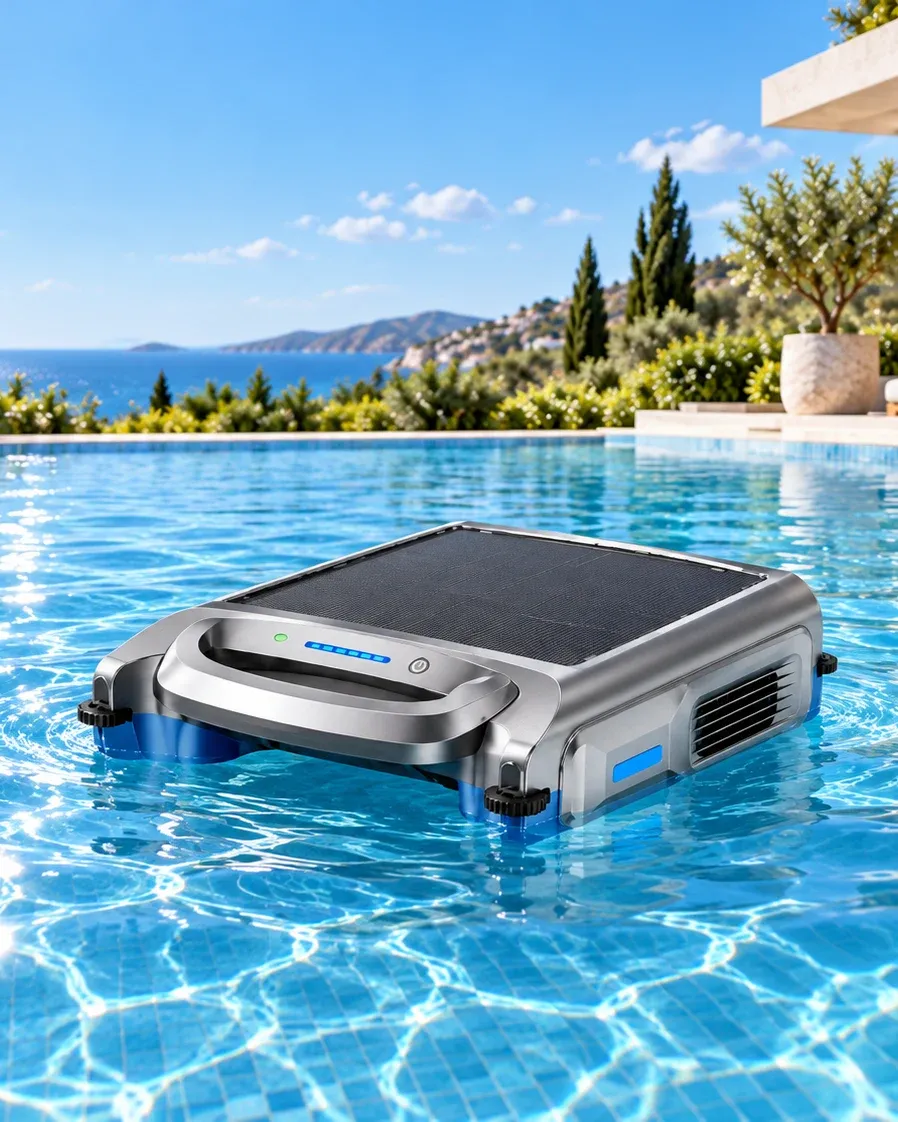
Partly, and it's better to say so in the listing than to find out from reviews. Pollen floats first, often as a yellow film, and some of it sinks later. A 180 µm robot basket holds clumps and whatever gets trapped in the debris layer, and lets most single grains through. A skimmer gets to pollen before it sinks, but our S100 and Y90 Pro also use 180 µm baskets, so the same limit applies. The pool's own circulation filter is designed for particles this fine, and a robot or skimmer takes load off it. In pollen-heavy markets, a model with a fine stage, the Y50 for the whole pool or the H200 for spot work, gives you something honest to say.
What should we stock for sandy markets?
Spare filters. Sandy pools mean more rinsing, and meshes wear with it; a torn mesh lets everything through. Filters can be ordered separately, along with brushes, tracks, chargers and batteries, so put spares in the first order rather than waiting for the first complaint. Basket size matters here too. Most of our floor-only robots carry 3 L baskets, the C3 1.5 L, and the Y50S and Y50 4 L. A bigger basket takes longer to clog.
When you test a sample, use the dirt your customers actually get, such as the fine sand that blows into local pools, rather than coarse play sand from a bag. After a cycle, check the water for haze, the basket for what it kept, and the edges where the basket sits for anything that slipped past.
FAQ
Do all your robots use a 180 µm filter?
The floor-only robots, the Y50S and both skimmers use 180 µm. The Y50 adds a 10 µm fine filter, and the H200 handheld uses 120 µm + 5 µm.
Can owners buy replacement filters?
Yes. Filters, brushes, tracks, chargers and batteries can all be ordered separately.
Selling into a sandy or pollen-heavy market? Tell us what your customers find in their pools in the form below, and we'll suggest models by filter and basket size, with spare filters for the first order. Our team will reply by email within 1 business day.
Written by the Silver Home R&D and quality team.