Oct 27, 2026Sortimentsplanung
Automatisches Parken bringt den Roboter nur in Reichweite
Sechs unserer Bodenroboter bieten automatisches Parken – in fünf Formulierungen. Was die Tasten- und Hakentests des Y50S abdecken, was fehlt und wie Sie das Parken prüfen.
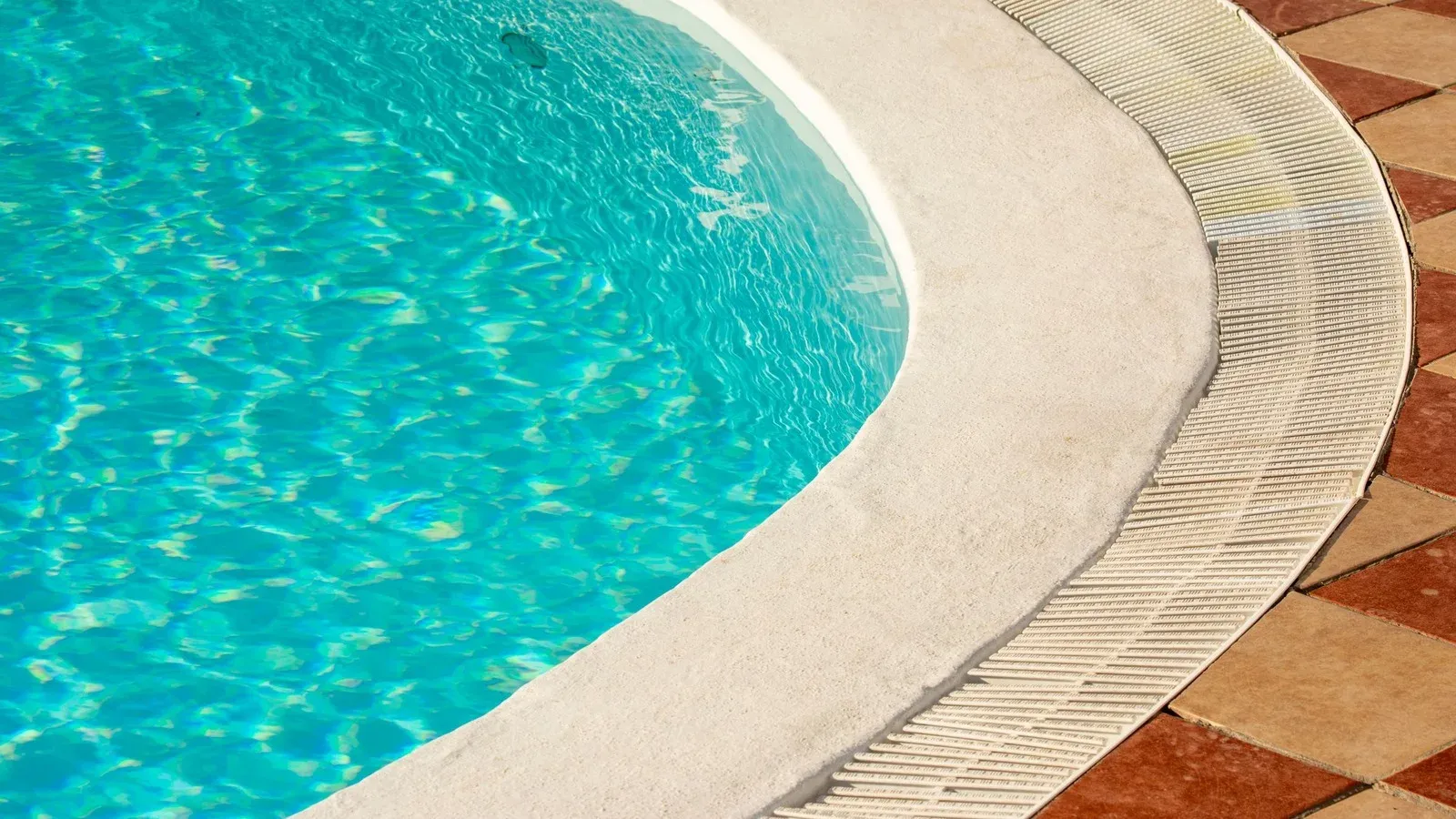
Six of our floor-only robots list auto-parking on their product pages, and the pages word it five different ways. Whatever the wording, parking brings the robot within reach of a pool pole and nothing more, so that's all the box should promise.
What we tested on the Y50S
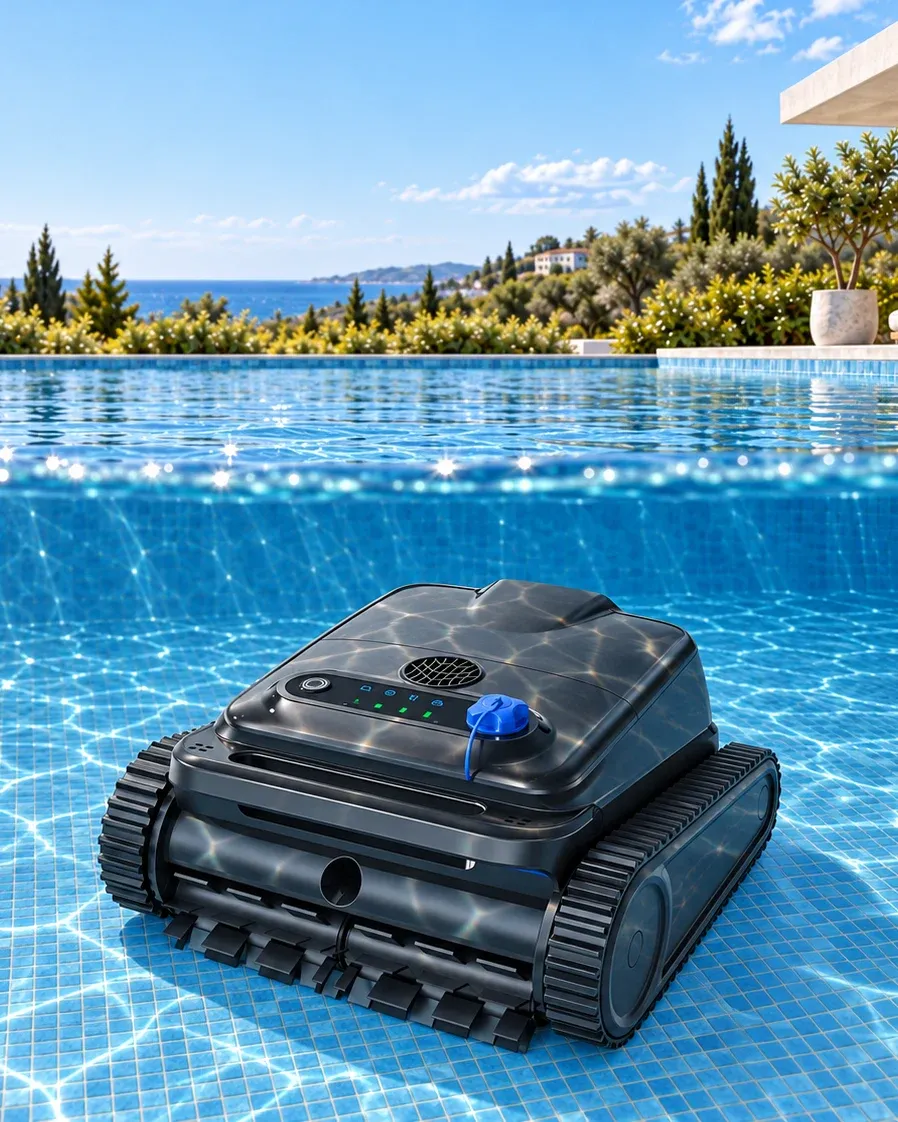
Retrieval has two parts a lab can test: the power button and the hook. In the Y50S validation (QM test 24089, Nov 2024 – Jan 2025), the power button was pressed 1,000 times and needs at least 15 N to press. The retrieval hook carried 3 times the robot's weight and was shaken for a minute. That margin matters because a robot leaving the pool still holds water in its shell and filter basket, so the hook carries more than the robot's dry weight.
The button force has a job. A firm button keeps a robot from switching itself on in its box or a storage bag and running the battery down before its next cleaning cycle. The Y10 and Y20 need a long press to start, which guards against the same thing.
Both Y50S tests passed. Neither one says anything about parking.
What that report doesn't cover
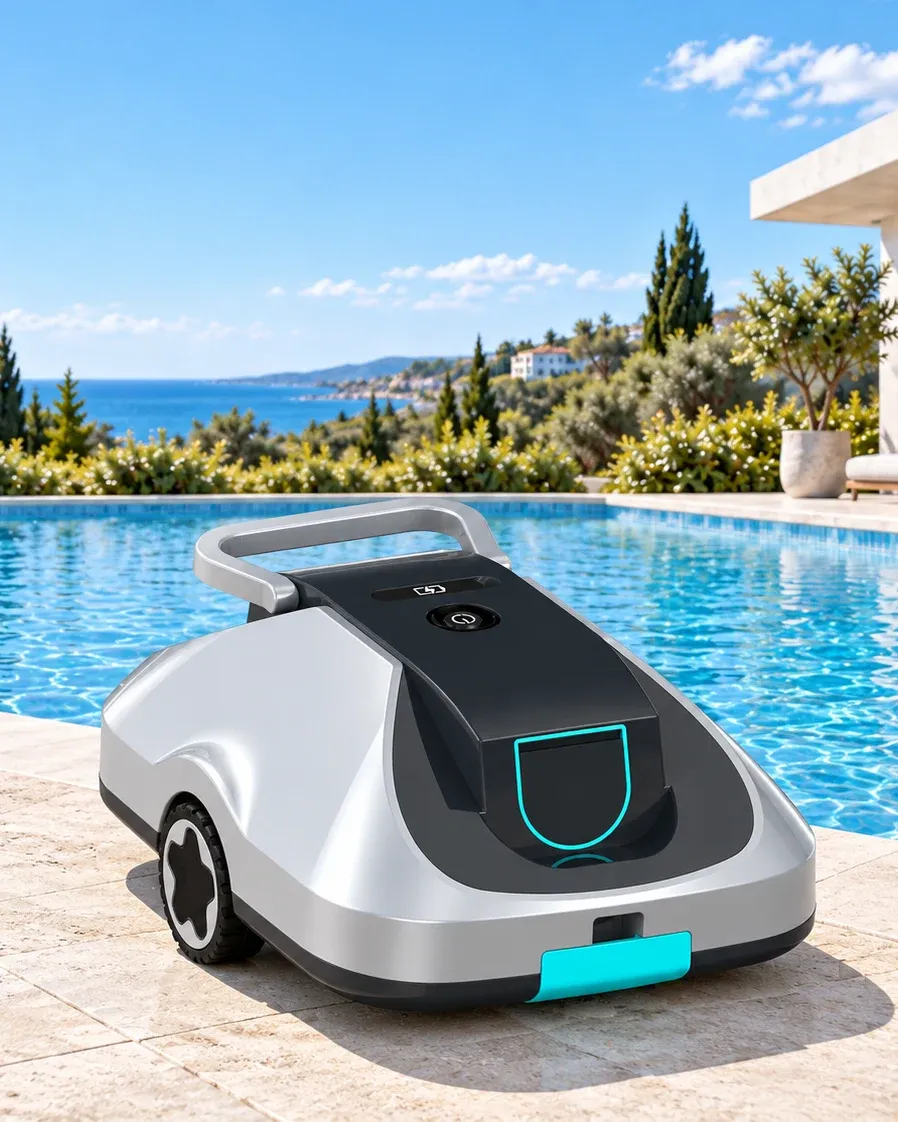
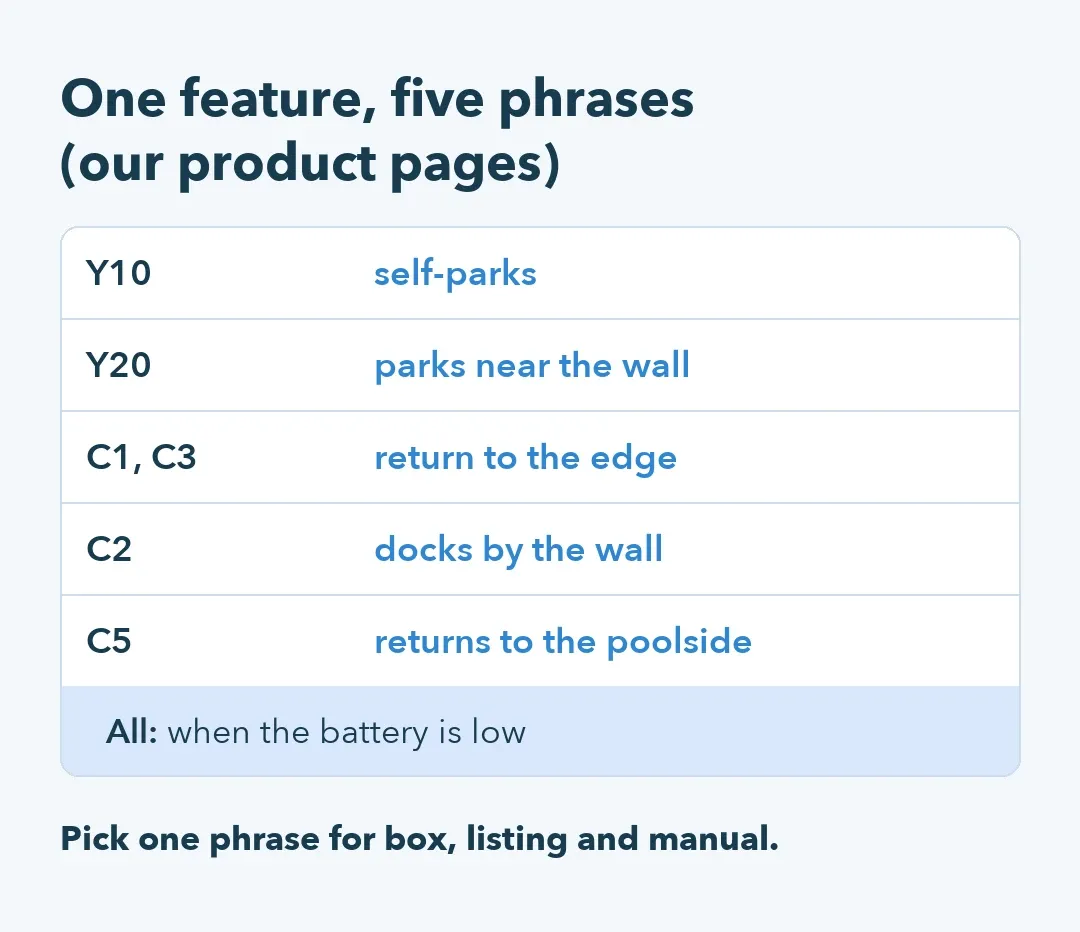
Parking itself. The Y50S product page doesn't list auto-parking, and the floor-only models that do weren't part of this report. Their parking behavior comes from their product pages: the Y20 parks near the wall after up to 135 minutes of cleaning, the C2 docks by the wall after up to 210 minutes, the C1 and C3 return to the edge, the C5 returns to the poolside and the Y10 self-parks.
Five phrases, six pool robots, one behavior. Pick one for your range and print it on the box, the listing and the manual.
Why did it stop in the middle of the pool?
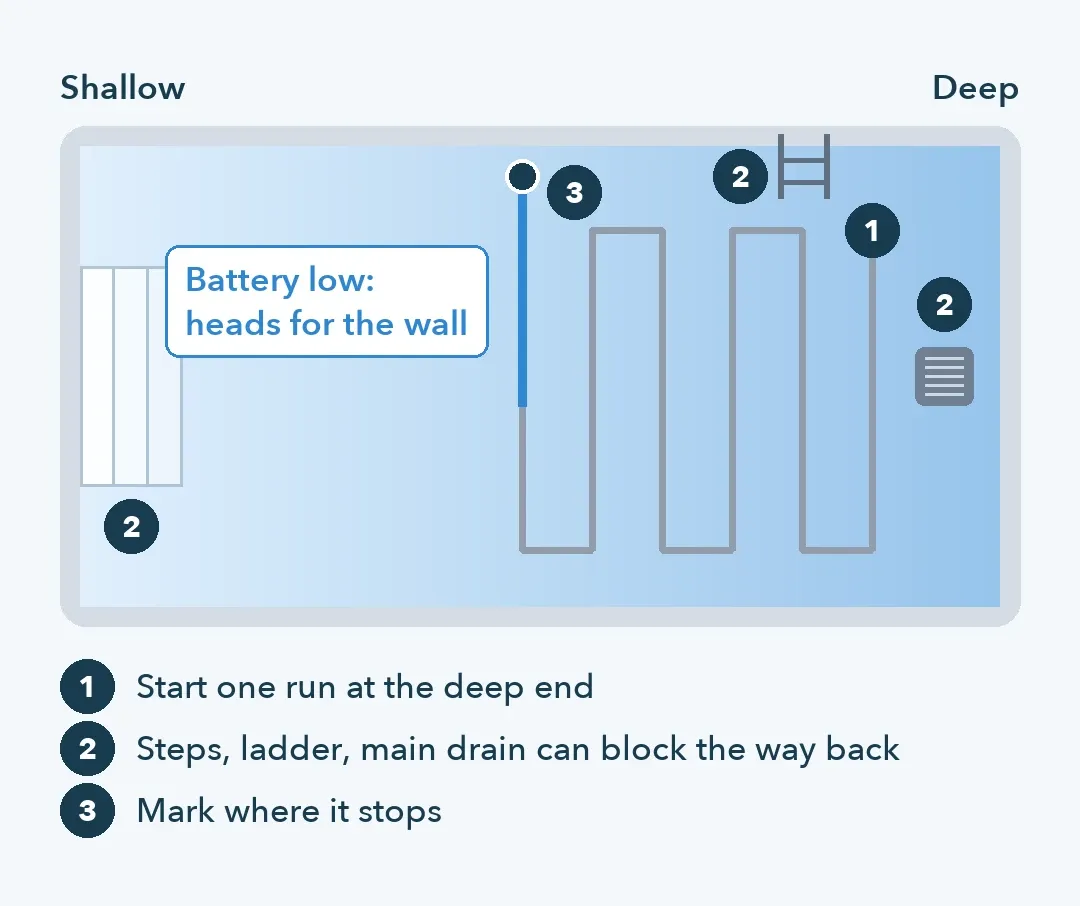
Owners write this when the robot parked somewhere they didn't expect, or never parked at all. Parking kicks in at a low battery level, and the robot needs enough charge left to reach the wall. Three situations are worth reproducing on a sample: it went in on a part charge, it was lifted out and dropped back in mid-cycle, or steps, a ladder or the main drain cover blocked its way back.
How to test parking and lifting on a sample
Samples can be tested in your own market before packaging, documents and the order are confirmed, so use a customer's real pool. Start one run at the deep end, where the trip back is longest, and one on a part charge. Lift the robot out mid-cycle and drop it back. Mark where it stops each time, then ask the supplier at what battery level parking begins.
Then lift it out with a full filter basket and watch the water under it as it clears the surface. A cloud of sand means debris is washing back out. Time how long it keeps streaming water: the C2's page says it empties in seconds, and the sample should match the page.
What should the listing promise?
Exactly what parking does: the robot makes for the wall or the edge once its battery runs low, and the owner lifts it out with a pole hook. Add one line to the quick-start card, such as: when the cycle ends, hook the robot, lift it and let it drain before you carry it. An owner who expects the robot at the pool wall won't report a stop at the wall as a fault.
Comparing parking between models? Ask for a sample of each floor-only model on your shortlist and run these checks in a customer's pool before you write the listing.
Written by the Silver Home R&D and quality team.