Oct 27, 2026Einkaufsratgeber
Poolroboter mit Eigenmarke: Was lässt sich ändern?
Logo, Gehäusefarbe, Verkaufsverpackung und Anleitung: vier Eigenmarkenanpassungen, Ihre nötigen Freigaben und der Übergang zu ODM.
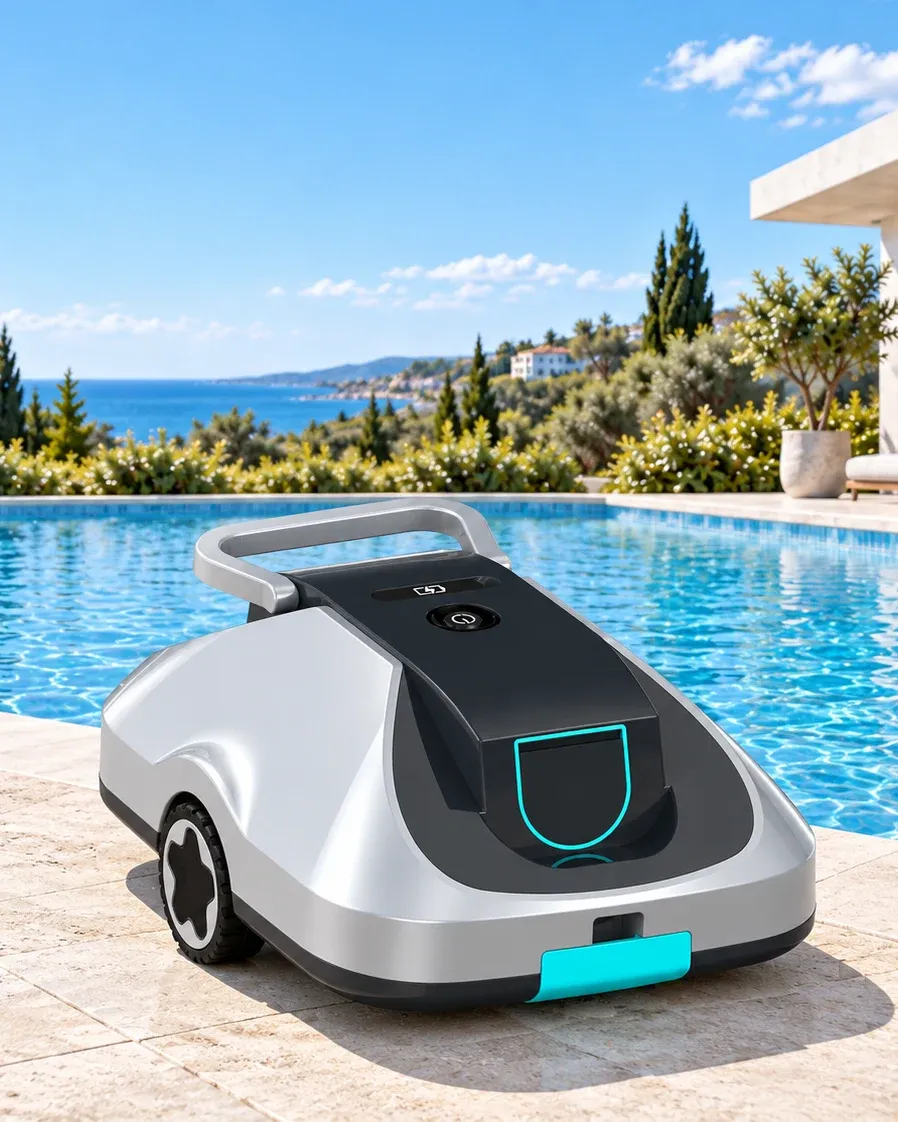
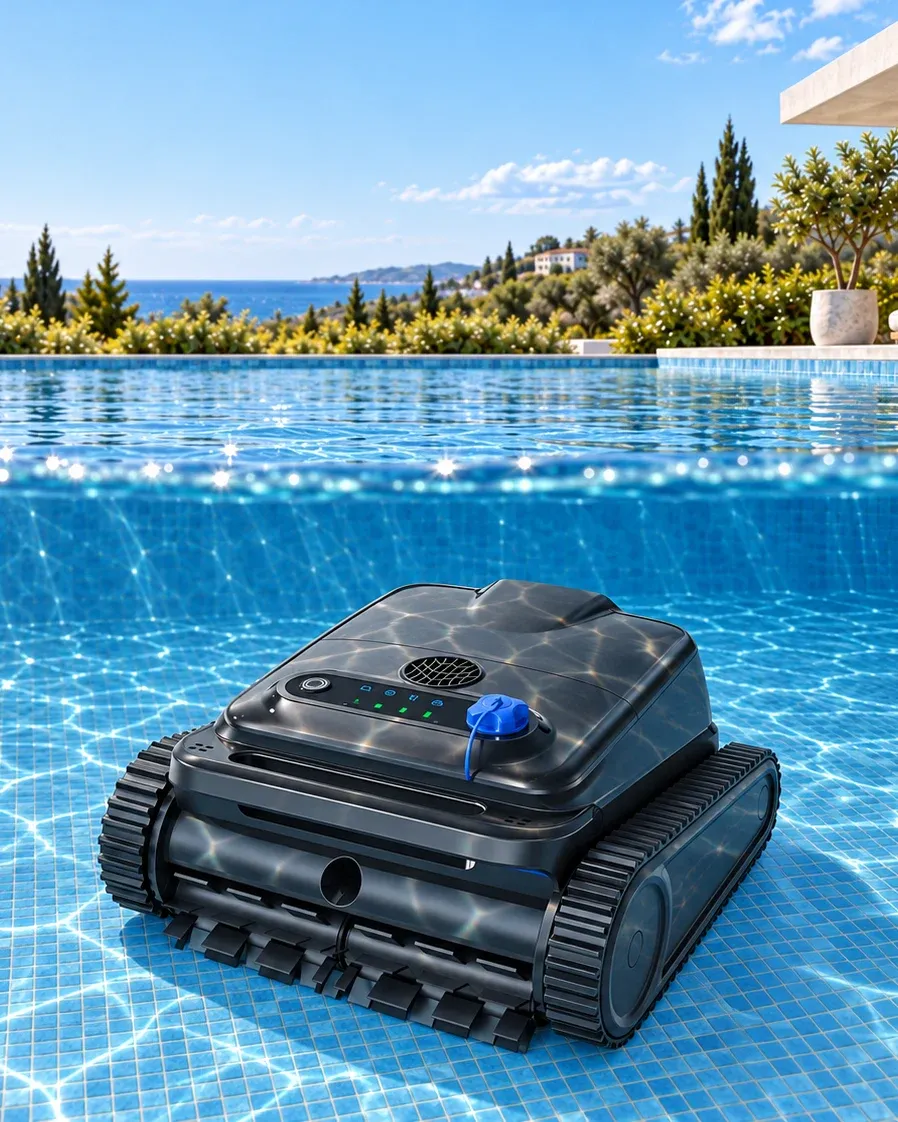
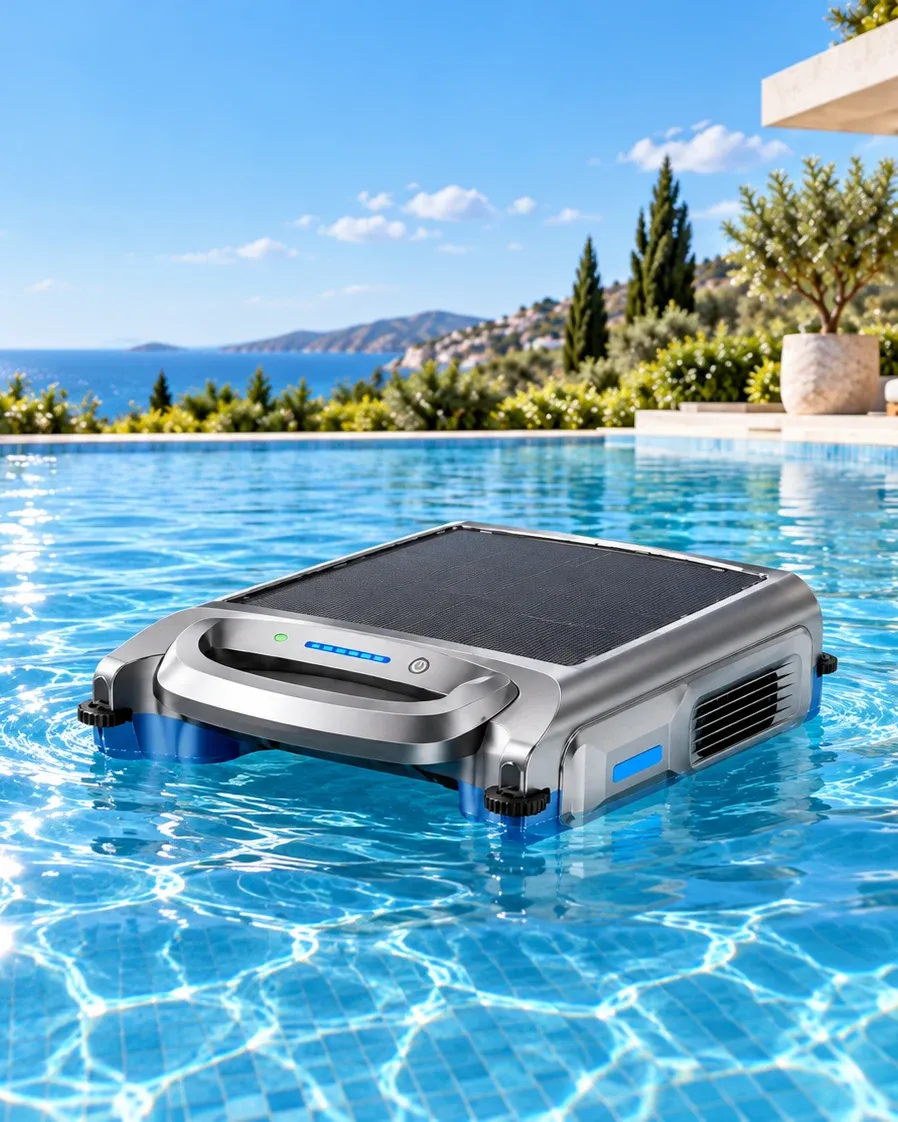
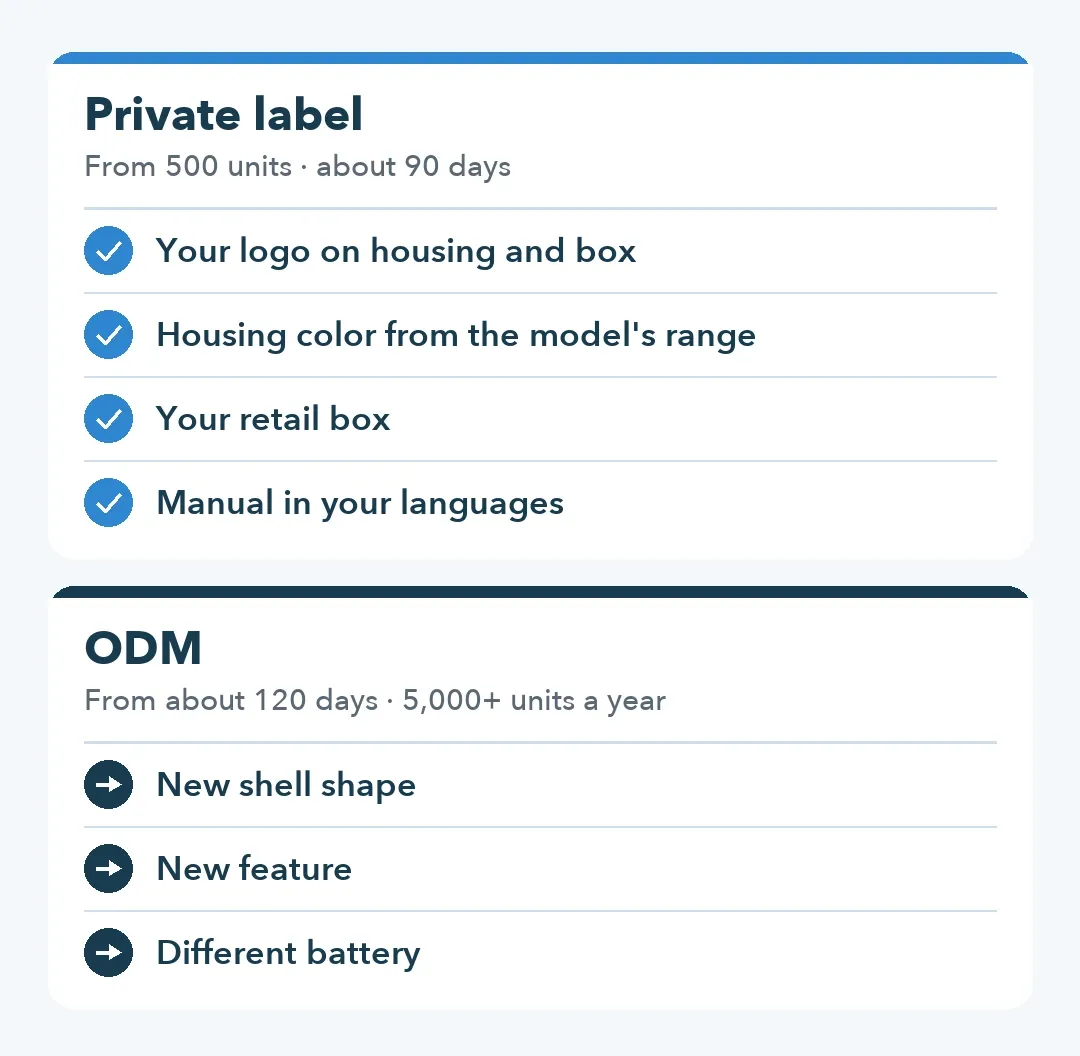
Four things change on a private-label pool robot: your logo, one of that model's housing colors, the retail box and the manual. Keep your first order to those four, because a request that touches the robot itself becomes an ODM project that starts at about 120 days.
The private-label minimum is 500–2,000 units, set per model. Three sign-offs on your side set the calendar: box artwork, color sample, manual.
1. Logo: approve a proof on the real shell
Send the logo as a vector file with your color codes. A robot's top shell is curved and broken up by seams, so a logo can't sit anywhere at any size. You approve a proof that shows the exact position and size on that model's housing before anything is printed. Hold the proof against a physical sample as well: a flat drawing hides the curve, and a logo that looked centered on paper can end up riding over a seam.
2. Housing color: sign a physical sample
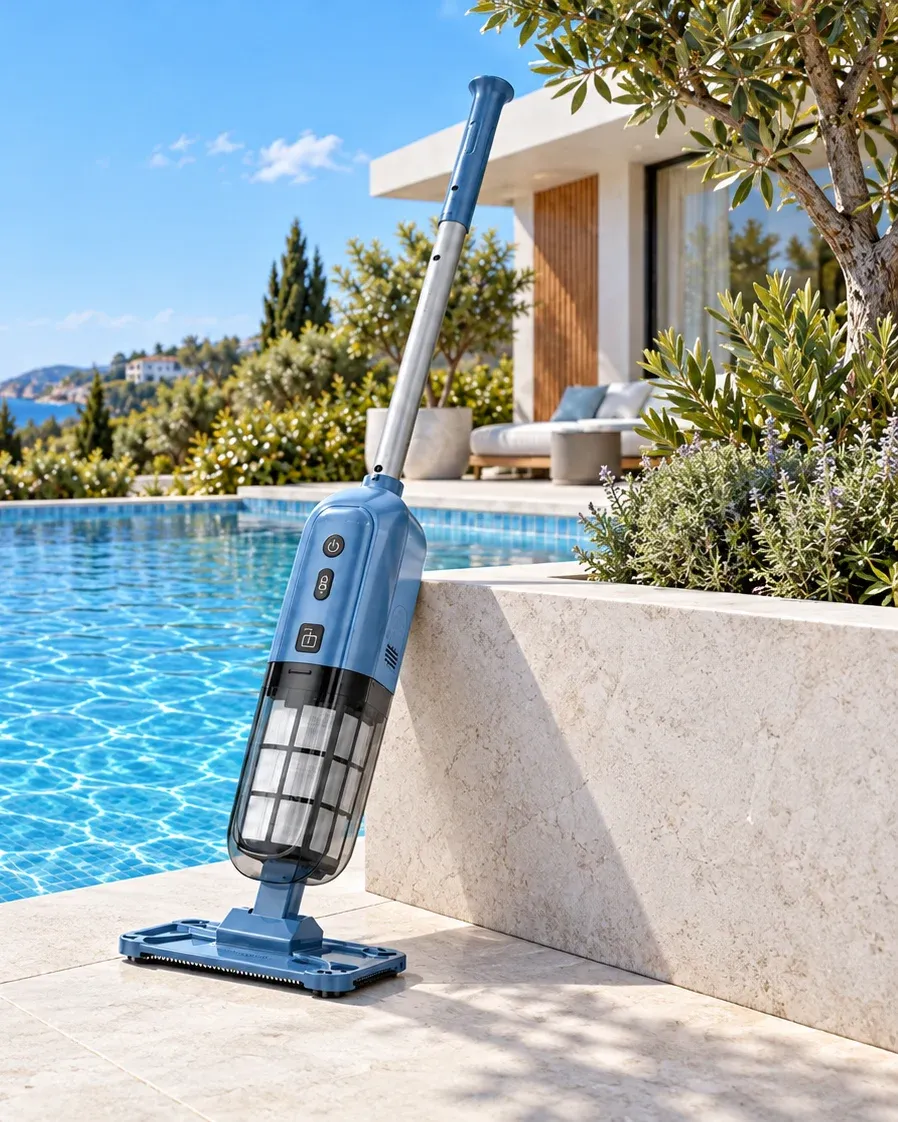
You choose from the colors the model is already made in; the H100 handheld vacuum, for example, comes in three. A color outside a model's range is a separate conversation, so don't build a launch plan around one until we've confirmed it in writing.
The sample you sign becomes the production reference. At final inspection, our inspectors hold each housing up to that signed sample and check that part gaps and steps stay under 0.3 mm.
A color code in an email looks different on every screen. A molded housing sample on the inspection bench doesn't.
3. Retail box: your barcode, your address
The box carries your artwork and barcode, plus the name and address of whoever places the pool robot on the market. In the EU, the General Product Safety Regulation (GPSR) asks for the manufacturer's and the importer's contact details on the product, its packaging or an accompanying document, and a business that sells the robot under its own name counts as the manufacturer. Put those lines in the first artwork draft. Adding them after approval reopens the approval.
Fix the box size early too: a bigger box changes how many robots fit in an export carton and in a 40HQ.
4. Manual: your language, your support line
Manual language is a standard option. If the language is new for that model, have a native speaker who knows pools read the draft before you approve it; terms like filter basket, waterline mode and low-battery parking are easy to get wrong. Then put your own support email in it. Under private label, owners contact your brand, so the manual should also give the first check your team wants them to try before asking for a return, such as rinsing the filter basket.
Can we change the robot itself?
Not under private label. What's inside the shell, and the shell itself, stays as tested. A new shape or a different battery is ODM, which runs from about 120 days and is usually planned as a yearly program of 5,000+ units.
If you can't say yet whether your customers want a Y10 or a C1, don't put your logo on either. Run a neutral-stock trial first and brand the winner.
The approval pack to send with your brief
All of it can travel in your first email: the vector logo, barcodes, the importer's name and address, a color from the model's range, the manual languages and the name of whoever will proofread the manual. Expect about 90 days for the first program and 30–45 days for each repeat. Most of that gap is the approvals, and by your second order they're already signed.
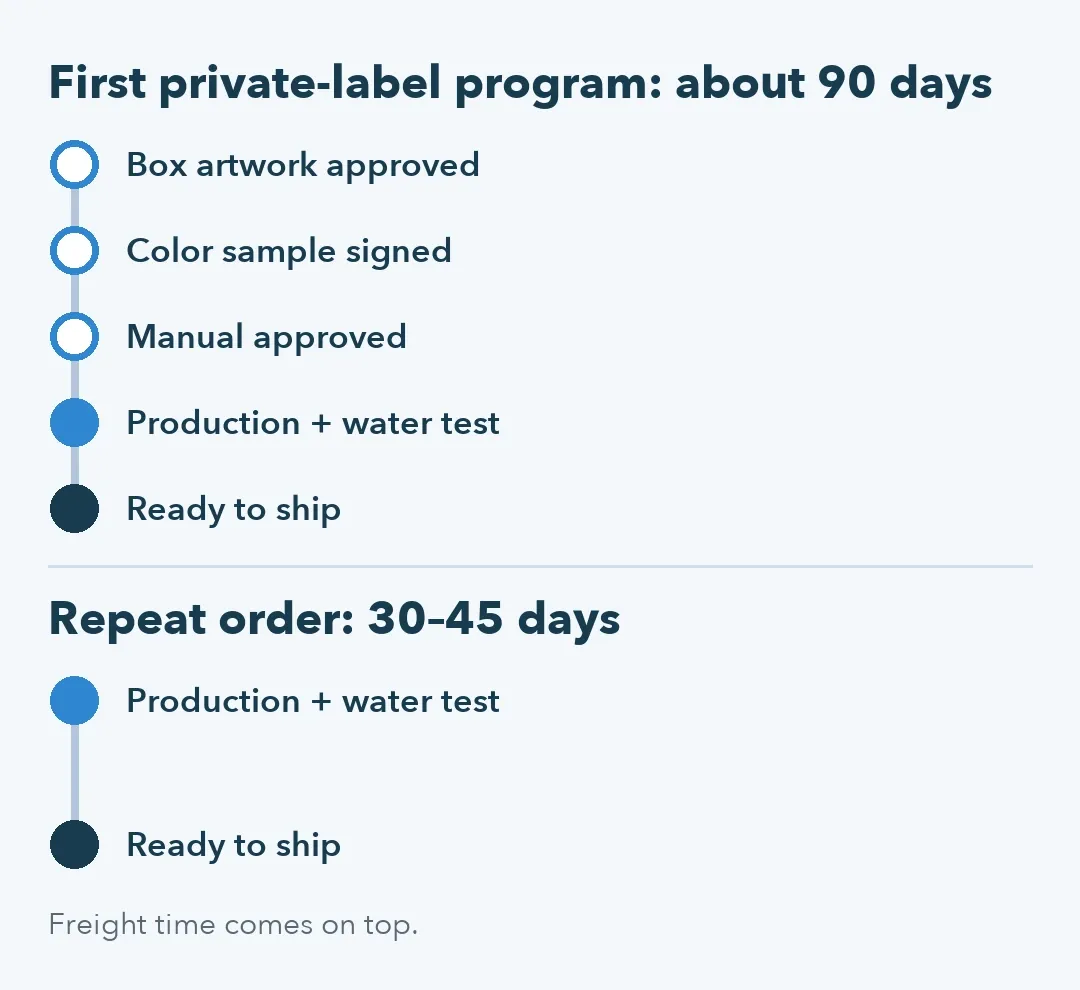
On repeat orders, any change to the box artwork restarts that approval. Save changes up and make them once a pool season.
Ask for the private-label checklist for the model you're considering. It lists that model's housing colors and every file we need for your artwork.
Written by the Silver Home R&D and quality team.