Oct 27, 2026Guía de compra
Costo de importación: qué se suma después del precio FOB
Por qué el robot con el FOB más bajo puede salir más caro: flete, cargos por retiro de productos, lanzamiento, inventario y diferencia de garantía, calculados por modelo.

Line up a floor-only robot packed three to a carton against a Y50S packed one to a carton, and the FOB price stops being the number that decides. Compare pool robots on landed cost per unit, because the cheapest FOB model can end up costing the most once carton count, season timing and the warranty gap are in the sum.
Under the ICC's Incoterms rules, FOB covers the pool robot until it's loaded on board at the Chinese port. Everything after that is in the line below.
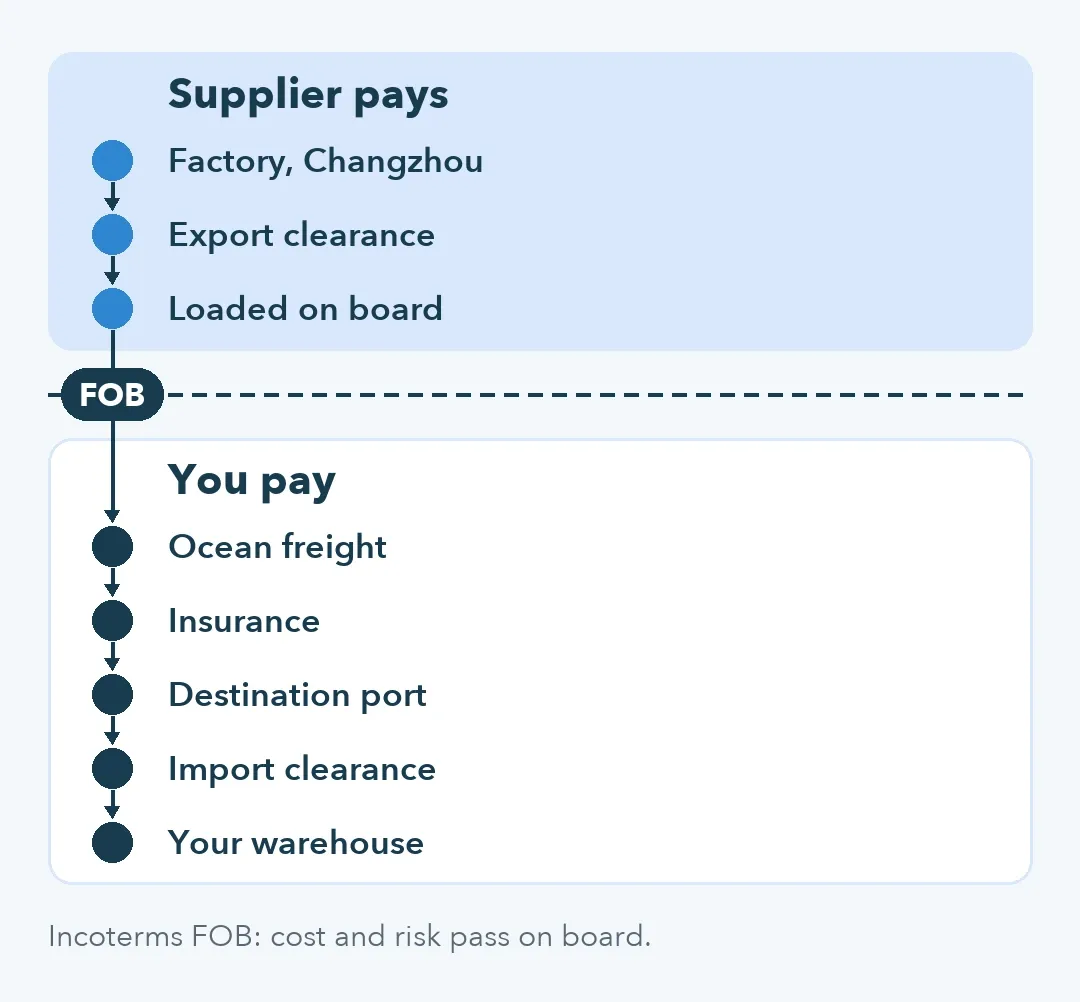
The sum, one line per model
Landed cost per pool robot = FOB + F ÷ n + D + T + P + O ÷ V + R + H. Every letter gets its number from someone: your forwarder, your customs broker, your own sales plan or us.
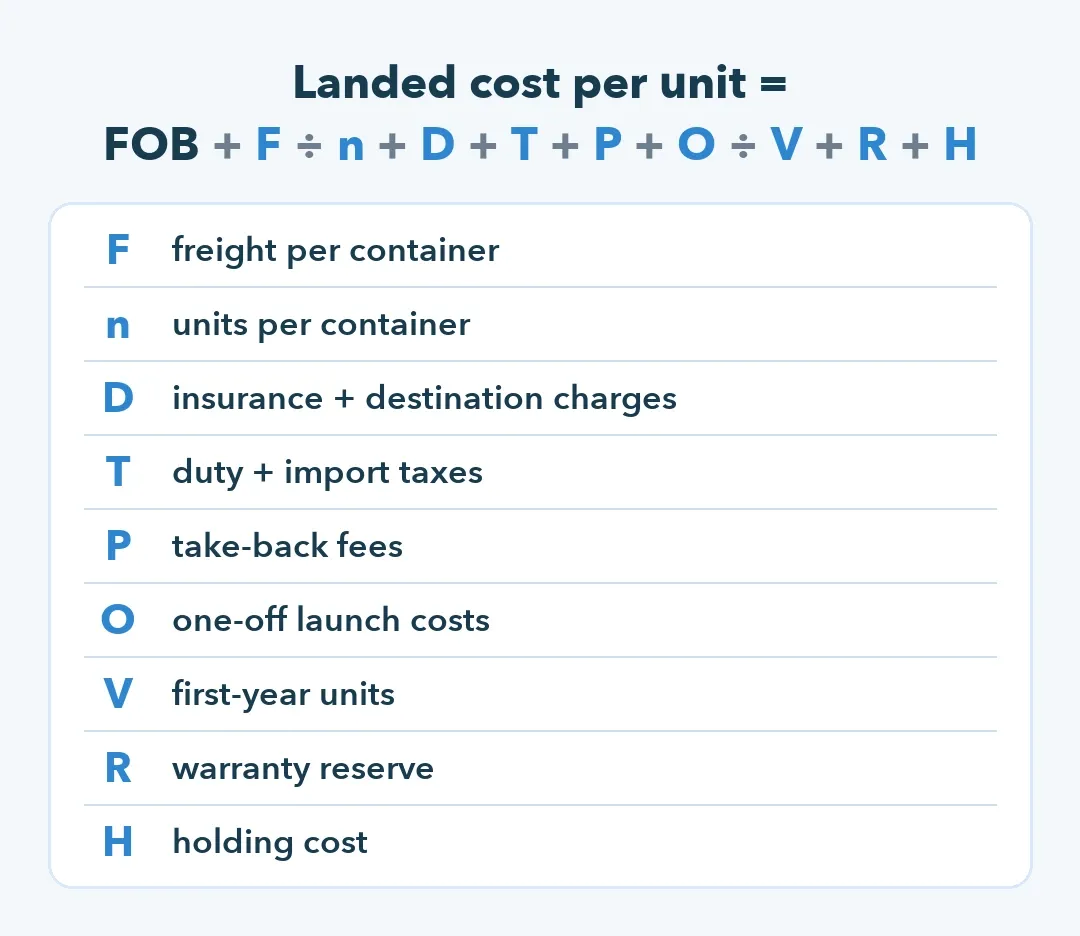
Leave out rates you don't have yet. Freight and duty move by market and month; refill them each pool season.
F ÷ n starts with the carton
n is the number of units in the container, and it starts with units per carton, which is why the opening comparison matters: one pool robot per carton against three changes F ÷ n before any freight quote arrives. Ask for each model's carton dimensions before you compare freight quotes, and confirm the container count once your packaging is final. A bigger retail box or pallets lower n, and every unit lost raises F ÷ n for the rest.
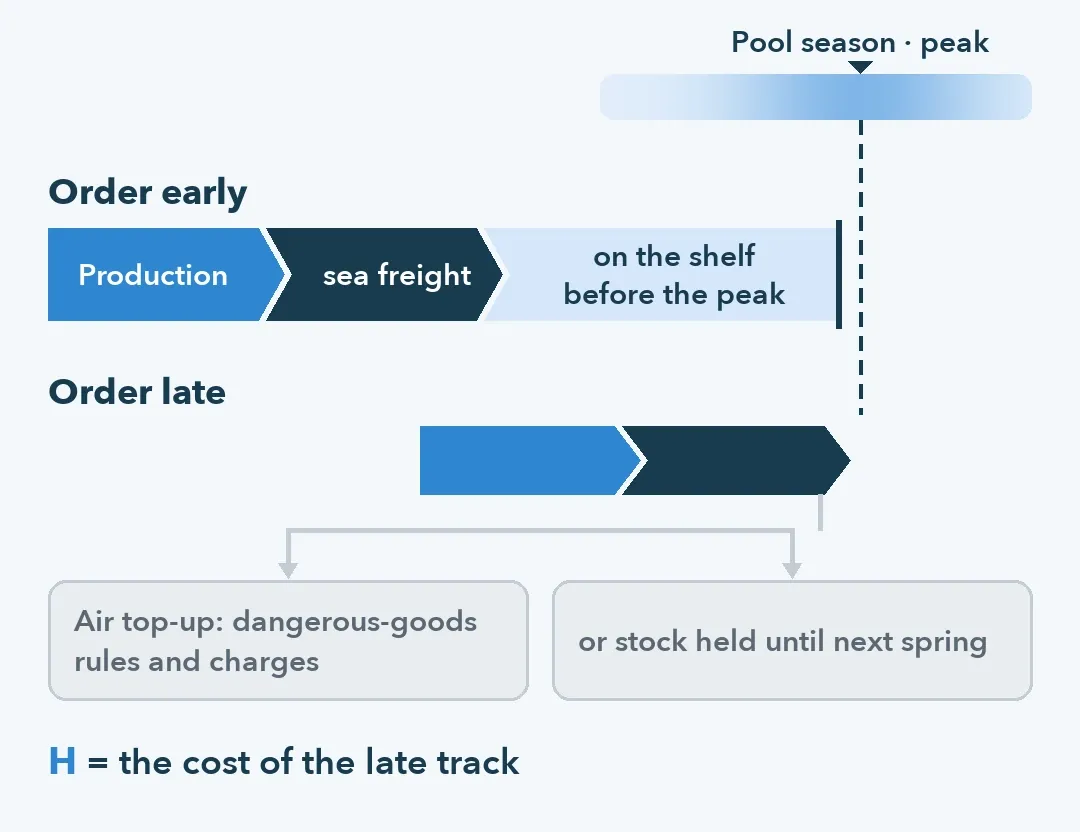
H: the cost of missing the season
Pool robots sell in a short season, and that's when air freight starts to look tempting for a top-up. Lithium-battery robots ship as dangerous goods under IATA rules, so an air shipment adds paperwork, labels and handling charges on top of a higher rate. Ordering early enough for the sea shipment to beat the peak is the cheaper fix.
Stock that misses the peak costs money too. It sits in your warehouse until next spring, and lithium batteries stored that long want a charge check before sale. That's H, for every unit you can't sell this pool season.
T and P: duty, tax and take-back fees
Your customs broker confirms the tariff classification and the duty rate in force when you order, so don't carry last season's rate forward. In the EU, the WEEE Directive and the Batteries Regulation also make the producer register with take-back schemes and pay their fees, and for an imported private-label pool robot the producer is the importer or brand placing it on the market. Spread those fees per unit and put them in P.
O ÷ V: launch costs over the first year
One-off costs sit here: packaging artwork, manual translation and proofreading, samples, and any certification testing your market requires. Spread them over V, the units you expect to sell in the first year. A pool robot you expect to sell slowly carries more of O on every unit.
R: the warranty gap is yours
Our warranty to you is 1 year on the whole unit. If you promise owners two years, the second year's claims land on you with no factory cover behind them. Size R from your own channel's claim history and the repair route you'll use, and price it in from the first order.
Each robot we build has to pass a water-tank run and a final check before packing, so a unit that leaks in the tank never reaches your claims. That check can't pay for the second year. Leave R at zero and your margin does.
Which lines you can push down
F ÷ n, by keeping the retail box compact and skipping pallets when your team can hand-unload. O ÷ V, by settling artwork once and saving changes for the next season. H, by booking production early enough for the sea shipment to beat the pool-season peak.
FOB is the line you can move least without changing the pool robot itself.
The sheet in the formula image also comes as a spreadsheet, one line per model, with our carton dimensions and units per carton for each pool robot filled in and blank cells for your forwarder's and broker's figures. Request it with your quote.
Written by the Silver Home R&D and quality team.