Oct 27, 2026Guía de compra
Pruebe el mercado con robots sin marca
Los equipos sin marca parten de 100–300 unidades y están listos en 7–14 días. Un cálculo sencillo para decidir cuándo conviene hacer una prueba antes de invertir en su marca y cuándo no.

A neutral-stock order can be as small as 100–300 units per model, and it's ready to ship in 7–14 days. If you can't yet say which model your customers will pick, that's the cheaper way to be wrong: a bad guess leaves fewer robots on your shelf, and none of them carry your logo.
The sum behind a trial order
Write the risk as one line: unsold exposure = (Q − S) × L. Q is the number of units you order, S the number you sell before the pool season ends, and L your landed cost per unit.
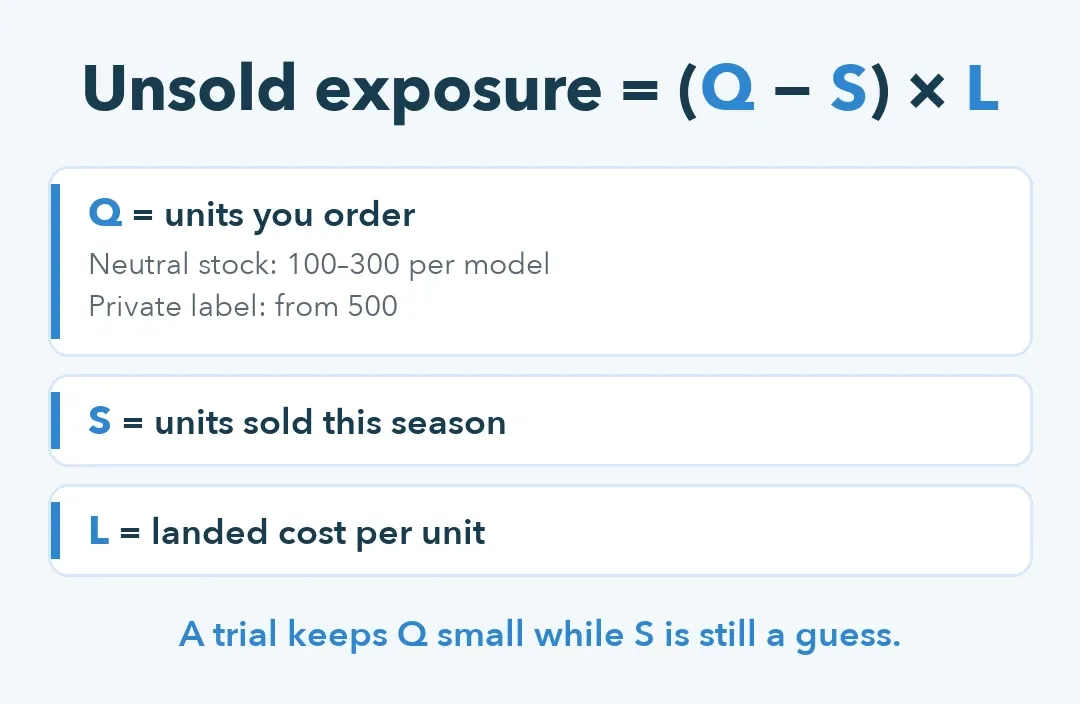
A trial moves Q. Neutral stock lets Q start at 100–300 depending on the model, while a private-label run starts at 500–2,000. Every unit between S and Q waits in your warehouse for next season, and branded units are harder to pass to another reseller because they carry your name.
A trial firms up S before Q reaches 500.
Neutral units are the same models from the same Changzhou factory, in a plain box. Each one is run in a water tank and given a final inspection before it's boxed, so the robot you trial is the robot you'd later brand.
Time is the second cost
A first private-label program needs about 90 days to reach the shipping dock; neutral stock needs 7–14. Pool robots sell in a season, so the same order date can put neutral stock on your shelf before the peak and a first branded run after it. Robots that miss the peak wait in storage for next spring, with a battery top-up check before they go out.
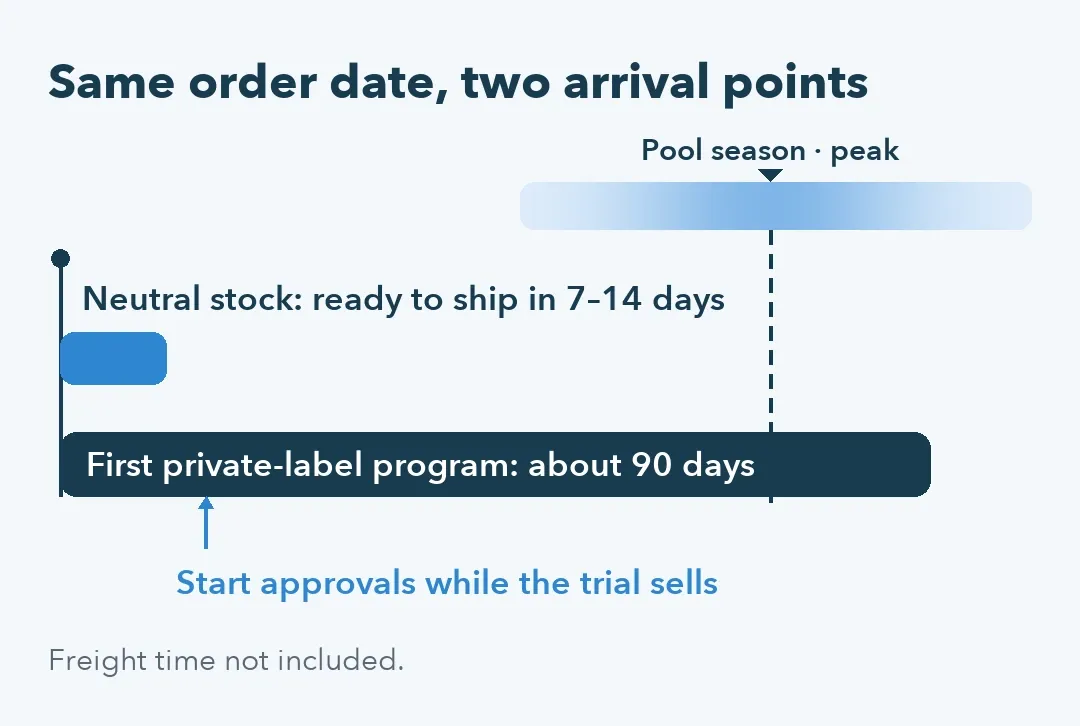
You don't have to pick one route. Start the private-label approvals for your front-runner, say the C1, while the trial is still selling. Box artwork, color sample and manual take most of a first program's time, and none of them needs the trial to finish.
Trial two models, and log every unit
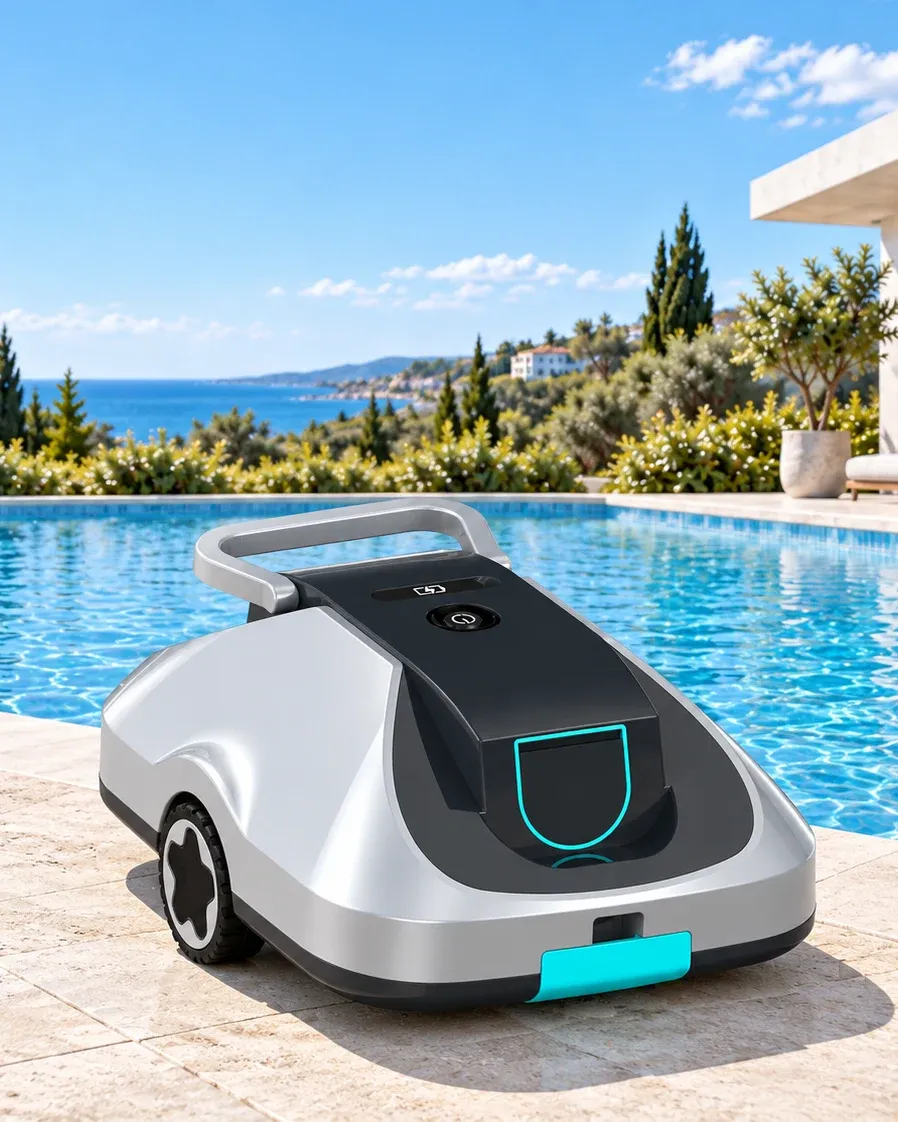
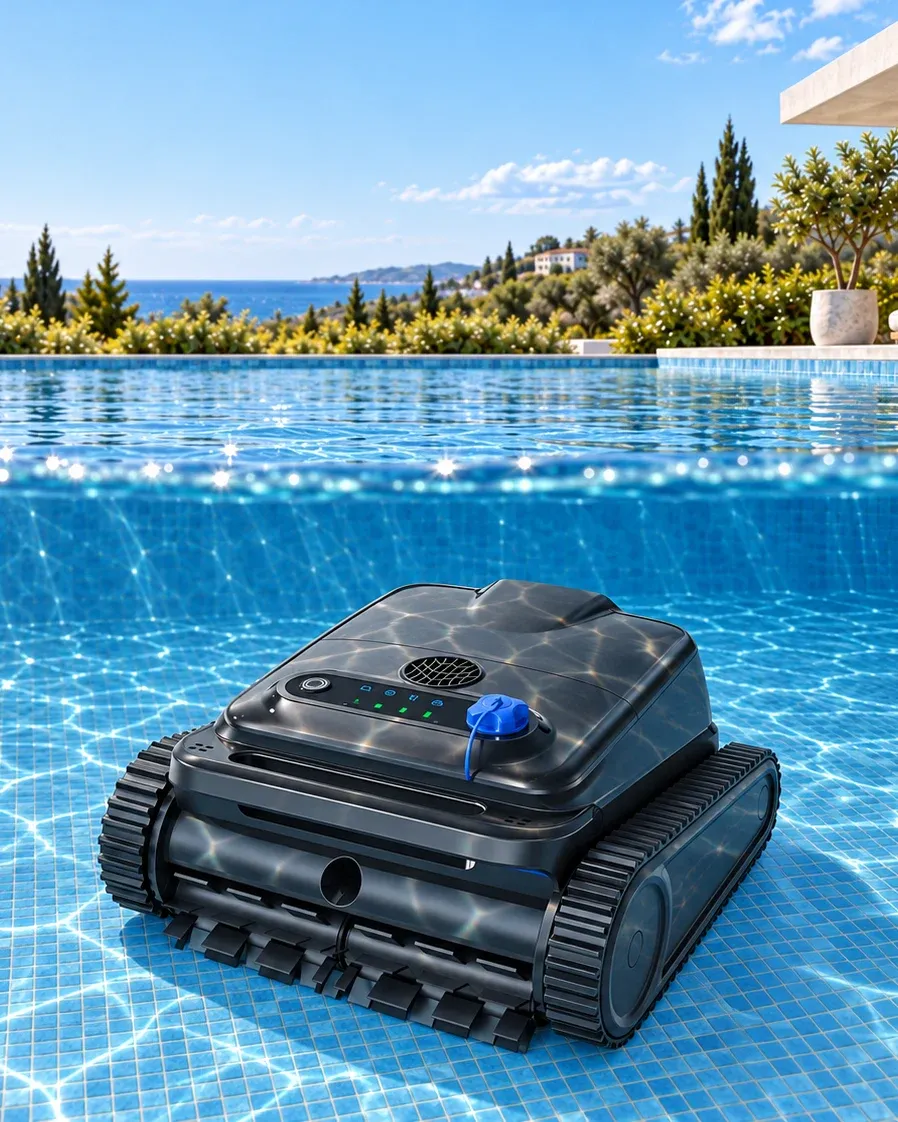
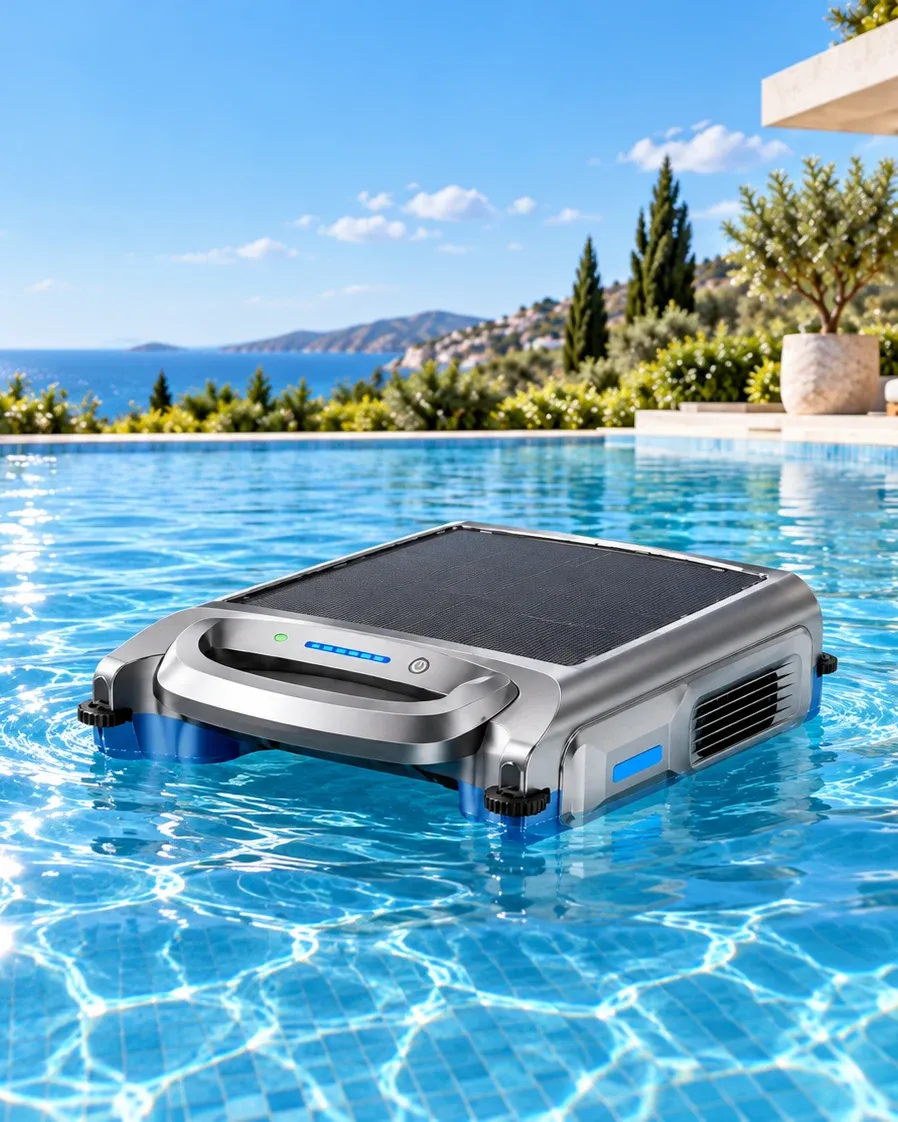
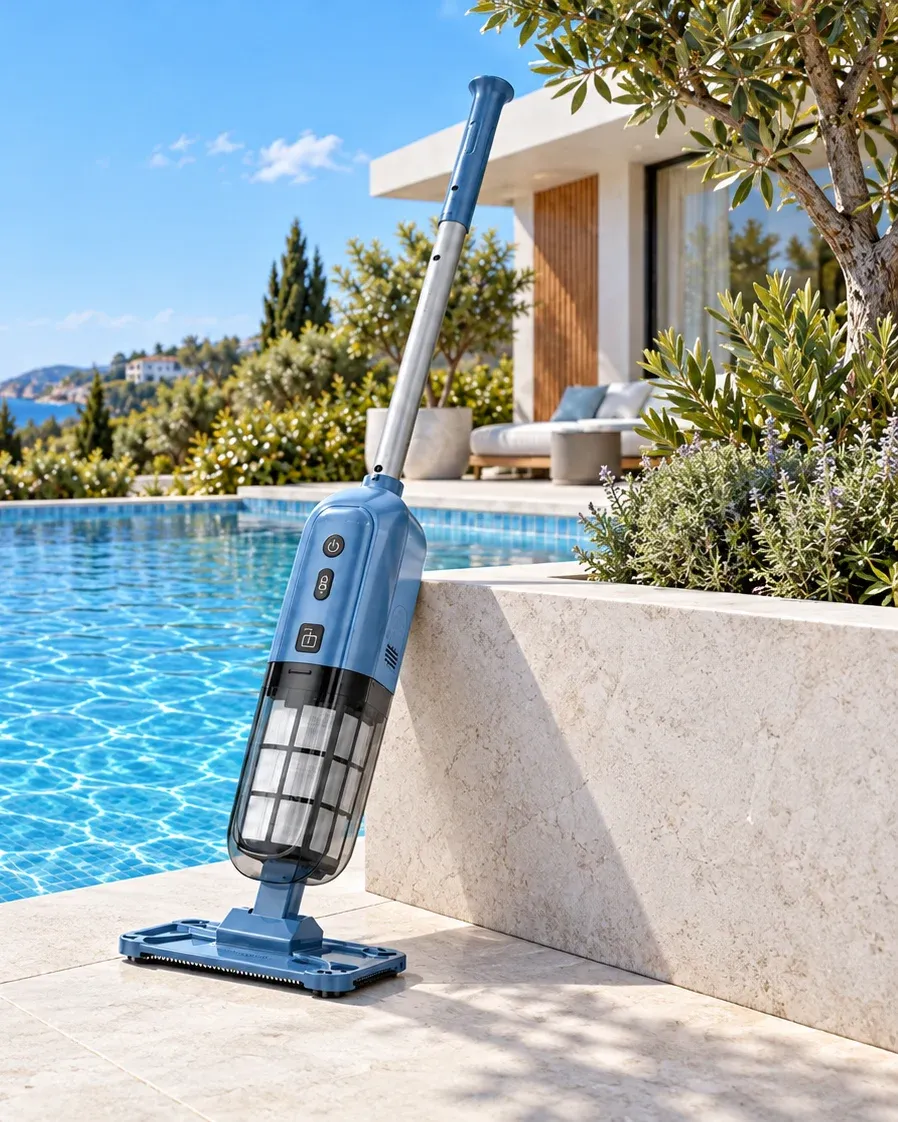
A Y10 next to a C1, each close to its minimum, tells you more than one model selling alone. Customers choosing between them show you which one wins and why.
Sales give you S. Support messages tell you whether S will hold once your brand is on the box. For every unit sold, log the pool size in m², whether the owner expected the walls cleaned, the questions asked before buying and every message after.
Tag each support message with one of the problems pool owners post in public reviews of cordless robots: won't charge, stuck on steps or a raised main drain, fine sand getting past the filter, runtime that ends before the pool is clean. Anything else goes under 'other'.
Then read the tags against the specs. A runtime complaint about a Y10 (120 minutes, rated to 100 m²) means something different from the same complaint about a C1 (210 minutes, rated to 150 m²). If the pools are bigger than the rating, the answer is a different model, and that's what the trial is there to show.
When to skip the trial
Skip it if you already know the model. A buyer replacing a robot they've sold for a season, into the same pools, learns little from neutral stock and loses a season of their own brand. Skip it too if your channel won't list unbranded goods.
A plain neutral carton can't show what your brand adds on a pool-shop shelf. That part stays your call.
Want the trial log as a spreadsheet, with the four pool-owner complaint tags already set up? It comes with a neutral-stock quote for your two front-runners.
Written by the Silver Home R&D and quality team.