Oct 27, 2026Guida all’acquisto
Filtri per robot: 180 µm o due stadi?
Il cestello da 180 µm di Y50S ha trattenuto il 92% della sabbia nel test. Limo e polline sono più fini: per questi, scelga il modello in base al secondo stadio filtrante.

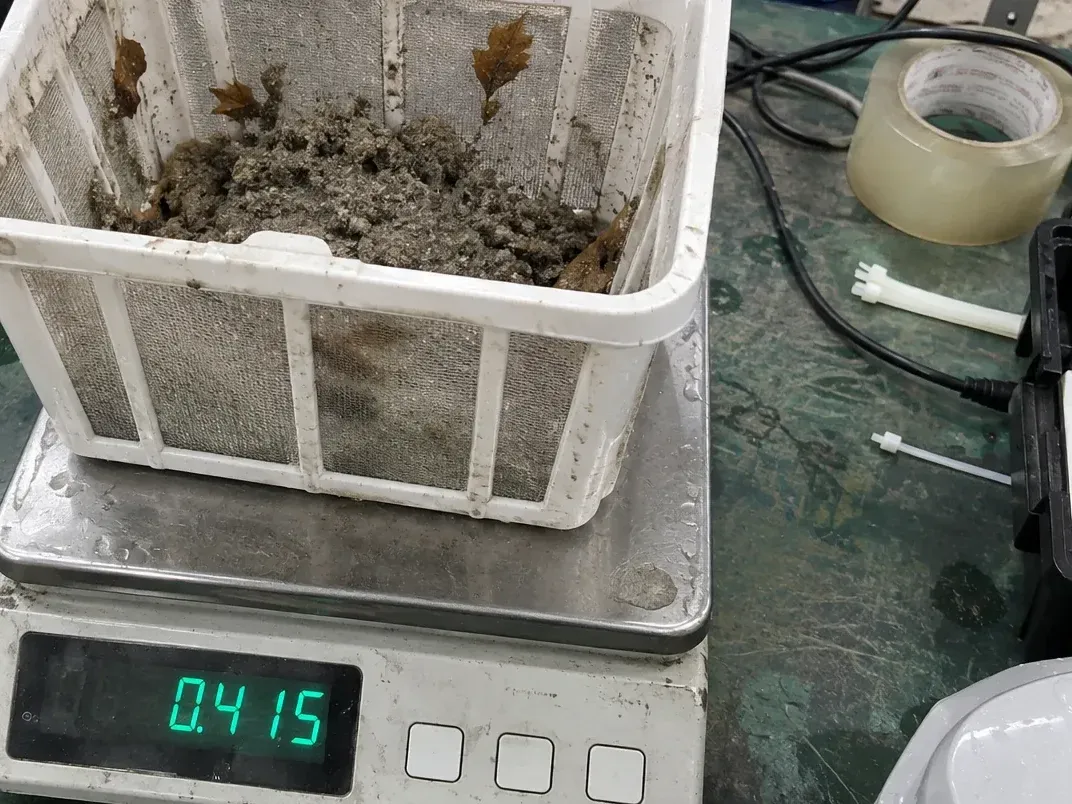
In our Y50S cleaning test, the 180 µm basket kept 415 g of the 450 g of sand spread over a tiled test pool of 3 × 3 m: 92%, against a 90% pass mark. Silt and pollen are another matter, and for them we'd pick a model by its second filter stage, never by a smaller number on a single mesh.
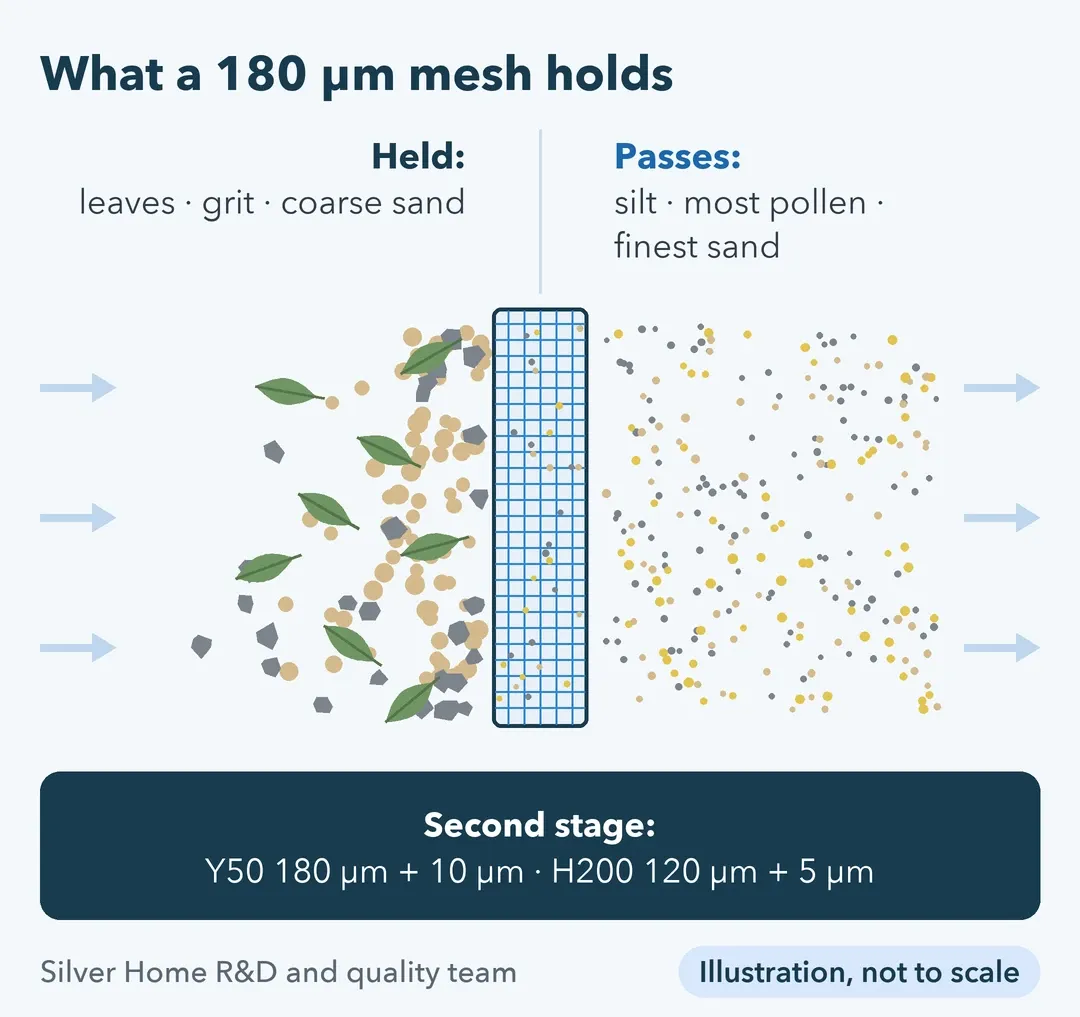
What a 180 µm mesh lets through
A micron is a thousandth of a millimeter, and the rating is the size of the openings in the mesh. Grit, leaves and coarse sand stay in the basket. Silt, most pollen grains and the finest sand are smaller than 180 µm and can pass straight through a single mesh. A basket that has been running for a while catches finer dirt than a clean one, because the debris layer on the mesh acts as a second filter. The same layer is why suction falls as the basket fills.
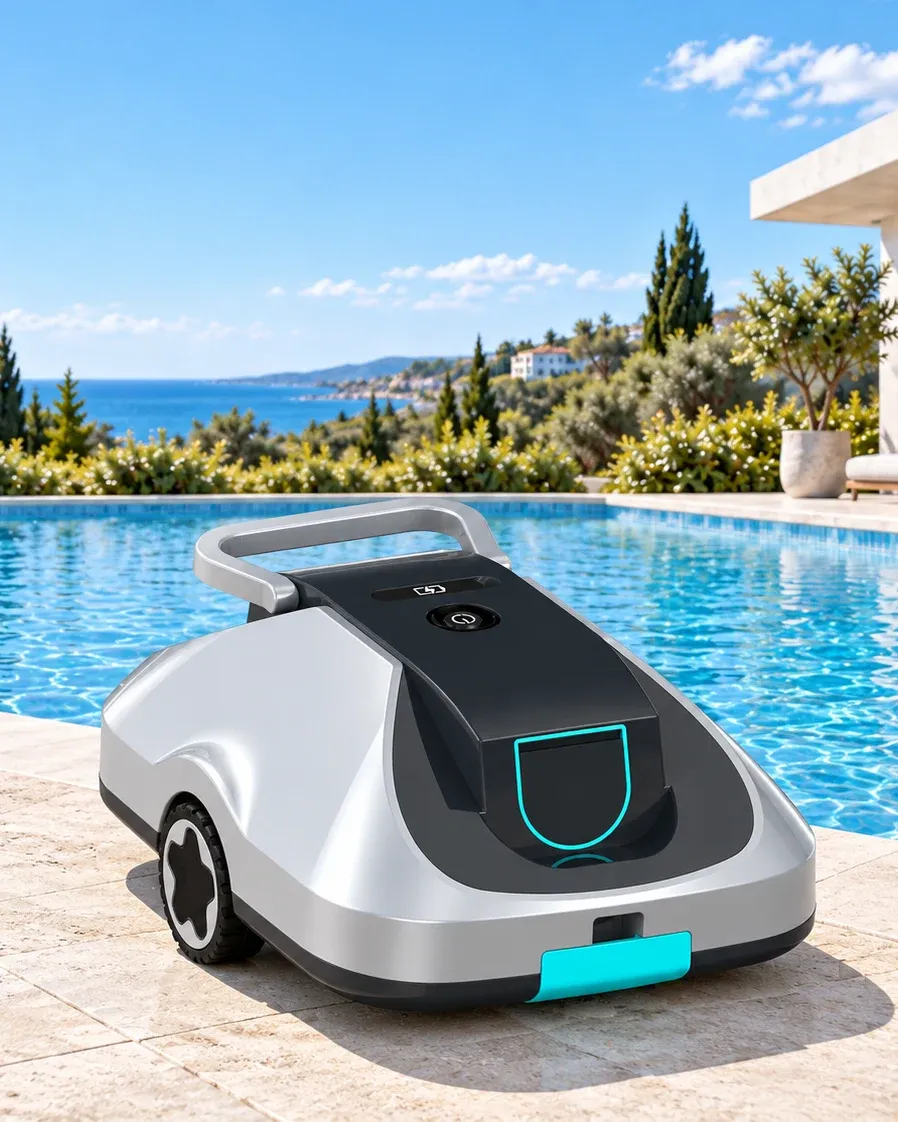
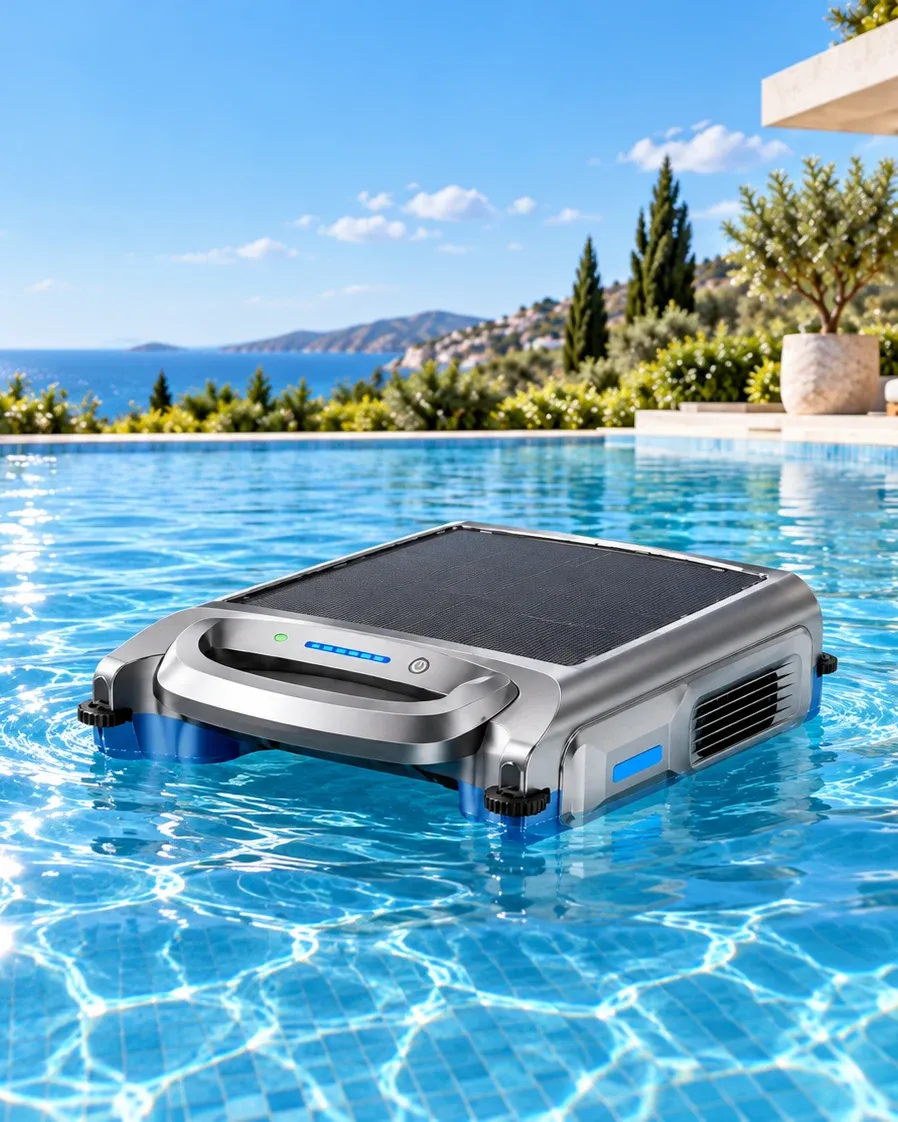
Most of our range sits at 180 µm: all six floor-only robots, the Y50S and both solar skimmers.
Is a finer mesh always better?
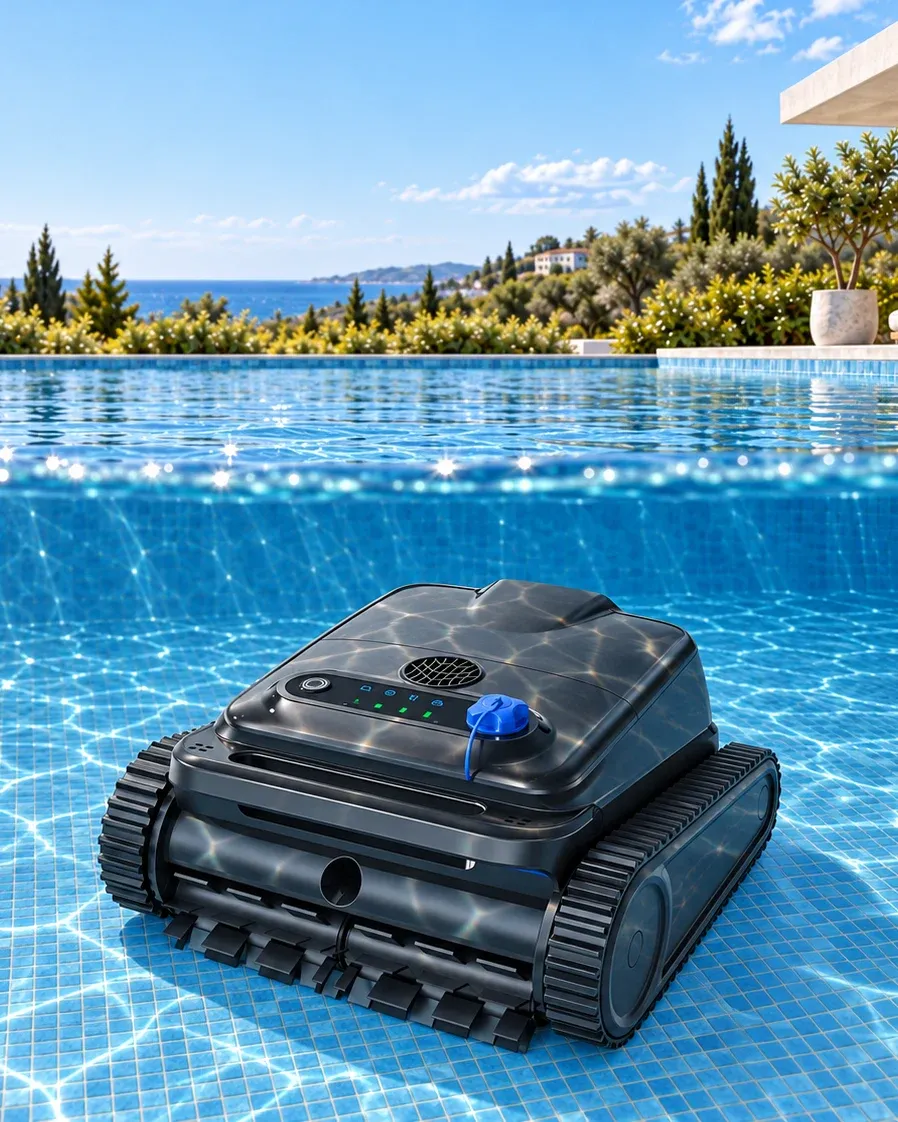
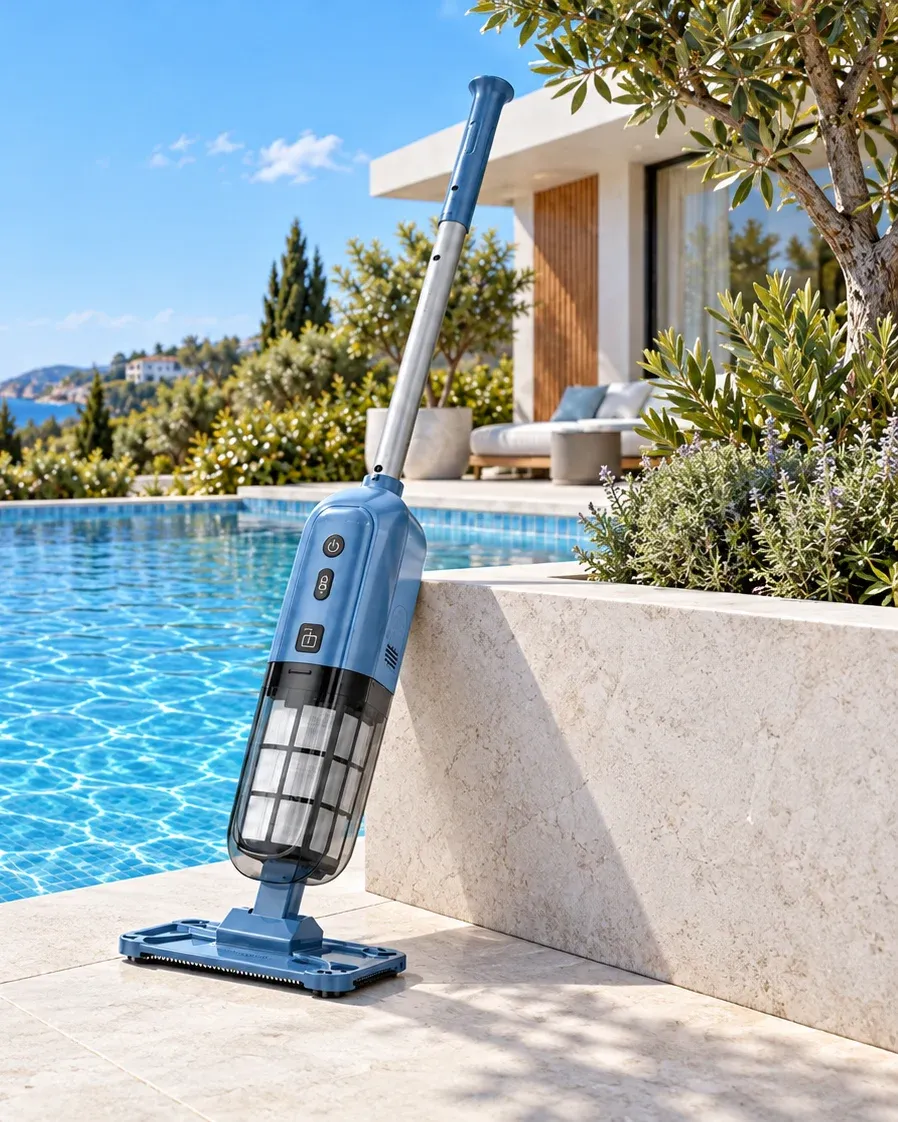
No. A finer single mesh catches more and clogs sooner, especially in pools where leaves and sand arrive together. Once it clogs, flow drops, the robot lifts less off the floor, and a wall-climber loses its hold on the wall. Two-stage filters split the job: a coarse layer holds the bulk and a fine layer behind it takes what gets through. The Y50 pairs its 180 µm basket with a 10 µm fine filter, and the H200 handheld uses 120 µm + 5 µm.
Sand that goes around the mesh
Before you blame the rating, check the fit. A basket that isn't seated properly lets water, and the sand in it, bypass the mesh. Look for thin lines of sand along the edges where the basket sits and around the lid. Then refit the basket with wet hands, the way an owner does at the poolside. One reviewer called a three-part filter lid the most annoying one they had tested, and a lid left half-closed is a bypass.
Choosing for sandy and pollen-heavy markets
For a whole pool with fine silt, the Y50 is our model with a fine stage, 10 µm behind its 180 µm basket, and it carries a 4 L basket for the bulk. For spas, hot tubs and steps, the H200's 5 µm stage fits. Pollen floats before it sinks, so a skimmer reaches it early, but our S100 and Y90 Pro use 180 µm baskets: they hold clumps and leave single grains to the pool's circulation filter.
Basket volume counts as much as microns in sand. The C3 carries 1.5 L against 3 L on our other floor-only robots, so in a sandy market it needs emptying sooner.
Don't sell the Y50's fine filter as a cure for cloudy water. Particles that small are the circulation filter's and the chlorine's job.
Sandy pools mean more rinsing, and a torn mesh lets everything through. Spare filters can be ordered separately, so put some in a sandy market's first order.
A photo of the dirt tells our engineers more than a description. Attach one to your inquiry, with a coin beside it for scale and a note on the pool type, and the reply will match it to a filter stage and basket size.
Written by the Silver Home R&D and quality team.