Oct 27, 2026Guida all’acquisto
Garanzia dei robot: pianifichi il secondo anno
La nostra garanzia copre l’intera unità per 1 anno; la normativa UE ne riconosce due ai consumatori. Chi copre la differenza, da quando decorre e come gestire i reclami con ricambi.

Our warranty to overseas buyers is 1 year on the whole unit. If your pool robot customers can claim for longer than that, plan the second year before launch, with parts on a shelf and a repair route, because paying it out as refunds costs you the most.
When does the year start?
Write the start date into the contract. The choices are our shipment date, arrival at your warehouse, or the day an owner buys the robot. The last is fairest to owners and needs a purchase date on every claim. Whichever you choose, count warehouse time: a pool robot sold in March from stock that landed the August before has spent months of a shipment-dated warranty in its carton.
Who pays for the second year?
The law where you sell decides. Under the EU's Sale of Goods Directive, the seller answers to the consumer for faults that show up within two years of delivery. The Australian Consumer Law sets no fixed end date at all: its guarantees run for as long as is reasonable for a pool robot of that type and price. Our factory warranty to you ends before either, so the gap is yours. A listing that promises owners extra years widens it.
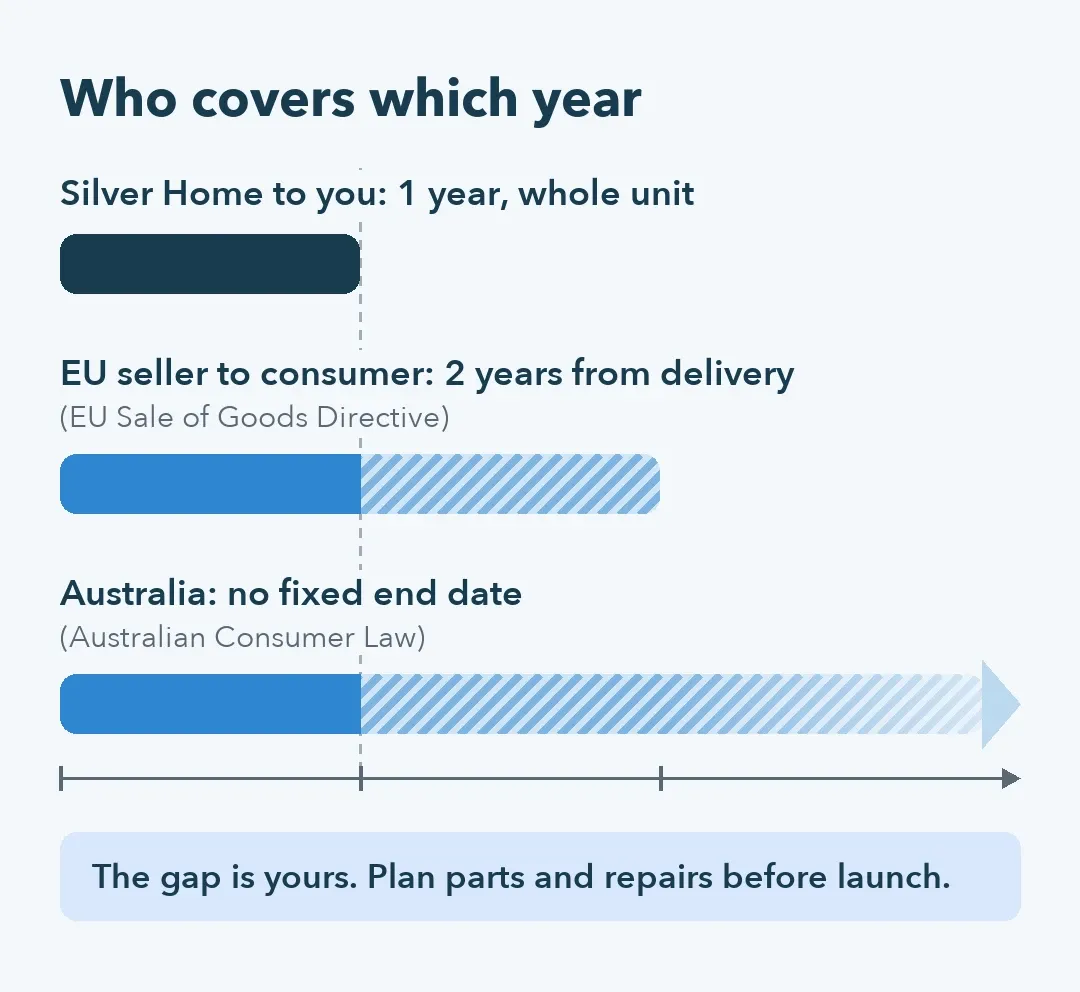
Cover it the cheap way: spare parts for faults that can be fixed at the poolside, and a budget for the rest.
A partial refund is the expensive answer
Owners reviewing one brand of cordless pool robot on an Australian consumer site describe a chain. The robot fails inside warranty, fails again after repair, the brand offers a prorated refund or a voucher, and the owner complains to the state fair trading office. Under private label, that chain ends at your brand name.
So agree in advance which faults get a part posted to the owner and which get a replacement robot. Settle who pays the freight on each, too. A charger in a padded envelope settles a claim that would otherwise send a robot across an ocean, and buyers can order spare parts and batteries separately from us.
What should a claim include?
The model, the serial or batch number from the rating label, a short phone video of the fault, the purchase date, and the result of your first-line checks. Those checks take minutes: was it charged on its original charger, and do the tracks turn by hand once the filter basket is rinsed? A claim with all five tells an engineer more than the robot will after a week in a box.
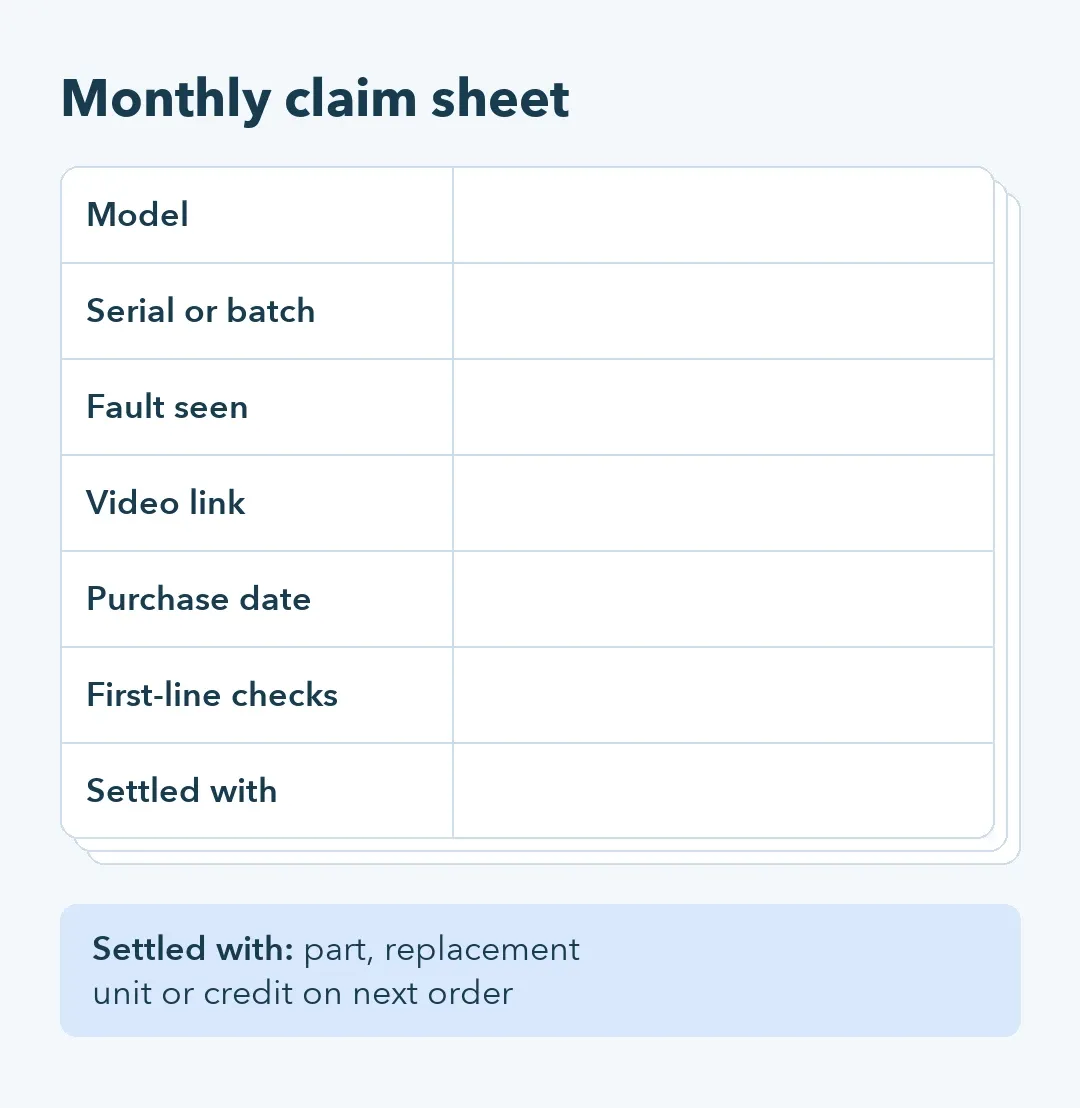
Send pool robot claims as one sheet a month, and agree the default settlement so nobody negotiates each claim from scratch.
What we check before the carton closes
Every robot we build runs in a water tank before it's packed, and every unit gets a final inspection. That catches a leaking seal or a dead motor at our factory. It can't catch a charger left in a wet garage or a battery stored flat all winter, which is why the claim sheet asks what your checks found.
Should we agree a defective allowance instead?
A defective allowance replaces unit-by-unit claims with a fixed credit on each pool robot order. It saves paperwork and moves the risk: claims under the allowance are your gain, claims over it are your cost. Set it per model only after samples have been tested in your market, then review it after the first season against the claim sheets from both sides. Agreed before anyone has data, it's a guess.
The claim sheet above exists as a blank spreadsheet. Ask for it in the form with the pool robot models you're considering, and it comes back listing the spare parts available for each.
Written by the Silver Home R&D and quality team.