Oct 24, 2026News & Insights
EU Battery Regulation 2027: Pool Robots
From 18 February 2027, EU rules require replaceable portable batteries. Pool robots may use a water-appliance derogation. 5 steps for importers.
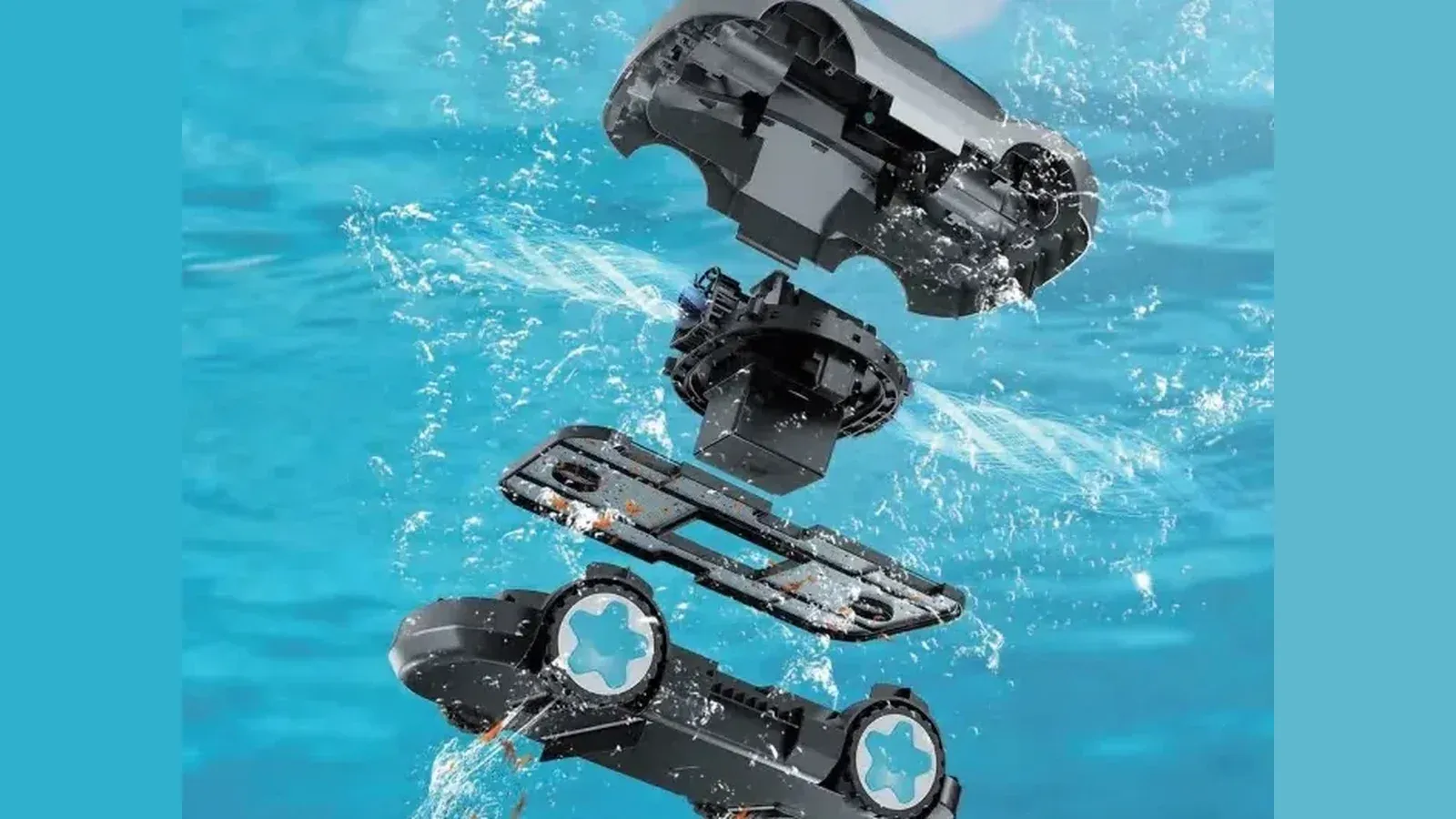
From 18 February 2027, the EU Battery Regulation requires that portable batteries built into products be readily removable and replaceable by the end-user. A cordless pool robot is a sealed, submerged appliance, so most importers will look at the regulation's derogation for water-exposed appliances. That derogation exists, but it isn't automatic, and the evidence behind it is the importer's job to hold.
This is a reading of the regulation's text, Regulation (EU) 2023/1542, not legal advice. Confirm your route with your compliance adviser before you fix next year's packaging and manuals.
What does the EU battery regulation 2027 rule actually say?
Article 11 applies from 18 February 2027. It says anyone placing products with portable batteries on the EU market must ensure the batteries are "readily removable and replaceable by the end-user at any time during the lifetime of the product."
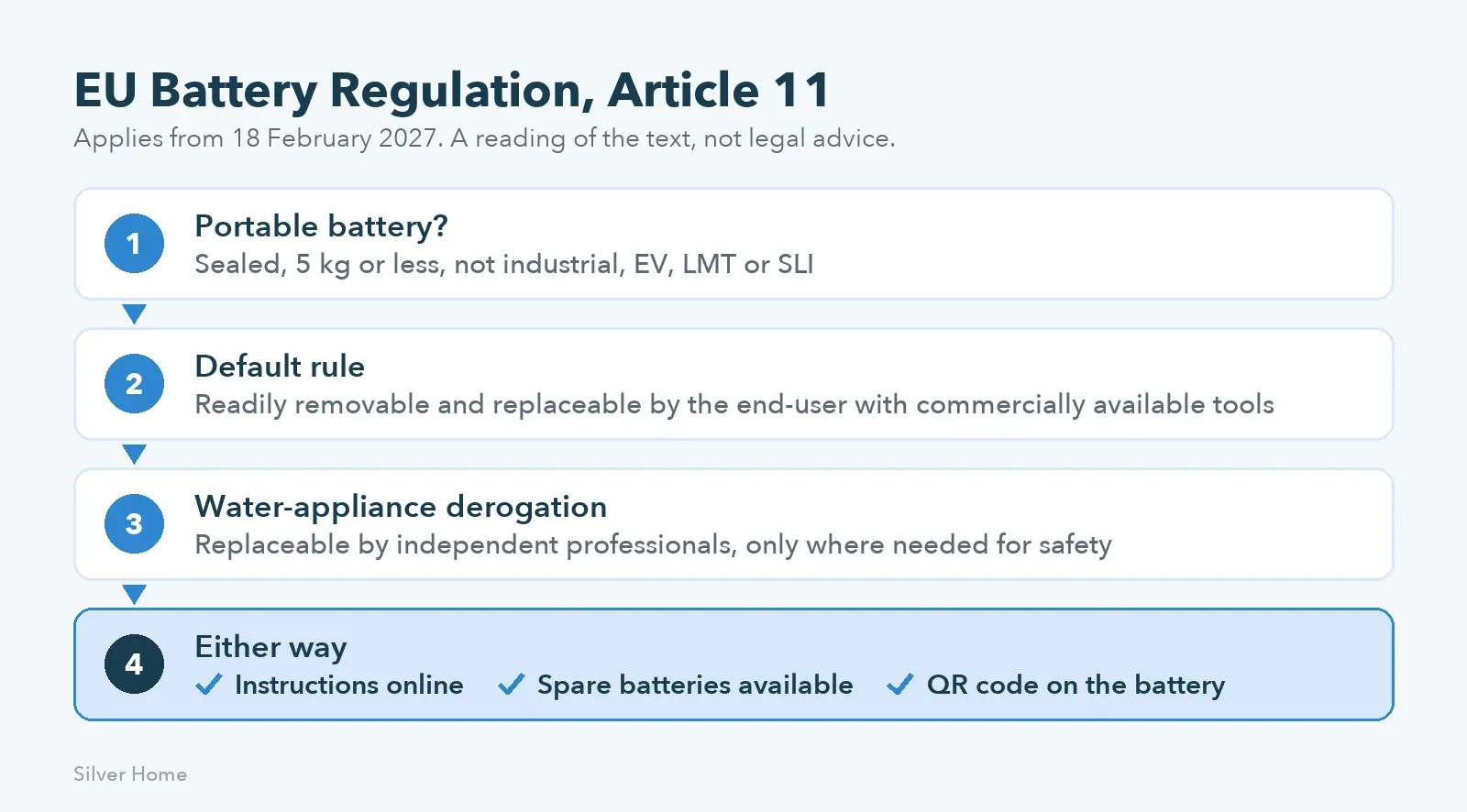
Readily removable means removable with commercially available tools. Specialised tools are allowed only if they're supplied free with the product; removal must not need proprietary tools, heat or solvents. The obligation covers the whole battery, not individual cells. Instructions and safety information on use, removal and replacement must also be available permanently online.
A portable battery, in the regulation's definition, is sealed, weighs 5 kg or less, isn't designed specifically for industrial use and isn't an electric-vehicle, light-means-of-transport or starter battery. Most pool robot battery packs will fall into that category; check yours against the definition.
Is there an exemption for removable batteries in pool robots?
There's a derogation, and the wording matters. Article 11(2)(a) allows appliances "specifically designed to operate primarily in an environment that is regularly subject to splashing water, water streams or water immersion, and that are intended to be washable or rinseable" to have batteries removable and replaceable only by independent professionals.
The same article adds that the derogation applies "only" where it's required to ensure the safety of the user and the appliance. That's the condition an importer has to be able to explain.
Two points follow. A professional-replaceable design is still a replaceable design: an independent repairer must be able to change the battery, as well as the brand's own service team. And the safety case belongs in your technical file, with the supplier's test records attached.
The Commission has also published explanatory guidelines on Article 11 (C/2025/214). They aren't legally binding, but they show how authorities read the rule.
A QR code on every battery from 2027
From the same date, the regulation's labelling provisions require all batteries to carry a QR code giving access to battery information. Check with your supplier who generates the code, what it links to, and whether the battery label artwork has space for it.
If you sell spare batteries in the EU, the same labelling and information duties apply to the spare as to the battery inside the robot.
Five steps for importers before February 2027
First, decide the route for each model: end-user replaceable, or replaceable by independent professionals under the water-appliance derogation. Don't assume one answer for a whole range.
Second, if you use the derogation, write down the safety reason: why opening a sealed, submersible housing at home would put the user or the appliance at risk. Ask your supplier for the sealing tests that support it.
Third, publish removal and replacement instructions online, in the languages you sell in, and keep them live for the product's lifetime.
Fourth, make spare batteries and a replacement process available: who can do it, with which tools, and how the resealed robot is checked afterwards.
Fifth, plan the QR-code label with your supplier now, so the artwork is approved before your 2027 production.
What changes in product design and service?
Battery access and sealing pull in opposite directions. Every opening in a submersible housing is a place water can get in, so a replaceable battery needs a seal that survives being opened and closed by someone other than the factory. That's why the replacement route and the sealing evidence have to be planned together.
After any battery replacement, the robot should be checked for water-tightness before it goes back in a pool. Decide who does that check, with what method, and write it into the service instructions.
Spare battery availability matters too. If the battery must be replaceable during the product's lifetime, you need spare packs and the documents to ship them for as long as the robot is sold and supported.
How we test this at our Changzhou factory
At our Changzhou factory, spare parts and batteries can be ordered separately, and we supply UN38.3 test reports and MSDS for lithium battery shipping. On the Y50S, motor housings were pressurized to 0.05 MPa and submerged to check for bubbles; none of the 3 samples leaked. Battery shipping documents are confirmed by model; assess each model's replacement route with your compliance adviser.
When can you leave this until later?
If your range is sold only outside the EU, Article 11 doesn't apply to it. If you plan to sell in the EU from 2027, don't leave it: battery access affects housing design, manuals and labels, and those are slow to change once a model is in production.
Silver Home designs and builds robotic pool cleaners in its own factory in Changzhou. If you're preparing an EU range for 2027, send your target models and markets through the form below, and we'll confirm the battery documents by model.
Prepared for the Silver Home website.