Oct 24, 2026News & Insights
Pool Robot Recalls: What 2025–2026 Shows
Three cordless pool robot recalls since March 2025 all trace to batteries or chargers. Use this 5-point battery check before your next order.
The three cordless pool robot recalls we reviewed between March 2025 and August 2026 all come back to the same two parts: the battery and the charger. None of them points to the motor, the seals or the software. For an importer planning next season, that's the clearest pool robot recall lesson available, and it tells you where your sample-testing hours should go.
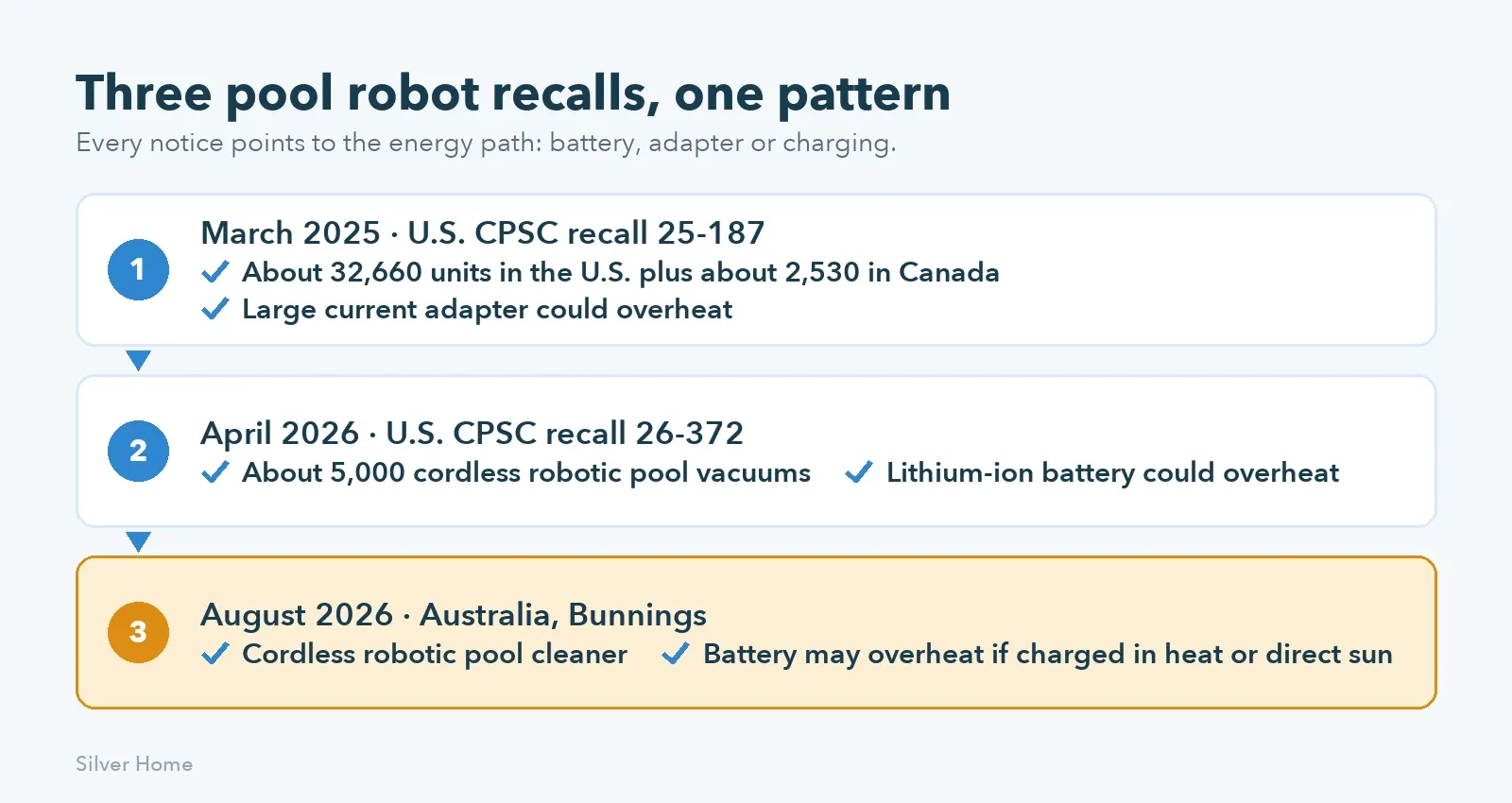
The largest of the three, announced by the U.S. Consumer Product Safety Commission (CPSC) in March 2025, covered about 32,660 robots in the United States and about 2,530 in Canada. We don't name the brands here. The pattern matters more than the logo.
Which pool cleaner recalls are we looking at?
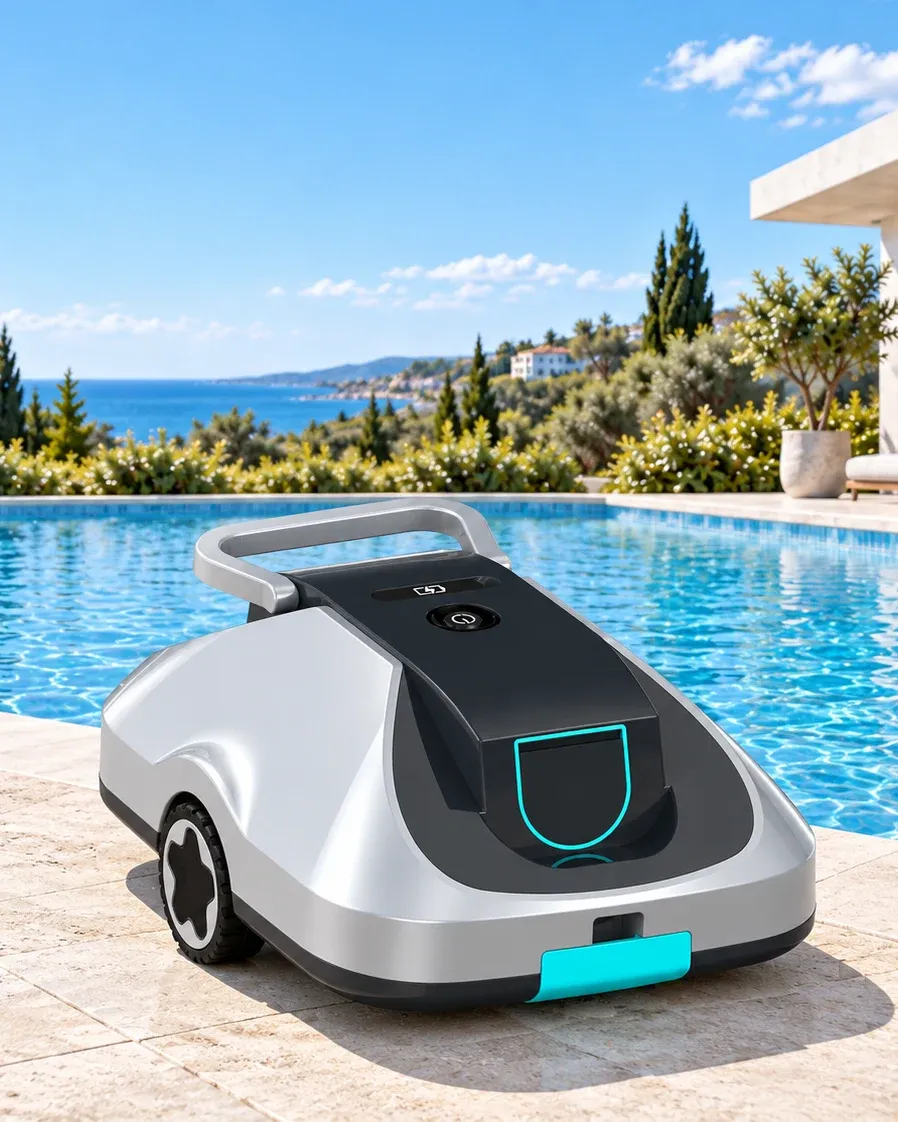
CPSC recall 25-187, dated March 20, 2025, concerned a cordless robotic pool cleaner whose large current adapter could overheat. The agency listed 19 reports of units melting, smoking or catching fire while charging, and five incidents of property damage. The robots had been sold from March 2023 through May 2024 at major U.S. retailers and online.
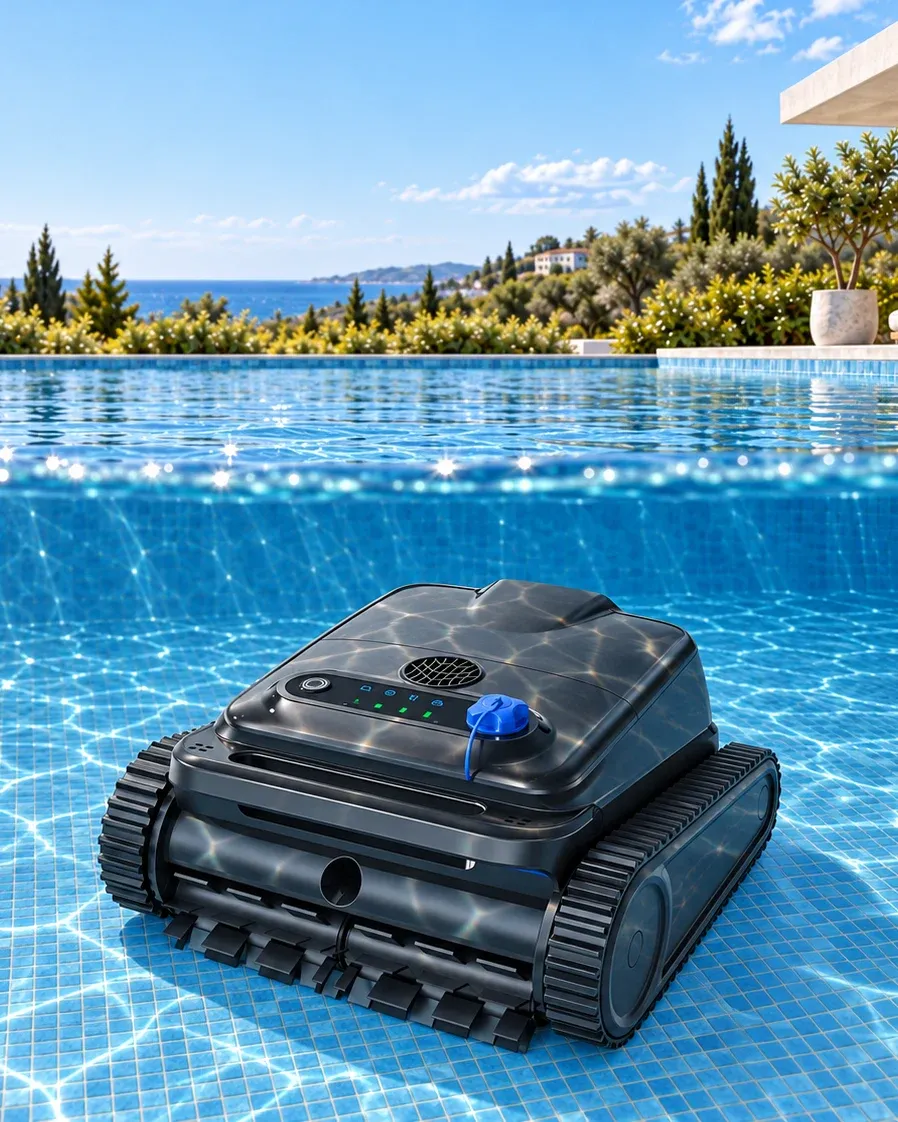
CPSC recall 26-372, dated April 9, 2026, covered about 5,000 cordless robotic pool vacuums. Here the lithium-ion battery itself could overheat. The notice records ten reports of overheating or fire, both while charging and while not charging, and nine property-damage incidents. Sales ran from April 2023 through November 2024.
In Australia, a rechargeable cordless pool cleaner sold through Bunnings between 1 November 2023 and 30 April 2025 was recalled in August 2026, as reported by SPLASH magazine. The notice says the lithium-ion battery may overheat and ignite if it's charged in hot weather or direct sunlight.
None of the three notices blames water getting into the robot.
What do the three pool vacuum recalls have in common?
The component is the first common thread. One recall is about an adapter, one about the battery pack, one about how the battery behaves when it's charged in heat. Every one of them sits in the energy path: the parts that store, move or convert power. That's where an importer's evidence requests should be sharpest.
The timing is the second thread. In both U.S. cases, the gap between the first sale and the recall notice was two to three years. The notices don't say how long the affected units had been in use when they failed, so don't read the gap as an ageing rule. Read it as a warning that a sample which charges and cleans on arrival proves little about the energy path. Ask for evidence that covers charging, idle storage and the ambient temperatures the manual allows.
The third thread is responsibility. The 2026 CPSC notice lists a manufacturer in Tianjin and an importer in California. Both U.S. recalls offered a free replacement robot, shipped within 15 days of receiving the recalled unit. On a private-label order, the name on the box is yours. You carry the recall logistics, the replacement stock and the customer conversation, even if the defect started in a component you never saw.
Where does the risk sit in a private-label order?
Start with the parts in the energy path. Ask which cells, battery management board and charger go into your model, and who makes them. A change of cell supplier or charger model between your approved sample and the production run can quietly invalidate the evidence you signed off. Ask the supplier to name the cell and charger models in the approved specification, and to tell you before either one changes.
Then look at charging guidance. The Australian notice ties the hazard to charging in hot weather or direct sunlight. That's partly a product question and partly an instruction question. If your manual and box don't tell owners where and when to charge, you've left a gap that testing can't close.
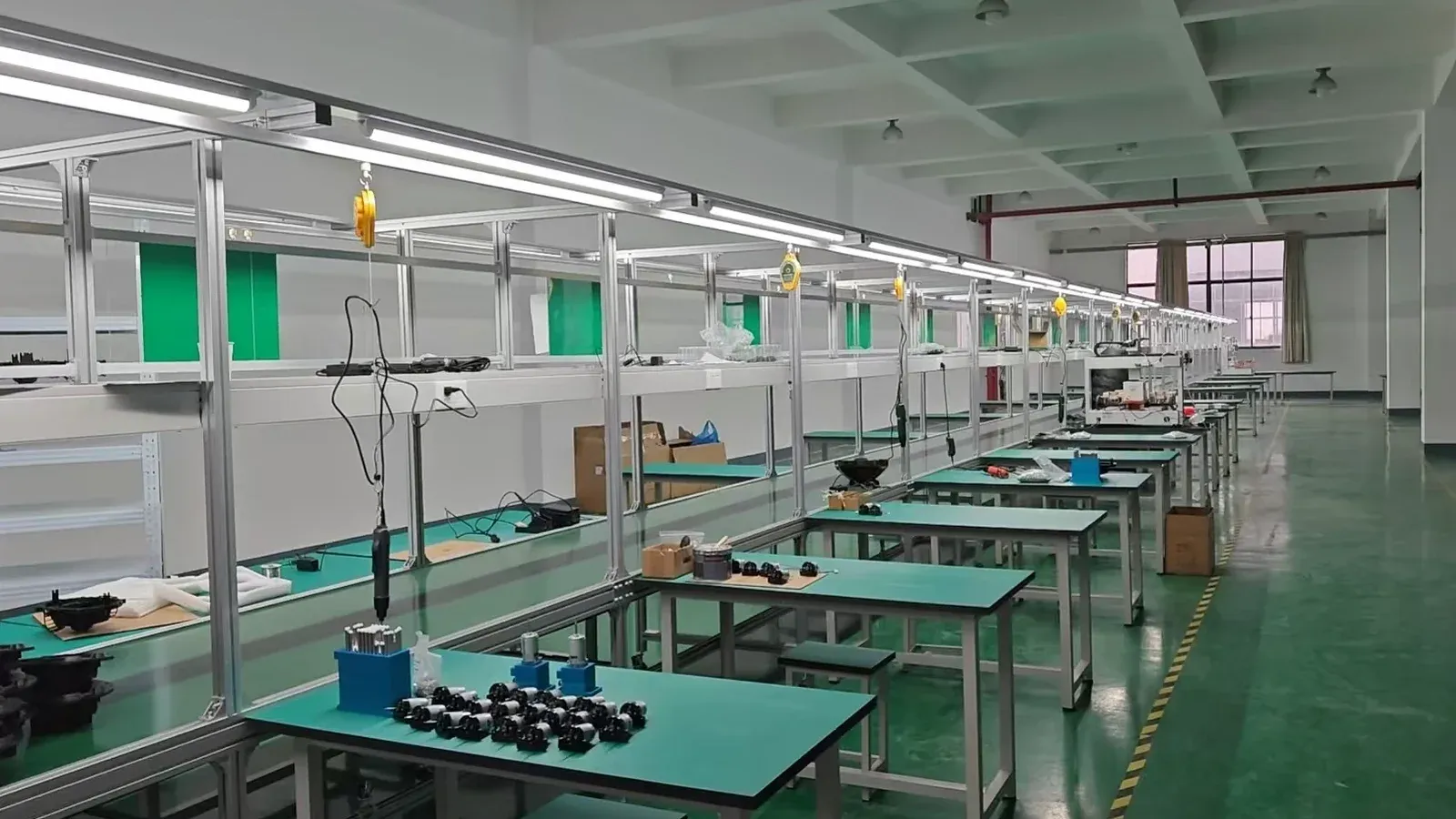
How we test this at our Changzhou factory
At our Changzhou factory, the Y50S validation logged the hottest battery cell at 40 °C during discharge, against a 67 °C limit, and the charger at a maximum of 41.6 °C over more than 5 hours of charging, against a 60 °C limit. The charger also passed a 3.6 kV withstand test, and the firmware shuts down on over-temperature and locks out at low voltage. These results belong to Y50S; every other model needs its own record.
A five-point battery check before you order
First, cell temperature under discharge. Ask for the hottest cell reading, the limit it was judged against, the number of samples and the ambient temperature. A single "pass" without the limit is not evidence.
Second, charger and adapter temperature over a full charge. Ask how long charging was logged, where the sensor sat and what the limit was. The 2025 recall involved the adapter, so don't let the charger be the part nobody tested.
Third, protection behaviour. Ask what the firmware does on over-temperature and at low voltage, and ask for the test that proves it. A protection feature described in a brochure and a protection feature triggered on a test bench are different things.
Fourth, charging instructions. Read the manual draft before you approve artwork. It should say where to charge, in what temperature range, and what to do if the robot is hot after a run. Put the same lines on the quick-start card.
Fifth, shipping documents per battery model: the UN38.3 test report and the MSDS. If the cell or pack changes, the documents have to change with it.
If the cell supplier or charger changes after sample approval, rerun the first three checks.
Does a recall make cordless robots a bad bet?
No. Three recalls tell you where the weak points are, not that the category is unsafe. Cordless robots removed the floating cable; the trade-off is a lithium battery and a charger that need proper evidence. A buyer who asks for that evidence is in a stronger position than one who avoids the category.
Where we'd hold back: if your team can't manage lithium-battery shipping documents, charging instructions and a replacement process, delay the cordless launch until you can. A recall is expensive for anyone, and it costs most for the importer who planned for it least.
Silver Home designs and builds robotic pool cleaners in its own factory in Changzhou. If you're reviewing battery evidence for a sample, request the Y50S validation test summary through the form below.
Prepared for the Silver Home website.