Oct 24, 2026Product Planning
Robotic Pool Cleaner Market Size, Explained
One filing puts the robotic pool cleaner market at US$2,799.7 million GMV in 2025. Why market numbers differ, and which ones belong in a business plan.
There's no single robotic pool cleaner market size, and a business plan that quotes one number without its definition is already wrong. A commissioned study quoted in a draft listing document filed with the Hong Kong stock exchange in April 2026, marked incomplete and subject to change, puts global GMV at US$2,799.7 million in 2025. Fluidra, a listed pool equipment group, describes the same market by adoption instead: below 25% of around 30 million pools. Both can be right, because they measure different things.
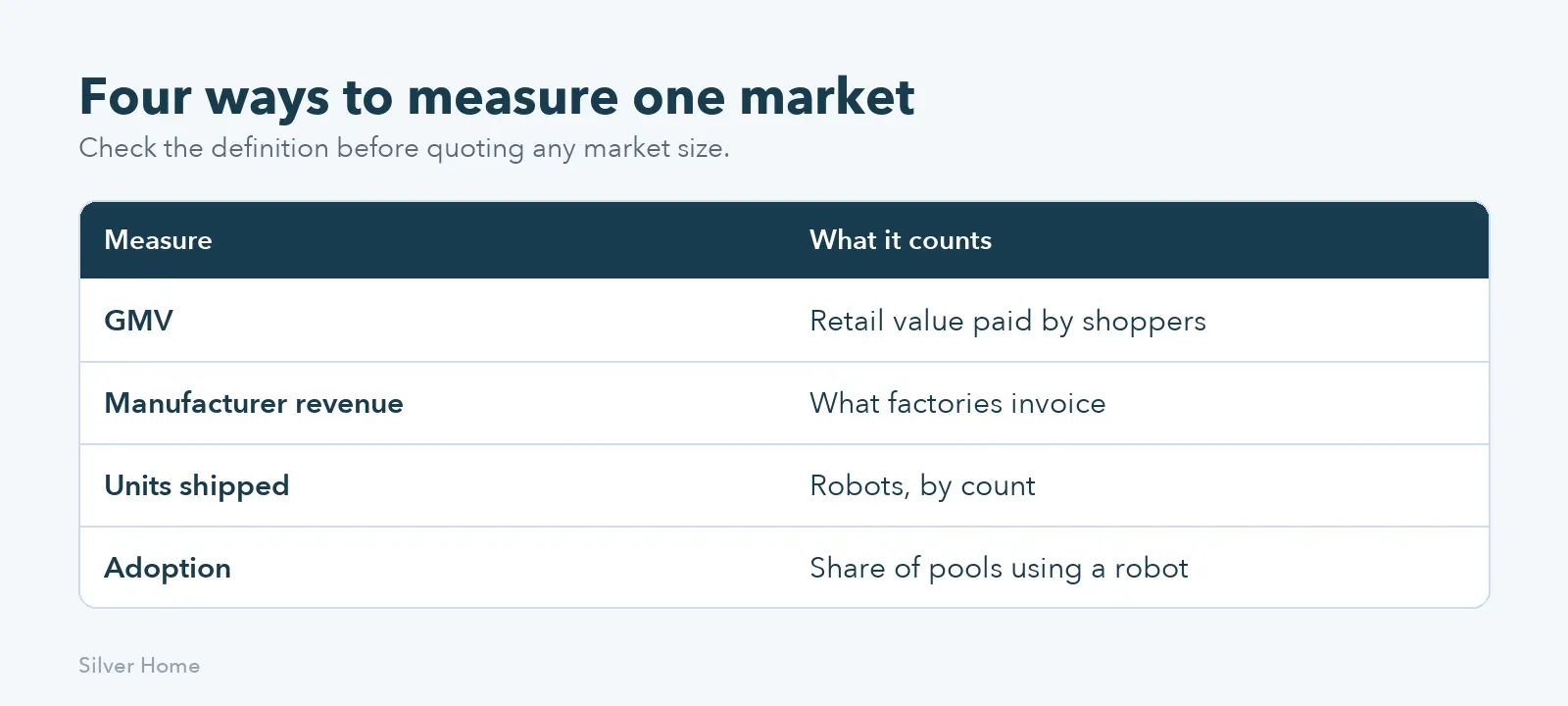
Before you put any figure in a range plan or an investor deck, check four definitions.
What does the robotic pool cleaner market size figure measure?
GMV, or gross merchandise value, is the retail value of goods sold. It counts what shoppers paid, including retailer and marketplace margins. A factory's revenue on the same robots is far smaller.
The filing makes that gap visible for one company. Its branded robots sold for retail prices ranging from US$89 to US$2,499, while its ODM products ranged from US$79 to US$879. The average selling price the company itself recorded on ODM units in 2025 was RMB 972. Adding up retail prices and adding up factory invoices describe very different markets.
Why do robotic pool cleaner market estimates disagree?
Scope is the first reason. Some studies count only robotic cleaners; others fold in suction-side and pressure-side cleaners. Some include commercial pools, some don't. Some include handheld and solar skimmer units, which a buyer would never place in the same range as a wall-climbing robot.
Measure is the second. GMV, manufacturer revenue, units shipped and installed base each give a different total, and they grow at different rates.
Adoption is the third. The filing's study puts adoption at 27.8% of pools in 2025; Fluidra puts it below 25%. The difference can come from how each counts pools, which pools are included and how a robot "in use" is defined. The excerpts don't give enough method detail to reconcile the two. Keep each figure with its source and date, and don't merge them into one series.
Summaries of paid market reports add a fourth problem: they rarely publish their definitions, so their totals can't be compared. We don't quote them.
Which numbers belong in a pool robot business plan?
Use a direction from the big studies, not a size. The filing's study projects GMV of US$4,567.7 million by 2030, a CAGR of 10.3% from 2025, after 15.0% a year from 2020 to 2025. That tells you growth is expected to continue at a slower pace. It doesn't tell you how many robots your channel will sell.
For your own plan, build from the bottom: the pools in your region, the share your channel can reach, your sell-through on comparable products and a realistic first order. A first private-label order is a test of that model, not a bet on a global total.
Unit volume from a single company is a useful reality check. The filing reports that its author sold 501.1 thousand robots in 2025, branded and ODM combined. That's one maker's volume, and it helps you sense the scale of the largest players without inventing a market share.
Which types of robotic pool cleaners should a range include?
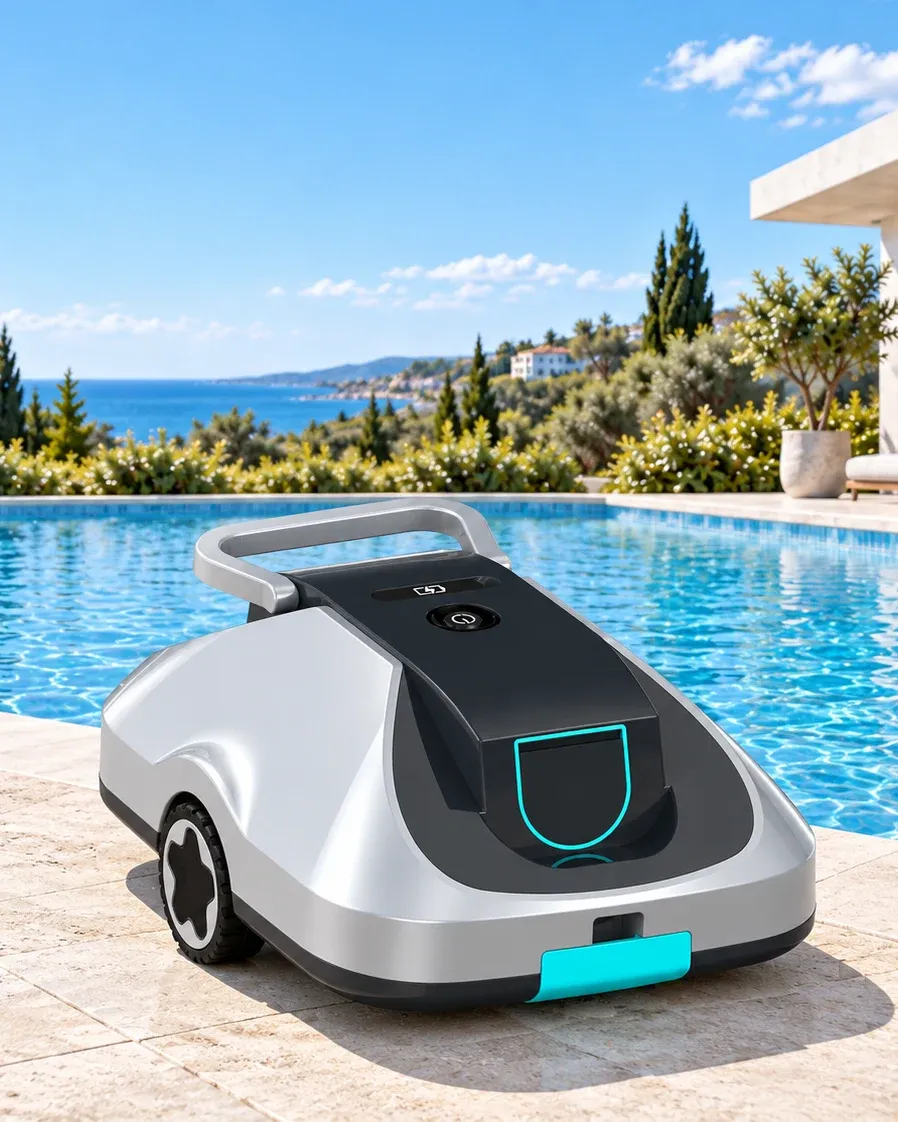
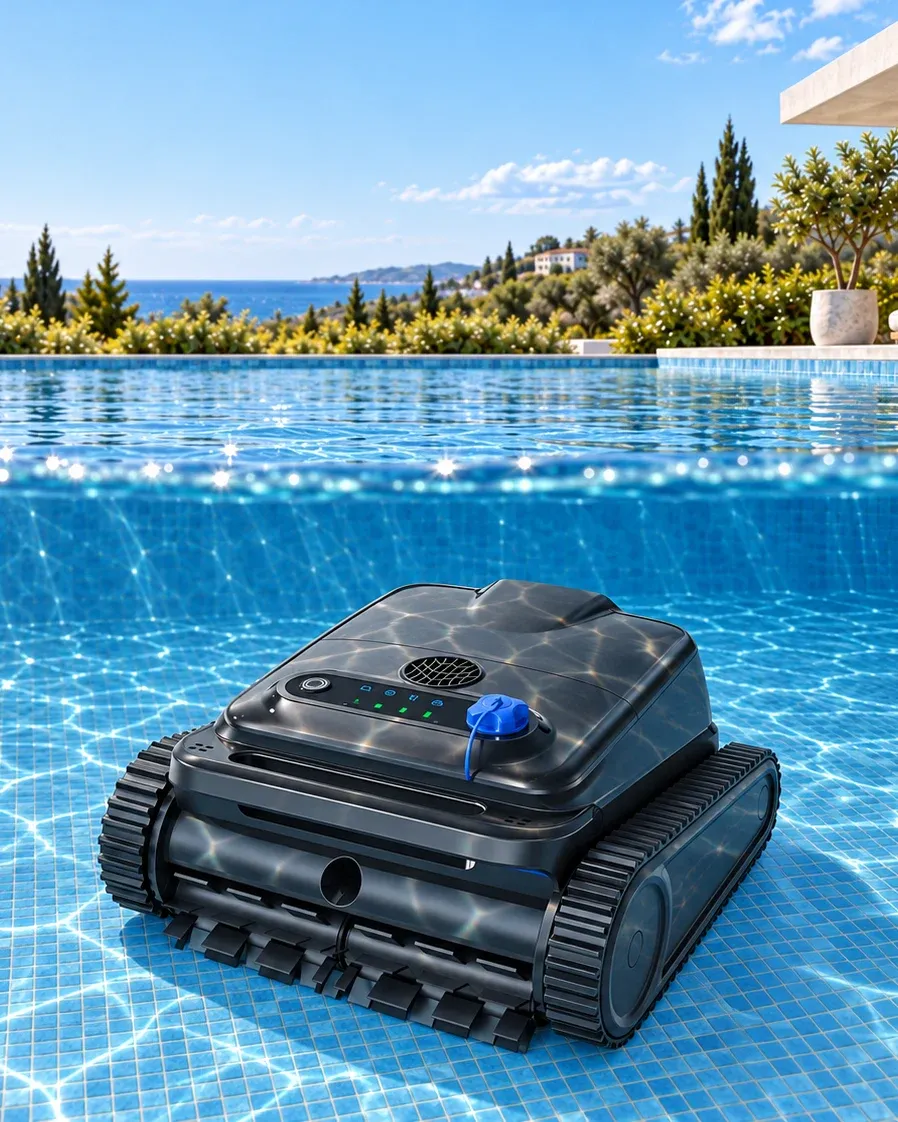
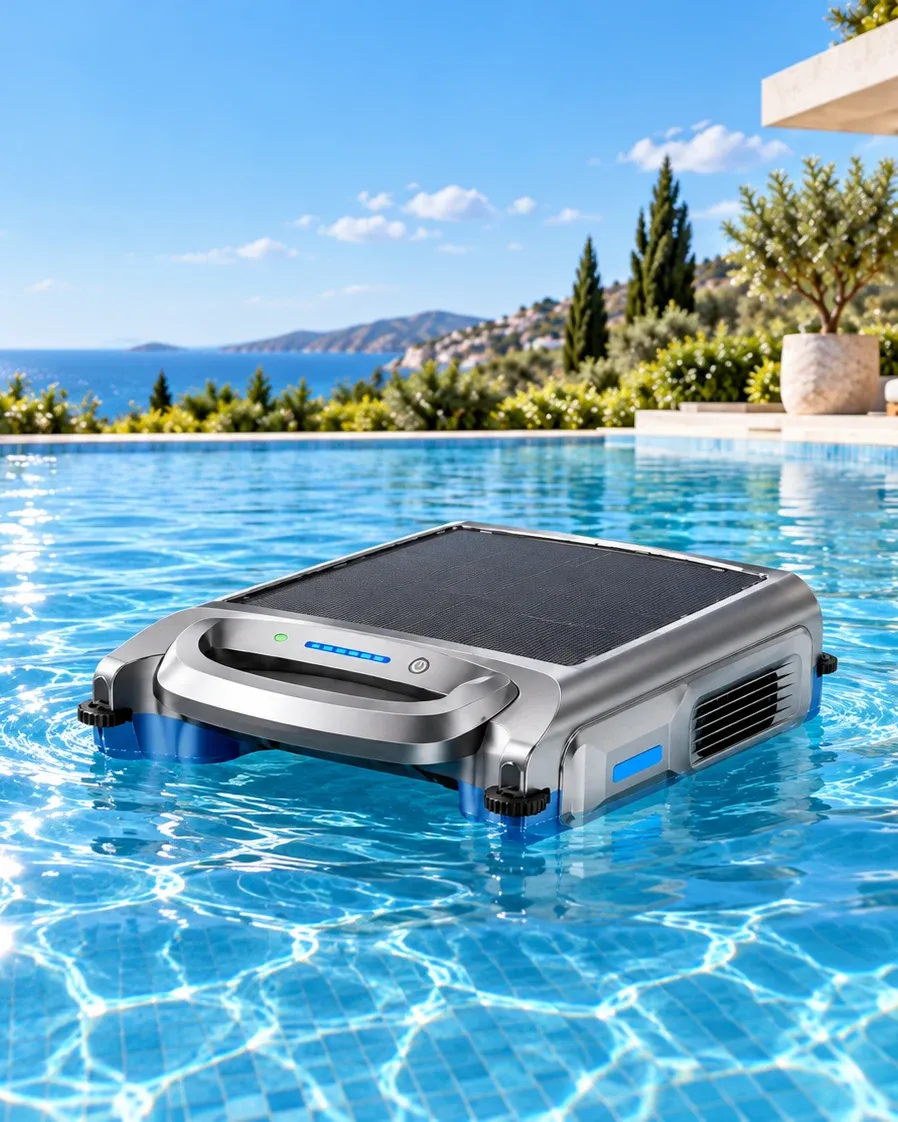
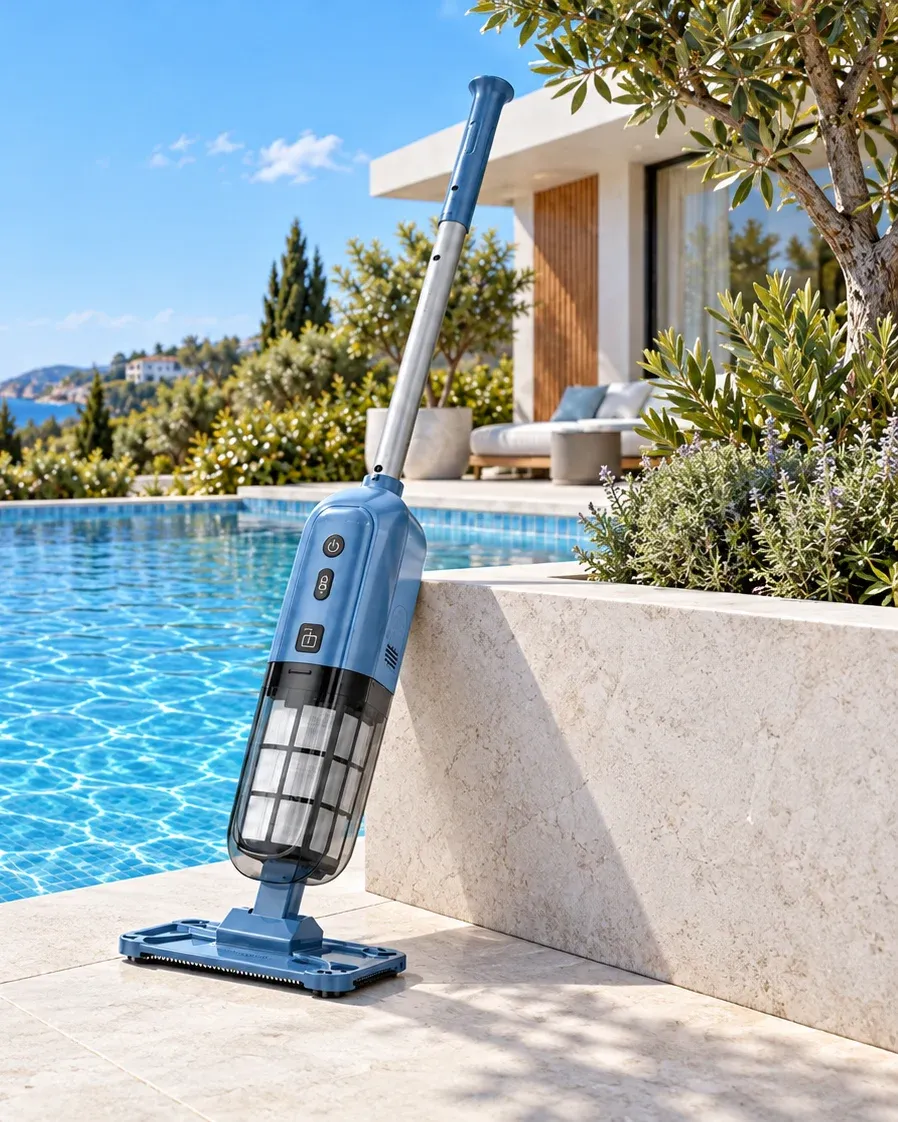
Split the range by job, because shoppers do. Floor-only robots clean the pool floor. Wall-climbing robots cover the floor, walls and waterline. Solar skimmers work on the surface. Handheld vacuums handle spot cleaning in pools and spas. A market total that mixes all four tells you little about any one shelf.
Start your plan with the job your customers complain about most, then size that segment from your own channel data.
A bottom-up check you can run this week
Take one region you sell into. List the channel accounts that already sell pool equipment, the number of stores or listings each one runs, and the sell-through you've seen on comparable products such as pumps or manual cleaners. Multiply out a cautious first-season number for one robot type. That number, not a global GMV, decides your first order.
Then test it with a neutral-stock order before committing to packaging. If sell-through beats your estimate, the private-label order that follows rests on your own data instead of a consultant's.
Red flags in a market report
No definition of what's counted. No split between residential and commercial pools. A single global number with no units or GMV label. A growth rate quoted without the start and end years. Any of these means the figure can't go into a plan unchanged.
Ask the publisher for the definition page. If they can't give it, use the report for direction only.
How we test this at our Changzhou factory
At our Changzhou factory, capacity is 200,000 pool units a year, and our range covers floor-only robots, wall-climbing robots, solar skimmers and handheld vacuums. Neutral stock starts at 100–300 units with 7–14 days to goods-ready, so a first order can test real sell-through before a private-label program of 500 to 2,000 units per model.
Silver Home designs and builds robotic pool cleaners in its own factory in Changzhou. If you're sizing a first order, send your market and target models through the form below, and we'll confirm quantity and timing by model.
Prepared for the Silver Home website.