Oct 27, 2026Fabricação
Recall de robôs: aprove também o carregador
Em março de 2025, a CPSC dos EUA recolheu cerca de 32.000 robôs sem fio por adaptadores com risco de superaquecimento. O que isso ensina sobre aprovar carregadores.
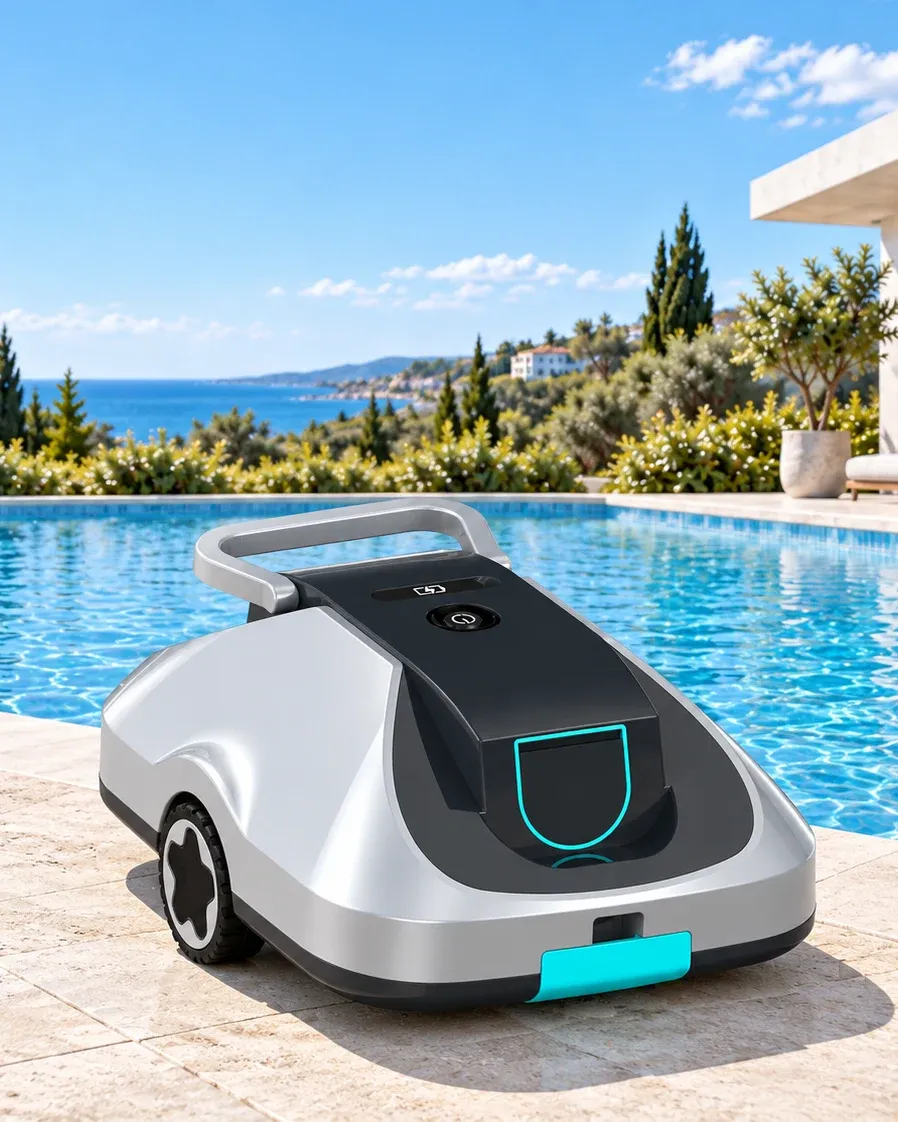
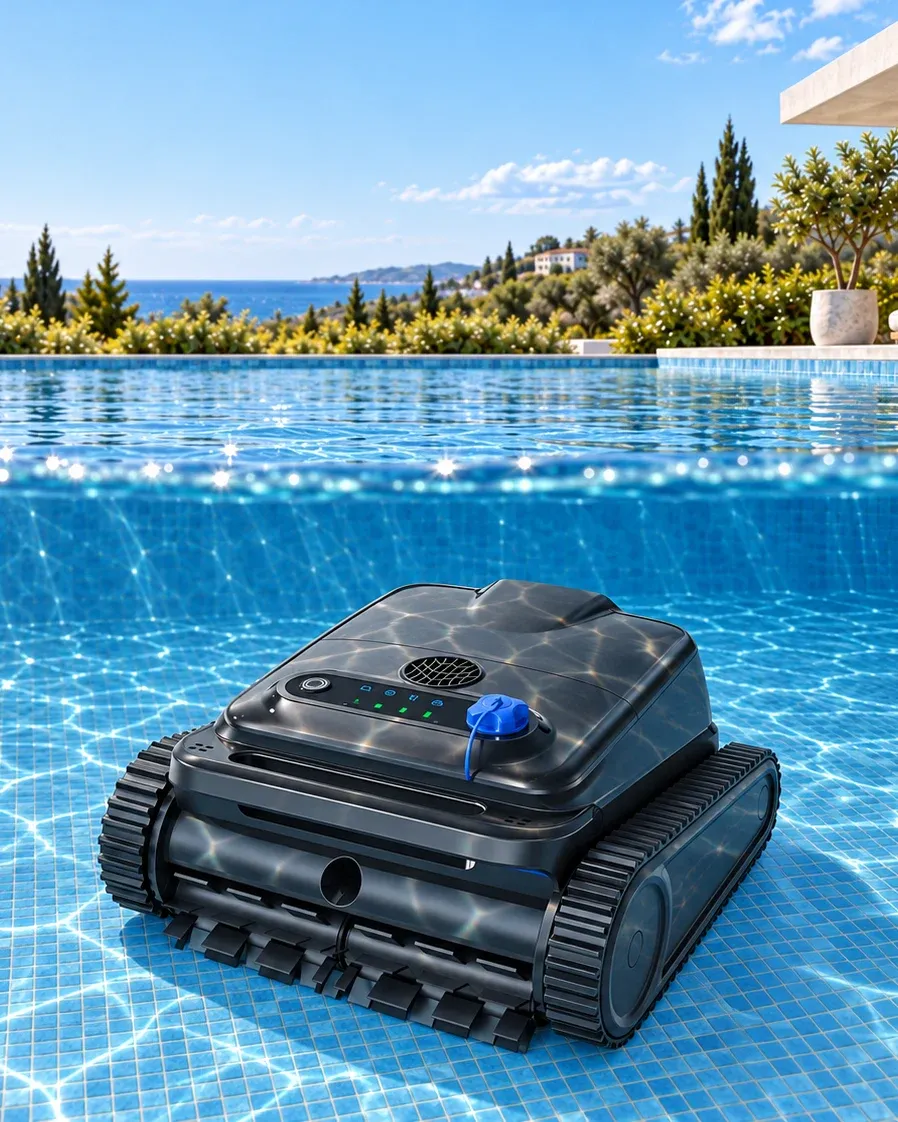
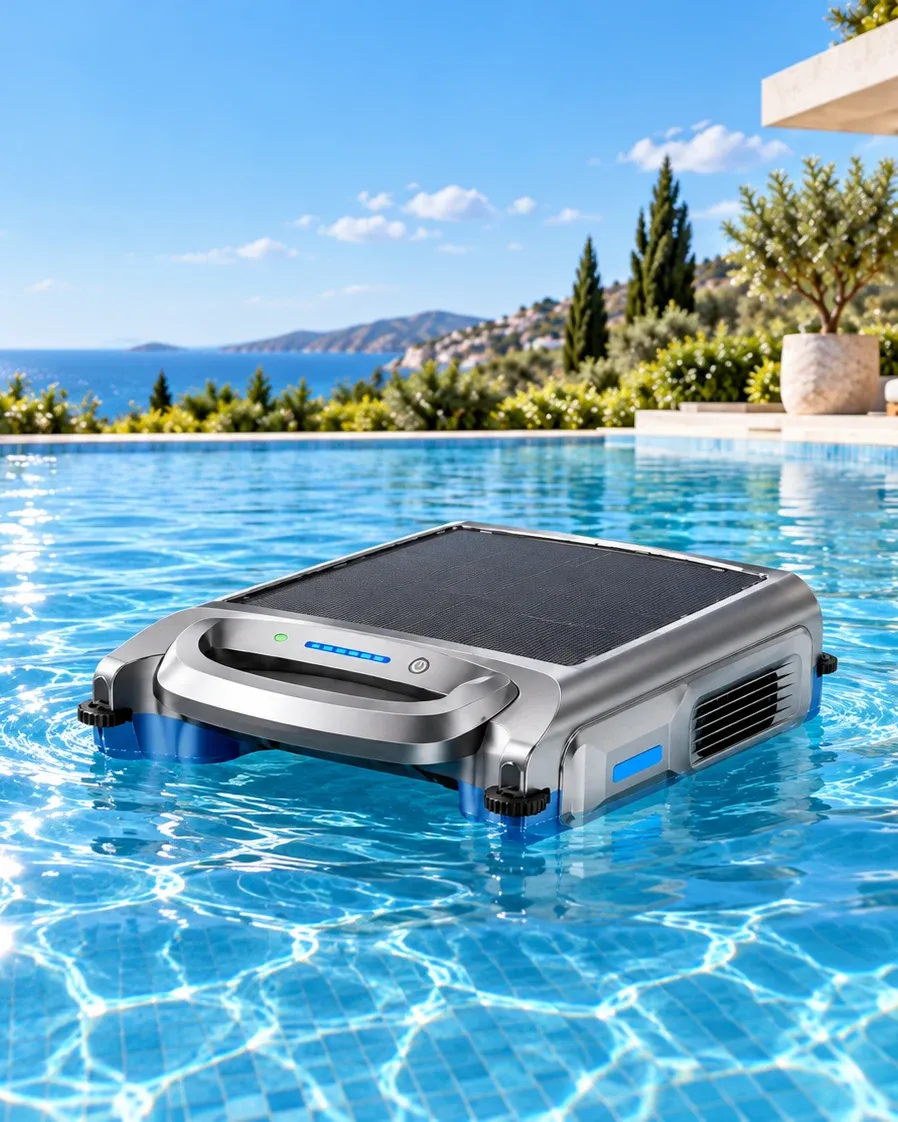
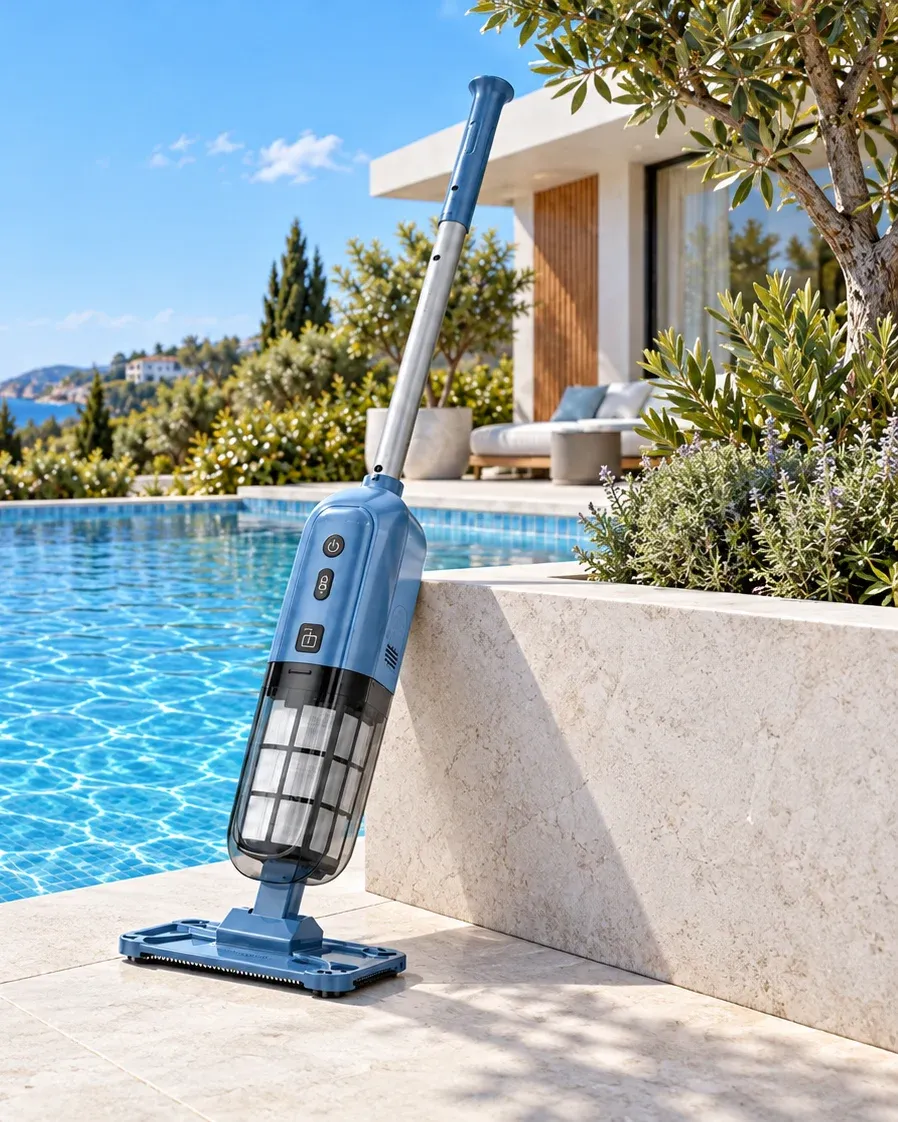
In March 2025, the U.S. Consumer Product Safety Commission (CPSC) announced a recall of about 32,000 cordless pool robots: the charging adapters sold with them could overheat. The part named was the plug-in adapter, so our view is simple: approve the charger as carefully as you approve the robot.
What the recall named
The adapter is the plainest thing in the box and the only part a pool owner plugs into a wall socket after every cleaning run. It's also a separate product, with its own maker, model number and safety approvals. When a robot program is approved on a sample, the adapter can slip through as an accessory nobody signed off on.
Overheating is a heat failure, and insulation tests don't measure heat. An adapter can pass one and still run too hot through a long charge on a summer evening by the pool.
Under the U.S. Consumer Product Safety Act, importers count as manufacturers. On a private-label pool robot, the recall notice can carry your name.
Four parts of a charging system
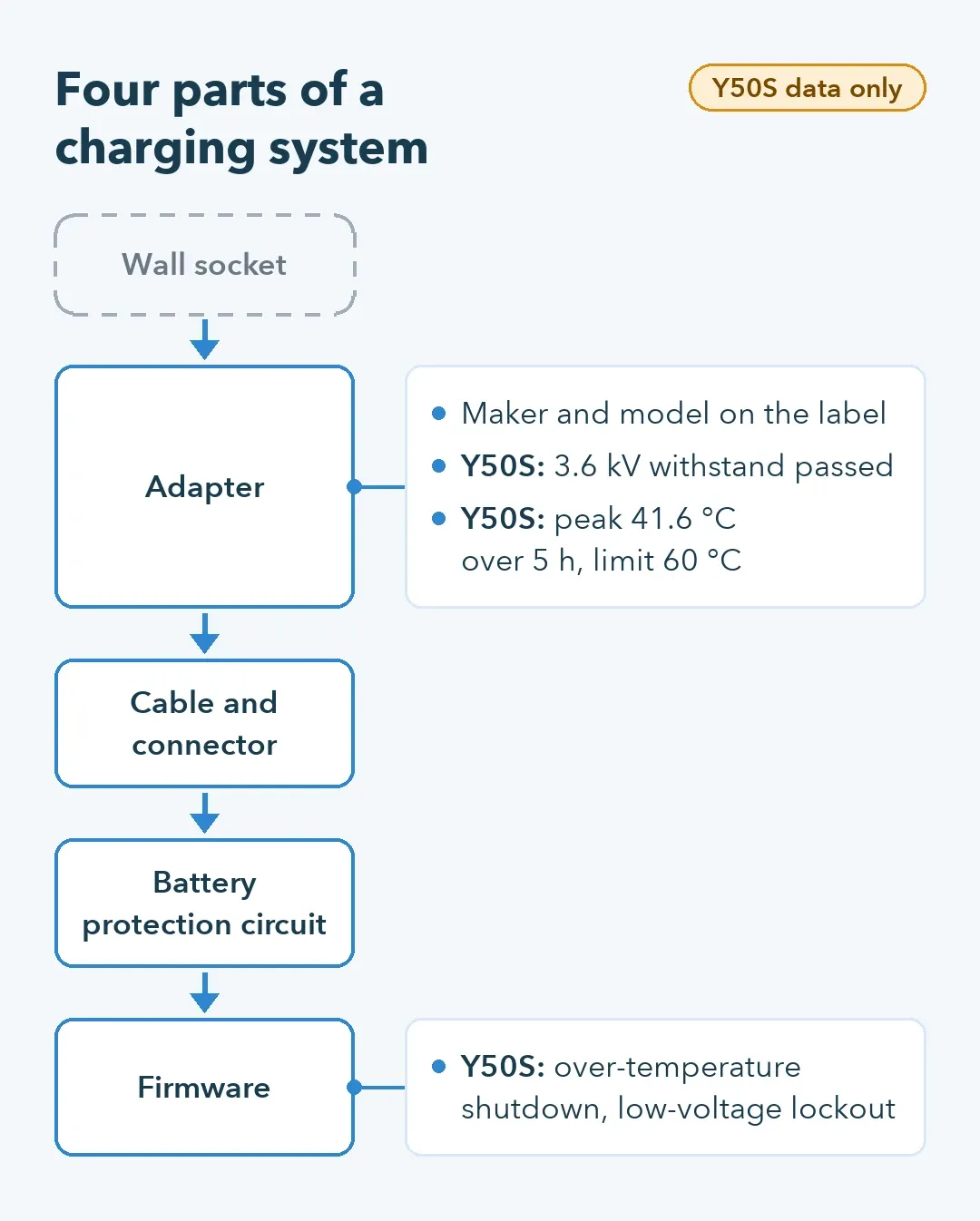
Ask for evidence on each part: the wall adapter, the cable and connector, the battery pack's protection circuit and the pool robot's firmware. A supplier who answers a heat question with an insulation result hasn't tested both.
On the Y50S, the charger passed a 3.6 kV withstand test, which checks that the insulation between the mains side and the low-voltage side holds. It was also logged through more than 5 hours of charging and peaked at 41.6 °C against a 60 °C limit. Inside the robot, firmware stops it when it runs too hot and refuses to run once battery voltage falls too low, before a cell is drained far enough to be damaged.
Those figures belong to the Y50S charger. Every other model needs its own answers.
Three things to put in writing
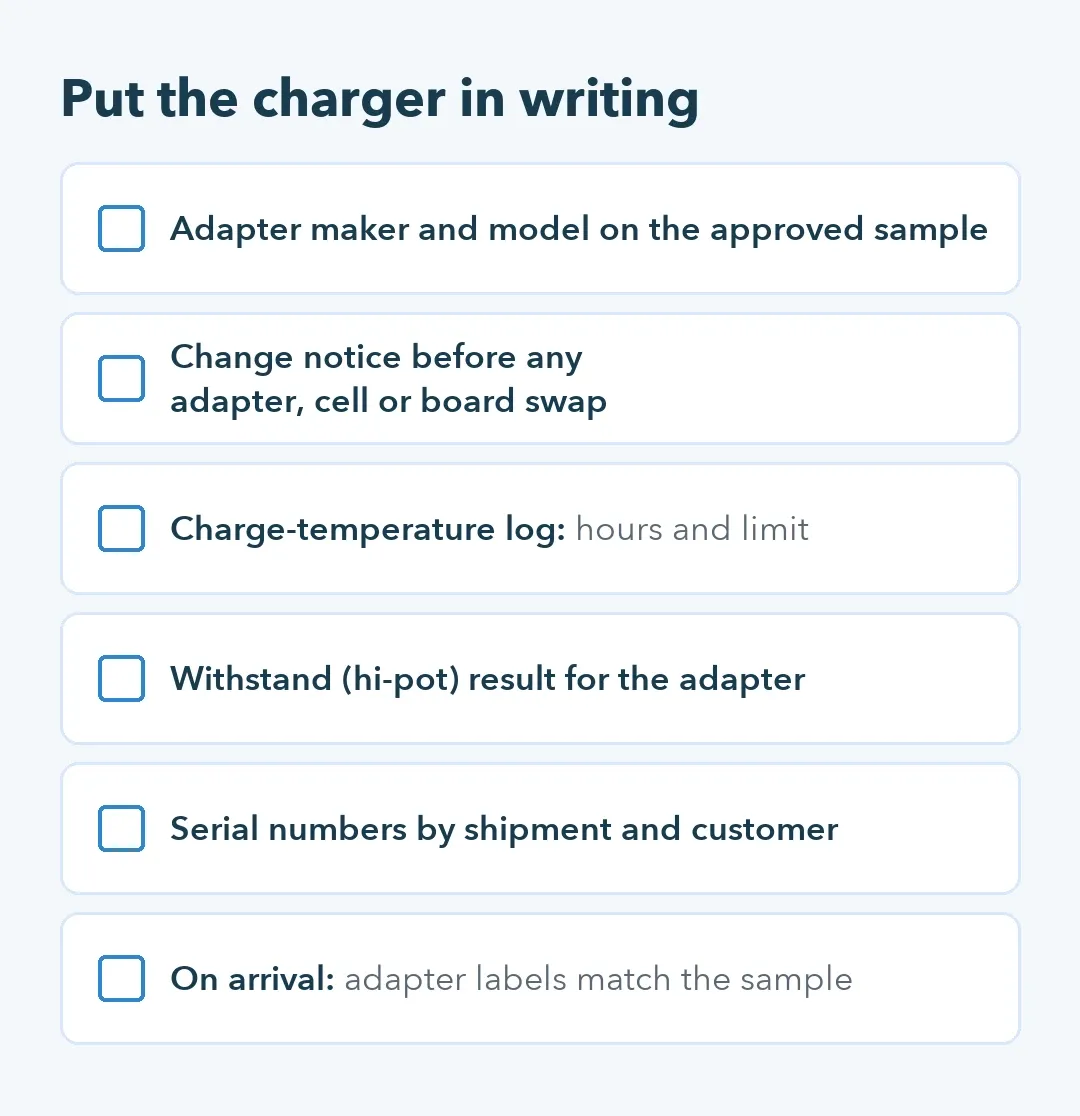
Name the adapter. Write its maker and model number into the approved-sample record, then add a change-notice clause: no switch of adapter, battery cells or protection board without telling you before shipment. A cheaper adapter swapped in mid-program never shows up on a pool robot spec sheet.
Ask for a heat log with its limit. A charging temperature means little without the limit it was judged against and the hours it covered, so ask for both numbers, plus the withstand result, for every pool robot model you buy.
Record serial numbers by shipment and customer. If a recall ever comes, the first question is which pool robots are affected, and you want to answer it from your own records. Ask your supplier whether a serial number traces back to a production date and an adapter batch.
What should we check when the container arrives?
Pull cartons from different pallets and compare each adapter label with the approved sample: maker, model number, ratings. It takes minutes and catches a swapped part before it reaches a pool owner. Buyers can order chargers on their own, so hold a few in stock. If an owner reports a hot adapter, your service desk can swap it straight away and send the suspect unit back for testing.
Comparing chargers between suppliers? Ask us for the Y50S charger test page, with the 3.6 kV withstand result and the temperature log, limit included.
Written by the Silver Home R&D and quality team.